Skip to Content

Research & Commentary Results

Filter by
2241 Results
Iran’s Role in Arab Allies’ Underground Warfighting
  • Analysis
  • Iran’s Role in Arab Allies’ Underground Warfighting

    Hamas, Hizballah and Houthi tunnel networks resemble Iran’s underground missile cities. But their origins reveal a more complicated story of local necessity, Iranian assistance and military adaptation.

    Dr. Marwan Muasher: Has the Middle East Really Changed?
  • Podcast
  • Dr. Marwan Muasher: Has the Middle East Really Changed?

    Have October 7 and the Iran war remade the Middle East, or just made it more dangerous? In the first episode of Re-Orient, Gönül Tol puts that question to Dr. Marwan Muasher, Jordan’s former Deputy Prime Minister and Foreign Minister. Muasher draws on his extensive career to unpack the key issues driving today’s Middle East, from regional alignments to US influence, and offers insights on what has the potential to shape this volatile part of the world.

    COP31: What’s at Stake in Antalya
  • Podcast
  • COP31: What’s at Stake in Antalya

    More than 100,000 people registered for the UN’s 31st annual climate change conference, COP31, now under way in Antalya, Turkey, in what could be the largest climate summit to date. Mohammed Mahmoud, CEO and founder of the Climate and Water Initiative, joins hosts Alistair Taylor and Matthew Czekaj to discuss the key takeaways from the conference so far and the negotiations around a final agreement. They unpack the fight over fossil fuels and climate finance, the US government’s absence, and whether participants can deliver on their agenda.

    November 20, 2026

    The Gaza Plan: Delivered, Stalled, Reversed
  • Report
  • The Gaza Plan: Delivered, Stalled, Reversed

    One year on, the Trump administration’s 20-point plan for Gaza remains a work in progress, and the debate around it has split into two narratives that rarely meet. Official statements announce breakthroughs, while critics dismiss the plan as a cease-fire in name only. Neither narrative tells a policymaker which commitments are working, which are stalled, who is obliged to take the next step, and what would unlock the process. The central goals of this policy analysis are to answer those questions and suggest a pathway forward into 2027 and beyond.

    Implications of West Bank Economic Collapse
  • Policy Memo
  • Implications of West Bank Economic Collapse

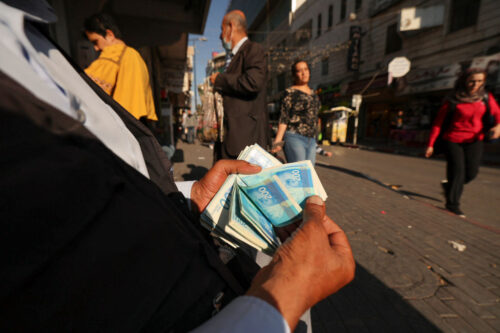
    The West Bank economy is in crisis. Since the Hamas attack on Israel on October 7, 2023, Israeli policies, compounded by Palestinian Authority (PA) governance and fiscal management weaknesses, have driven the economy into free fall. The measures are imposing severe hardship on the lives and livelihoods of Palestinians; risk destabilizing the West Bank; carry spillover implications for Israel and its neighbors; and threaten to derail the US administration’s efforts to implement its 20-point plan for Gaza.

    Blue Wave, Regional Ripples: Turkey and Lebanon React to the Midterms
  • Podcast
  • Blue Wave, Regional Ripples: Turkey and Lebanon React to the Midterms

    The November 3 US midterms handed Democrats control of both chambers of Congress, a result many abroad read as a rebuke of President Donald Trump’s policies. How does the “blue wave” resonate among electorates and governments in Turkey and Lebanon, two key American partners in the Middle East? Ankara is weighing an early vote that could let President Recep Tayyip Erdoğan run again while his chief rival stands trial. Beirut, its elections postponed by war, is trying to restore state authority, including over Hizballah’s weapons. MEI Senior Fellows Gönül Tol and Fadi Nicholas Nassar join host Alistair Taylor to discuss how both countries read the results, how issues like corruption struck a chord in each, and what Ankara and Beirut expect from a Democratic Congress.

    November 12, 2026

    The Human Story Behind Gaza: Jaser AbuMousa on the Costs of Survival for Palestinians
  • Podcast
  • The Human Story Behind Gaza: Jaser AbuMousa on the Costs of Survival for Palestinians

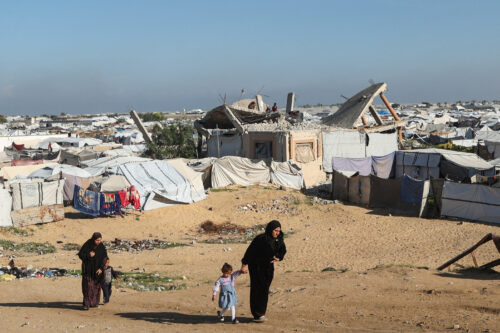
    Brian sits down with MEI Senior Fellow Jaser AbuMousa to assess the situation on the ground in Gaza three years after October 7 and a year into the ceasefire. Drawing on his own personal experience, Jaser explores the toll that the war and continued destruction have taken on Gaza’s residents, the implications of the recent Israeli and US elections, and the difficult path forward.

    Turkey and the Nuclear Threshold
  • Policy Memo
  • Turkey and the Nuclear Threshold

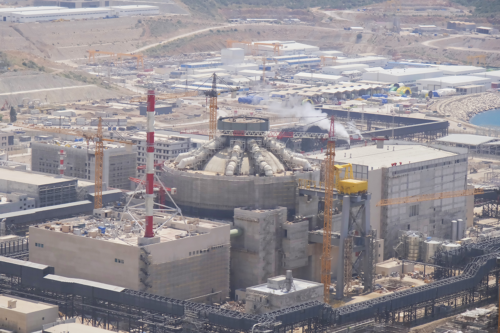
    As a result of the Iran war, Turkish thinking about nuclear weapons appears to be shifting. Iran’s emergent ability to threaten regional states (and possible determination to acquire a nuclear weapon itself), growing concern about Israeli aggressiveness, doubts about US security guarantees, and greater Saudi nuclear autonomy are all pushing Ankara to consider a future nuclear option.

    Eastern Mediterranean Gas
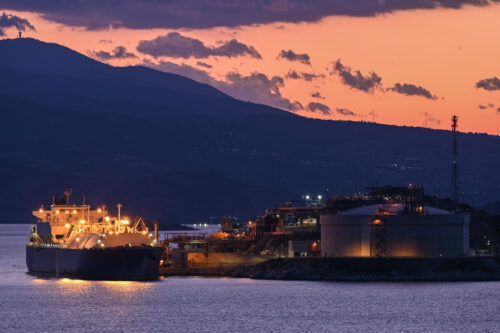
    LNG tanker unloading at Revithoussa Terminal near Athens on May 2, 2026. Photo by Nicolas Koutsokostas/NurPhoto via Getty Images.
  • Backgrounder
  • Eastern Mediterranean Gas

    In less than two decades, a string of offshore discoveries has turned the Eastern Mediterranean into a significant gas-producing region, making Israel an exporter, twice lifting Egypt into the ranks of liquefied natural gas (LNG) exporters, and giving Cyprus finds it has yet to bring to market. This backgrounder explores the potential and challenges of exploiting and managing LNG resources in the region.

    October 15, 2026

    Deadlock in Gaza and the West Bank at a Breaking Point
  • Podcast
  • Deadlock in Gaza and the West Bank at a Breaking Point

    A year after world leaders gathered in Sharm el-Sheikh to mark the end of the war in Gaza, Israel controls about 70% of the Strip, Hamas retains its arms, and reconstruction has yet to begin. Meanwhile, in the West Bank, record settler violence and settlement expansion are colliding with a Palestinian Authority on the brink of fiscal collapse. Hosts Alistair Taylor and Matthew Czekaj are joined by MEI Associate Fellow Tahani Mustafa to discuss why the Gaza peace plan is deadlocked, an increasingly emboldened Israel in the West Bank, Mahmoud Abbas’s postponement of Palestinian elections, the Palestinian Authority’s deepening economic crisis, and what role the US could play.

    October 15, 2026

    Israel’s E-1 Settlement Tender
  • Policy Memo
  • Israel’s E-1 Settlement Tender

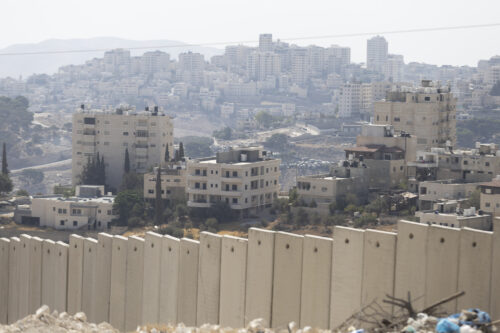
    The Israeli government’s plan to build 3,401 housing units in the 12-square-kilometer E-1 corridor, between Jerusalem’s municipal boundary and the Israeli settlement of Ma’ale Adumim, would cut the West Bank in two. Israeli officials are under no illusion about the implications. Announcing the plan’s approval in August 2025, Finance Minister Bezalel Smotrich called it a “significant step that practically erases the two-state delusion.”

    The Americans Are Gone. Will Iraq’s Militias Disarm?
  • Podcast
  • The Americans Are Gone. Will Iraq’s Militias Disarm?

    On September 30, the US completed its military withdrawal from Iraq, ending a 12-year-long mission to combat ISIS that began in 2014. The date was also meant to be the deadline for disarming the largely Iranian-backed militias known as the Popular Mobilization Forces (PMF), but Prime Minister Ali al-Zaidi has now pushed that cutoff back to June 30, 2027. MEI Distinguished Diplomatic Fellow Amb. (ret.) Robert S. Ford joins hosts Alistair Taylor and Matthew Czekaj to discuss what the US military withdrawal means for Iraqi security and the nature of the bilateral relationship going forward. They also speak about what it will take for Baghdad to bring the PMF militias to heel, and how Iraq may navigate the post-Iran war era.

    October 8, 2026

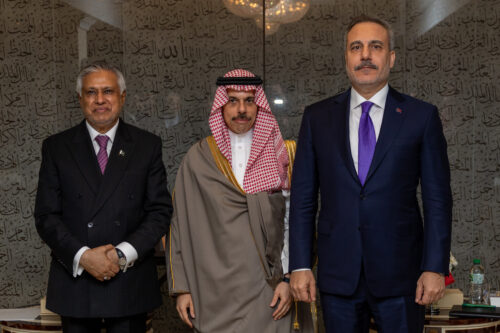
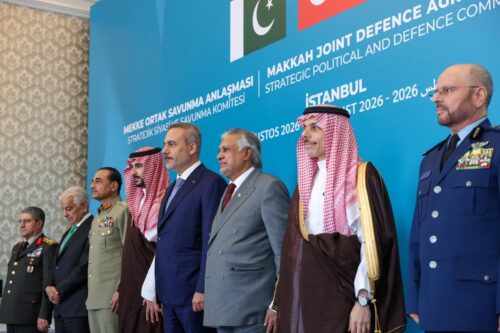
    The Mecca Joint Défense Agreement: A New Geometry of Middle Eastern Power?
  • Analysis
  • The Mecca Joint Défense Agreement: A New Geometry of Middle Eastern Power?

    On August 7, 2026, Saudi Arabia, Turkey, and Pakistan signed the Mecca Joint Défense Agreement, a collective-defense pact widely compared to NATO’s Article 5. This essay argues that the comparison is misleading. Mecca borrows NATO’s language of solidarity without yet possessing NATO’s institutional machinery, and the Houthi offensive against Saudi Arabia in September 2026 provided an early and revealing test of what the agreement actually means in practice. Neither Pakistan nor Turkey automatically entered the fight on Saudi Arabia’s behalf, and Washington, despite an initial reluctance to strike directly, remained indispensable through intelligence support and a major proposed F-35 sale. Drawing on realist alliance theory — Hans Morgenthau, Kenneth Waltz, Stephen Walt, Glenn Snyder, and Steven David — and on the precedent of the Central Treaty Organization (CENTO), the essay contends that the Middle East is not dividing into rival blocs but moving from hierarchy toward a looser, overlapping geometry of hedged partnerships, in which American exclusivity is eroding considerably faster than American primacy.


    The Mecca Alliance Meets the Red Sea – Saudi Arabia’s New Defense Pact Faces Its First Major Test
  • Commentary
  • The Mecca Alliance Meets the Red Sea – Saudi Arabia’s New Defense Pact Faces Its First Major Test

    When Saudi Arabia, Turkey and Pakistan agreed to a mutual defense pact in August, it was principally seen as a political commitment. The “Mecca alliance,” as it was dubbed, stipulated that an armed attack on one would be treated as an attack on all three, accompanied by deeper military cooperation.