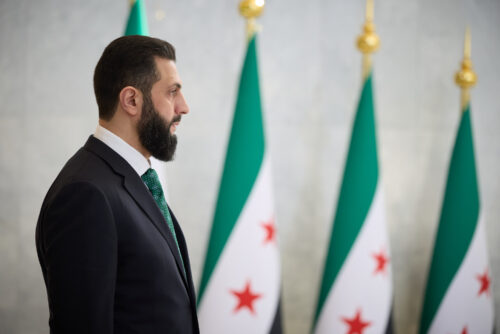
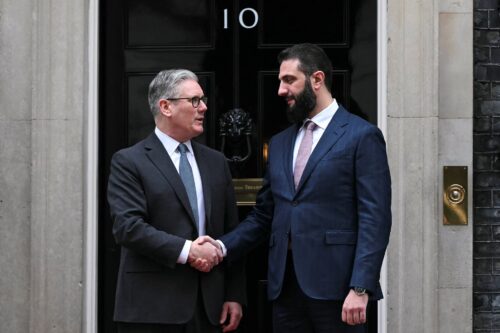
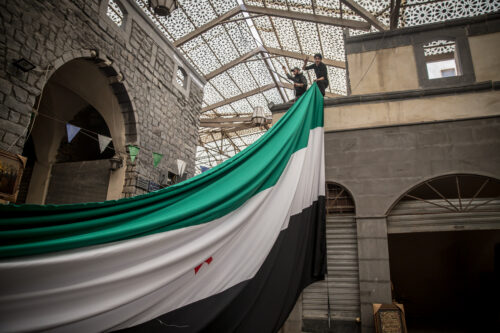
Though it has fallen out of the headlines because of the Iran war, Syria has had a dramatically consequential summer. Hosts Alistair Taylor and Matthew Czekaj are joined by MEI Senior Fellow Charles Lister to take stock of recent developments: the dissolution of the Kurdish-led Syrian Democratic Forces, Israeli strikes and the friction with Turkey they have exposed, the standoff in Sweida, as well as Damascus’s bid to turn Syria into a trade corridor between the Mediterranean and the Gulf. Is the transition consolidating or fragmenting nearly two years after the fall of the Assad regime?
Reflections on a Diplomatic Career in the Middle East: A Conversation With Ambassador Yael Lempert
Brian is joined by Amb. (ret.) Yael Lempert, Vice President for Outreach at MEI, to discuss her career in diplomacy and the importance of US diplomatic efforts abroad. She shares stories from postings across the Middle East in Baghdad, Cairo, Tripoli, Jerusalem, and Amman and examines how her personal and professional experiences shaped her approach to the work. Together, Brian and Yael discuss the realities of life in the Foreign Service, the core tenets of American diplomacy, and why it matters in today’s Middle East.
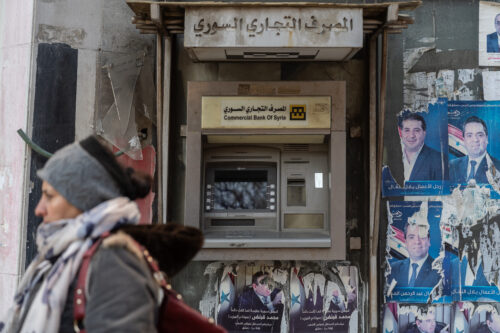
With sanctions repealed, Syrian policymakers must ensure that growing volumes of credit reach beyond the narrow political and commercial networks that have generally dominated Syrian finance. That will require a credit strategy aimed at sectors and regions historically excluded from formal finance. Syria’s specialized state banks offer an imperfect but ready-made mechanism to do so.
In many ways, the U.S.-Israeli war against Iran and the war in Gaza that preceded it seem transformative. After decades of shadow warfare, Iran and Israel have now attacked each other’s homelands directly. And Israel and the United States have joined forces in a genuinely novel way to wage war against Iran.
This summer, brutally hot temperatures, deepening water scarcity, and spiking fertilizer costs have put North Africa’s agricultural sector under intense pressure. Host Alistair Taylor is joined by Mohammed Mahmoud, CEO and founder of the Climate and Water Initiative and lead for Middle East Climate and Water Policy at the United Nations University Institute for Water, Environment, and Health, to unpack the region’s food and water security challenges. Drawing on Mahmoud’s new report card on agricultural sustainability in North Africa, they explore the diverging picture across the region, why some countries have weathered the strain better than others, and what it will take to build a more resilient and secure food system.
US President Donald Trump recently proposed that Syria intervene militarily against Hizballah in Lebanon. Is that a good idea? This episode of Middle East Focus features a recent MEI Virtual Briefing. Director of Communications Zeina Al-Shaib is joined by Ambassador David Hale, MEI Distinguished Diplomatic Fellow and Charles Lister, MEI Senior Fellow. Together they examine the prospects and implications of renewed Syrian involvement in Lebanon, the potential impact on US relations with both countries, and how evolving dynamics in Lebanon and Syria could reshape the regional balance of power and affect countries such as Turkey and Israel.
ISIS appears to have collapsed in Syria in the wake of the SDF’s military defeat and subsequent integration, followed by the withdrawal of US troops. To the extent that the US prioritizes the group’s enduring defeat in the country, a relationship centered in Damascus is the best way to achieve it.
After over a decade of division between rival factions in eastern and western Libya, the Trump administration has put forward a plan to unite the two sides through a power-sharing agreement. Hosts Alistair Taylor and Matthew Czekaj are joined by MEI Distinguished Diplomatic Fellow Jonathan M. Winer to unpack the details of this proposal and its potential consequences for the Libyan people. Winer, who served as United States Special Envoy for Libya, offers analysis of the plan’s viability, the response of various actors on the ground, and whether it can stabilize the country and help resolve its deep-seated challenges.
Syria’s New Investment Law and the Return of State-Mediated Market Access
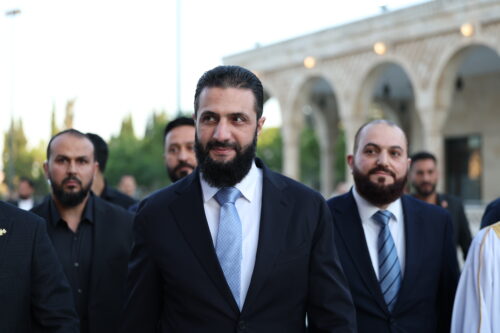
As Syria moves toward reconstruction, the country’s new authorities have already made a consequential decision about who will control the postwar economy. Last June, President Ahmed al-Sharaa enacted Investment Law 114 by presidential decree, granting sweeping and permanent concessions to investors. Yet rather than make those incentives broadly accessible, the law preserves the country’s longstanding model of state-mediated market access.
How Israel-Backed Sweida Became Syria’s Narcotics Capital
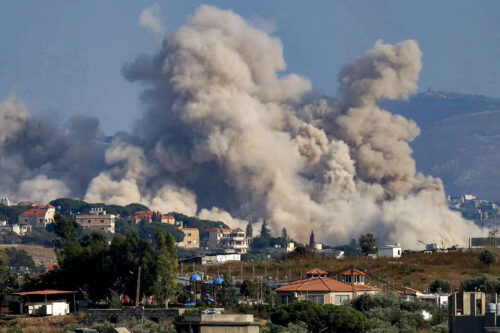
In the early hours of Sunday, May 3, Jordanian F-16 fighter jets crossed into Syrian airspace and launched strikes on at least six locations in the southern province of Sweida. In a statement issued hours later, Jordan’s military said that “Operation Jordanian Deterrence” had targeted “factories, facilities and warehouses used by trafficking groups as launch points for smuggling operations into Jordan.”
US-Iran War Gives Syria’s Global Economic Pitch More Urgency
When the United States and Israel launched military operations against Iran a month ago, the Middle East was plunged into debilitating conflict. Nevertheless, Syria has remarkably just completed its most stable month in 15 years. Damascus and its international partners must capitalize on this opportunity.
Libya’s Fragile Equilibrium: Succession Risk and Energy Stability
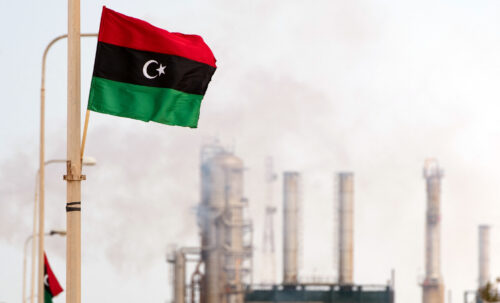
Libya’s stability has taken on renewed strategic importance as the impact of the US and Israeli war with Iran reverberates through global energy markets. Sustaining existing Libyan oil production depends on a governing arrangement capable of keeping ports open, pipelines flowing, and revenues distributed without triggering conflict.
After the Iran War: What Is America’s Long Game in the Middle East?
Brian is joined by Dana Stroul, Director of Research and Shelly and Michael Kassen Senior Fellow at the Washington Institute for Near East Policy, to examine US objectives in the Middle East in the midst of the ongoing war between the US, Israel, and Iran. Drawing on her extensive experience in US policymaking, most notably as the Pentagon’s top civilian official responsible for the Middle East from 2021 to 2023, Dana offers an insider’s perspective on this strategic moment. Together, Dana and Brian unpack the rapidly developing situation in Iran, the fragility of the ceasefires in Gaza and Lebanon, the shifting landscape in Syria after Assad, and the United States’ role in a region that may be on the cusp of transformation.
Syria’s Path Toward Stabilization — and How the US Can Help
After more than 50 years of brutal dictatorial rule and 13 years of civil conflict, the first year of Syria’s transition has been complex, imperfect, and fraught with difficulties. However, despite some significant challenges, Syria is clearly stabilizing. To sustain this progress, the United States must remain engaged.