From the Middle East to West Asia: Redefining America’s Global Strategy
MEI Senior Fellow Mohammed Soliman joins hosts Alistair Taylor and Matthew Czekaj to discuss his new book, West Asia: A New American Grand Strategy in the Middle East. The book argues that it is time for the United States to move decisively away from nation-building and focus instead on order-building, outlining a framework for a new regional order that links Europe to the Indo-Pacific. Soliman also shares how he conceived of the core ideas behind his book and explains why his thesis is especially relevant in today’s geopolitical, economic, and technological landscape.
Special Feature: A Front-Row Seat to Saudi Arabia’s Transformation
In this episode, Brian sits down with Faisal Abbas, editor-in-chief of Arab News. Abbas, who reported on Saudi Crown Prince Mohammed bin Salman’s November 18 visit to the White House, unpacks his impressions from the visit and the opportunities it presents for US-Saudi relations. The conversation also explores the Kingdom’s transformation over the past decade, its relationships with key partners including the United States, and Abbas’s recommendations for deepening the US-Saudi partnership going forward.
Digital frontlines: What the 12-day war revealed about the evolution of Iran’s cyber strategy
During June’s Israel-Iran war, a quieter but significant battle played out in cyberspace, highlighting how Tehran has refined its use of digital tools to shape the battlespace, control domestic narratives, and project influence abroad. While largely ineffective in operational terms, Iran’s cyber response marked a new phase in its strategic evolution.
Saudi Arabia’s AI ambition, and what it means for the United States
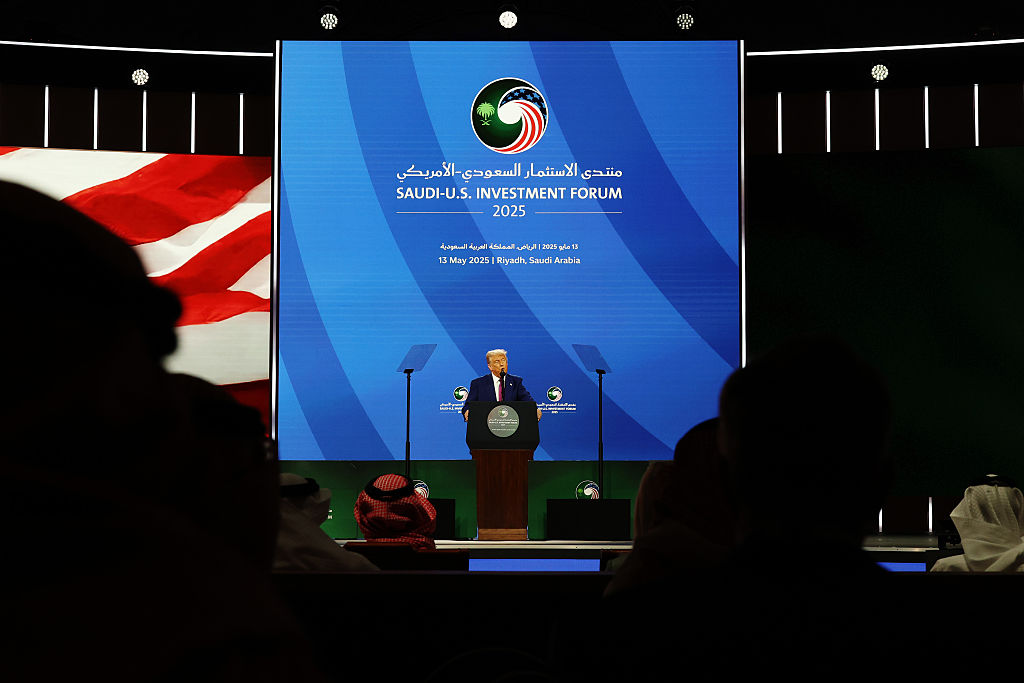
A day before Air Force One touched down in Riyadh to kick off US President Donald Trump’s three-country tour of the Gulf, Saudi Arabia made a pivotal announcement. The kingdom, long synonymous with oil, revealed a major investment in artificial intelligence (AI) through its newly launched company, HumAIn. This pivot, explicitly timed to coincide with Trump’s visit starting on May 13, and in anticipation of the signing of multiple tech deals between US and Gulf firms during the trip, signaled a profound shift in US-Saudi relations — from a traditional oil-for-security alliance to a partnership centered on AI and digital infrastructure.
Hosts Alistair Taylor and Matthew Czekaj speak with MEI Senior Fellow Mohammed Soliman about President Donald Trump’s recent trip to Saudi Arabia, the UAE, and Qatar, which yielded a wave of major US-Gulf tech and AI deals. Soliman explains how these partnerships mark a shift in the relationship—from oil and arms to compute power and data infrastructure—and what it means for the Gulf’s strategic role in the global AI ecosystem.
As Saudi Arabia accelerates its transformation into a global technology powerhouse, the United States has a pivotal opportunity to redefine its partnership with the kingdom. Moving beyond the traditional oil-for-security framework, a new partnership centered on artificial intelligence and digital infrastructure can anchor US-Saudi relations in the 21st century.
Sheikh Tahnoon in Washington: UAE-US relations reimagined for the 21st century with technology at the core
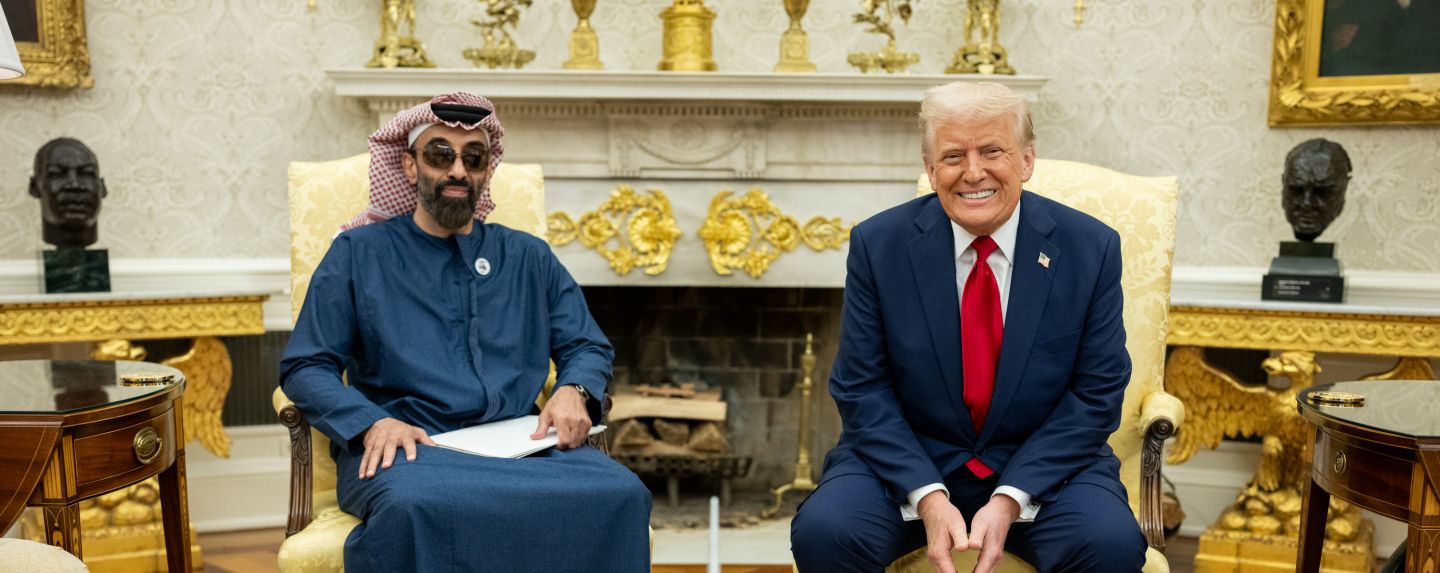
Sheikh Tahnoon bin Zayed, the United Arab Emirates’ national security adviser and a central figure in its tech and security landscape, visited Washington for high-level engagement with President Donald Trump’s team late last month, signaling a transformative shift in UAE-US relations.
Roadmap for America’s Leadership in AI Action Plan
In response to the request for information (RFI) from the National Science Foundation (NSF) and the Office of Science and Technology Policy (OSTP) regarding the “Development of an Artificial Intelligence Action Plan” in support of the objectives set forth in Executive Order (EO) 14179, the Middle East Institute (MEI) offers five recommendations to solidify the United States’ position as the global leader in AI innovation while addressing critical ethical, regulatory, and infrastructural imperatives.
For decades, the MENA region’s pivotal role in the global economy has been rooted primarily in oil and gas exports. The region’s GDP grew from $1 trillion USD in 2000 to nearly $4.5 trillion in 2022, and more than 60% of that combined GDP is in its oil-exporting countries.
To counter China, Trump’s administration should build on Biden AI memo
Across both the Biden and Trump administrations, the US has consistently viewed China as the primary global rival, particularly in the fast-evolving field of artificial intelligence. President Biden’s administration recently underscored this stance with the first-ever National Security Memorandum (NSM) on AI, which set a firm foundation for addressing the AI challenge posed by Beijing.
The Role of the Middle East in the US-China Race to AI Supremacy
AI is a pivotal catalyst for global innovation, with the United States at the forefront of the development of this transformative technology amid its ongoing great power rivalry with China. This report aims to define the concept of AI supremacy and to revise the US’ AI strategy in accordance with a more comprehensive understanding of it. The report also looks at how the competition has affected actors from the Middle East, namely the UAE and Saudi Arabia, attempting to steer the conversation on the global AI race toward a comprehensive conception of AI supremacy that is anchored in the realities of international affairs and US-China great power competition.
Beyond oil: Google’s big bet on Saudi Arabia’s AI future
In a landmark move signaling the growing importance of the Middle East in the global tech landscape, Google has entered into a strategic partnership with Saudi Arabia’s Public Investment Fund (PIF), the kingdom’s sovereign wealth fund. The partnership underscores the “growing interlink” between AI and energy, as Saudi Arabia — along with the United Arab Emirates and other Gulf states — uses its energy surplus to power data centers, a critical pillar of AI infrastructure.