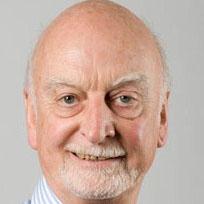
Dr. Tim Niblock is Emeritus Professor of Middle East Politics, University of Exeter, United Kingdom. From 1999 to 2008, he was Professor of Arab Gulf Studies, University of Exeter. He also served as Director of the Institute for Arab and Islamic Studies at Exeter (1999-2005). Before that, he was Professor of Middle Eastern Studies and Director of the Centre for Middle Eastern and Islamic Studies at the University of Durham (1993-99). His research interests include the political economy of Arab and Islamic states, with specific attention on the social and political effects of economic liberalization; and the role of Islam in the role of religion in state-building and state-resisting, with particular reference to the Middle East. His initial research and publications on the Gulf and Asia initially focused on the Gulf and China but more recently has encompassed Gulf relations with Asia as a whole. Two articles on this topic have already been published: “China’s Growing Involvement in the Gulf”, and “China’s Intensifying Relationship with Saudi Arabia” (with Norafidah Ismail), in Shen, S, and Blanchard, J-M, Multidimensional Diplomacy of Contemporary China (New York: Lexington Books, 2010).
Situating the GCC in China's Transforming Roles in Asia
China is a major economic partner of the GCC countries. This essay discusses the size and scope of this economic relationship, and considers how these ties might evolve as China’s ambitious One Belt One Road (OBOR) and Maritime Silk Road (MRS) initiatives take shape.
Asia-Gulf Economic Relations in the 21st Century: The Local to Global Transformation
Asia constitutes the hub of the transformation of global economic power today. The Gulf, itself part of Asia, is of increasing importance in this transformation. This book documents the growing interactions between the economies of the Gulf states and those of the rest of Asia. These relationships are critical to how the world economy develops over the next decade, and how economic (and perhaps strategic) power is distributed.