Skip to Content

Robert R. Bianchi

Robert R. Bianchi

Robert R. Bianchi is a political scientist, an international lawyer, and an authority on the Islamic world and China. He earned his doctorate and law degrees at the University of Chicago where he later joined the faculties of the Political Science Department and the Law School.

He has also held professorships at the University of Pennsylvania, the American University in Cairo, Qatar University, the Johns-Hopkins Nanjing Center, the National University of Singapore, and the Shanghai International Studies University. He founded new graduate programs for International Political Economy in Egypt and for International Law in China. In Singapore, he helped launch a research institute for Middle East studies and, in Chicago, he taught the Law School’s first courses on international law dealing with the contemporary Islamic world and China. As a practicing attorney and political consultant, he has advised the World Bank, numerous U.S. government agencies, and several foreign governments.

Bianchi is a former Peace Corps volunteer, a three-time Fulbright grantee, and a recipient of the Albert Hourani Book Prize for Guests of God: Pilgrimage and Politics in the Islamic World (Oxford University Press, 2004). His most recent book is China and the Islamic World: How the New Silk Road is Transforming Global Politics (Oxford University Press, 2019). His other books include Islamic Globalization: Pilgrimage, Capitalism, Democracy, and Diplomacy (World Scientific Publishers, 2013), Unruly Corporatism: Associational Life in Twentieth-Century Egypt (Oxford University Press, 1989), and Interest Groups and Political Development in Turkey (Princeton University Press, 1984). Several of Bianchi’s books and essays have been published in foreign languages including Arabic, Persian, Chinese, Turkish, and French.
 

Websites:

https://beyazomar.com

https://chicago.academia.edu/robertbianchi

The Latest from Robert R. Bianchi

Filter by
3 Results
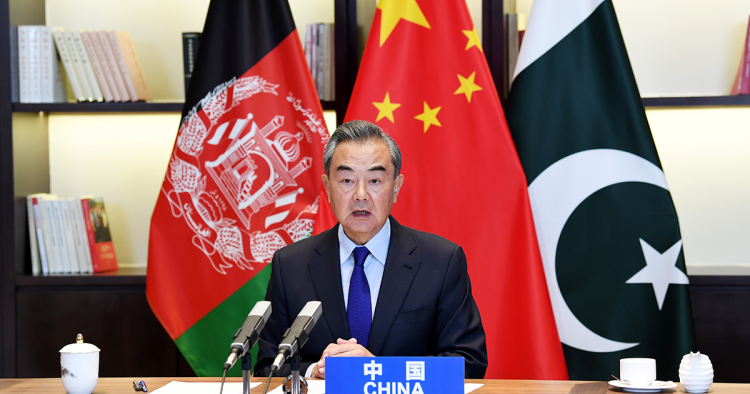
China-US rivalries after the Afghan war
Photo by Yang Wenbin/Xinhua via Getty Images.
  • Analysis
  • China-US rivalries after the Afghan war

    As the Great Game between the United States and China unfolds on a global scale, American and Chinese leaders have to make a choice — will they clash more openly in a struggle to dominate Afghanistan and its neighboring regions or will they rein in their ambitions and jealousies to accomplish goals that benefit themselves and many others?

    August 24, 2021

    China, Islam, and New Visions of the Old World
  • Analysis
  • China, Islam, and New Visions of the Old World

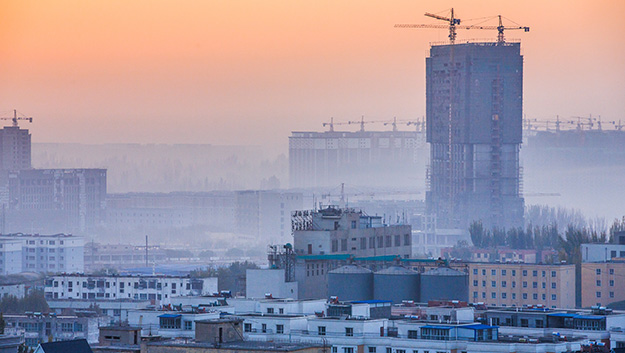
    China is steadily reshaping the world’s political and economic landscape by connecting Europe and the Pacific through a series of transcontinental and transoceanic networks that will run across the major Islamic countries of Asia and Africa. The slogan that Beijing uses to promote these projects—“One Belt, One Road”—is a shorthand reference to the Silk Road Economic Belt (the overland routes through Central Asia and the Middle East) and the Maritime Silk Road (the sea lanes joining the Pacific and Indian Oceans with the Mediterranean). In fact, even these grandiose labels understate the true magnitude of China’s ambitions; the total number of planned mega-networks is not two, but seven—and still counting.

    March 3, 2015

    Beijing Hosts Simultaneous Visits of Mahmoud Abbas and Benjamin Netanyahu: What, if Any, Significance?
    Middle East Institute
  • Analysis
  • Beijing Hosts Simultaneous Visits of Mahmoud Abbas and Benjamin Netanyahu: What, if Any, Significance?

    DR. ROBERT BIANCHI INTERVIEWED

    In The Guardian, May 8, 2013

    “China welcomes Binyamin Netanyahu—Visits from Israeli prime minister and president prompt speculation about China’s possible role as a Middle East mediator.”

    Interview with Tania Branigan on the simultaneous visits to China of Binyamin Netanyahu and Muhammad Abbas to China


    On China Radio International, May 8, 2013

    May 12, 2013