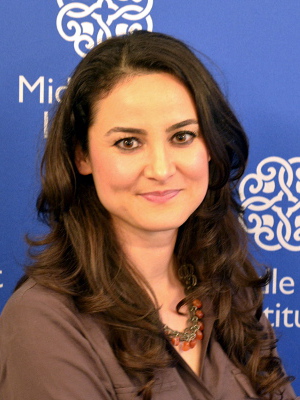
Gönül Tol is a senior fellow at the Middle East Institute (MEI), where she focuses on Turkish politics, US-Turkey relations and regional dynamics in the Middle East.
A frequent commentator, Dr. Tol has written extensively on Turkish domestic and foreign policy for publications such as Foreign Affairs, The New York Times, Foreign Policy, and The Financial Times. Her articles include “Turkey Is Now a Full-Blown Autocracy” in Foreign Affairs (March 2025), “The Indispensable Erdogan” in The New York Times and “Erdogan Sees Nothing But Opportunity in Syria” in The Financial Times (December 2024).
She is the author of Erdogan’s War: A Strongman’s Struggle at Home and in Syria (Oxford University Press, 2023).
She holds a PhD and MA from Florida International University, and a BA from Middle East Technical University.
She is a native Turkish speaker.
The Latest from Gönül Tol
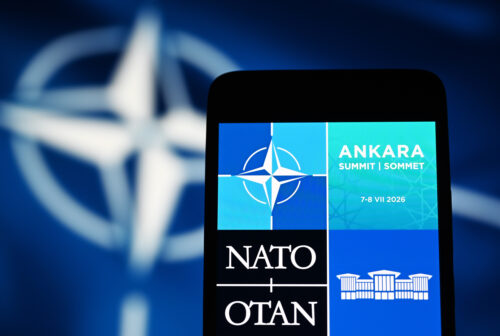
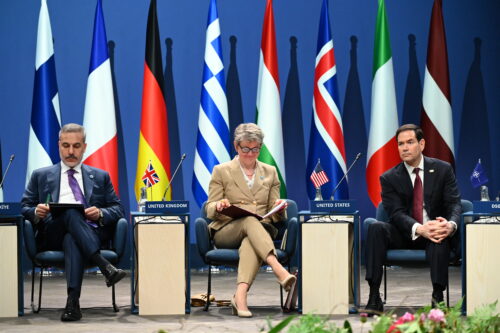

Can Turkey’s Opposition Fight Back?
A Turkish court has taken a dramatic step that could reshape the country’s political landscape. It annulled the results of the CHP’s 2023 party congress, effectively overturning the election of Özgür Özel as leader of Turkey’s main opposition party and potentially paving the way for former chairman Kemal Kılıçdaroğlu to return.
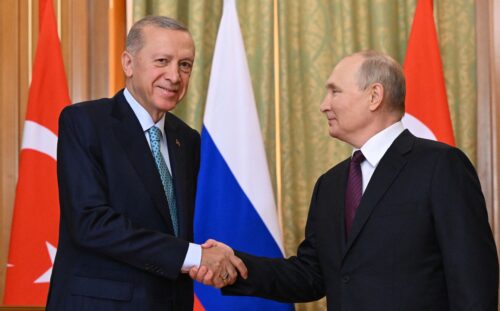
Erdogan and Putin, the End of an Unlikely Partnership
Can Hamas Be Disarmed?

Middle Eastern Rivalry in the Horn of Africa
How is competition for influence in the Horn of Africa among Middle Eastern powers — especially the UAE, Saudi Arabia, Turkey, and Israel — reshaping the political landscape? Hosts Alistair Taylor and Matthew Czekaj are joined by MEI Senior Fellows Mirette Mabrouk and Gönül Tol to unpack the dynamics driving this rivalry and its implications for conflicts and alliances across the region.
Will the PKK Really Disarm?
In 2025, jailed PKK leader Abdullah Öcalan made a historic call for the group to disarm and dissolve, raising hopes of ending a 40-year conflict that has shaped Turkey and the wider region. Months later, the PKK symbolically laid down arms in what many viewed as a breakthrough moment for the peace process.
Can Syria Hold Together?
Syria is in the midst of a fragile transition. Many observers see positive momentum, with new humanitarian initiatives underway and fresh funding beginning to flow. But the risks remain serious: regional spillover, deep humanitarian needs, funding shortfalls, Israeli strikes, sectarian tensions, stalled political tracks, and continued reports of abuses by multiple actors.
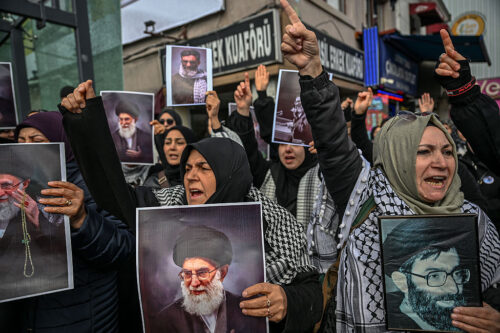
Turkey Sees Short-Term Pain, Long-Term Gain in the Iran War
The Iran war has posed significant immediate challenges for Turkey, including rising energy prices. But Turkish officials think that Ankara could reap benefits from the war in the long term.
Nazanin Boniadi: How the World Can Help Iran’s Democratic Struggle
Lebanon at the Brink: War, Hizballah, and the Fate of Democracy
Israel’s escalating campaign against Iran-backed Hezbollah is rapidly turning Lebanon into one of the most unstable fronts in the wider US-Israel confrontation with Iran — pushing an already fragile state to the brink. The war is tearing at Lebanon’s sectarian and political fabric, displacing Shiite communities and deepening polarization between Hezbollah and its rivals.
The Kurdish Card: Can Iranian Kurds Shape the War’s Endgame?
Can Turkey Stay Out of the Iran War?
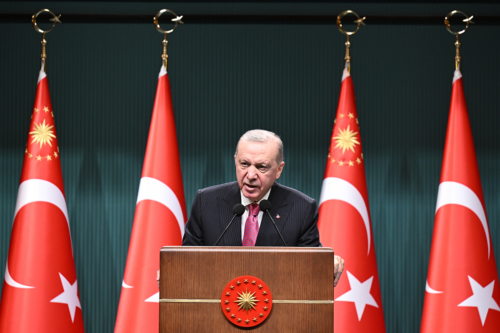
Turkey caught in the vortex of a widening Iran war
After months of trying to head off a US-Israeli war with Iran, Turkey now finds itself caught in the middle of it — and deeply concerned that a prolonged, regionalized conflict could pose serious security, economic, and political risks.