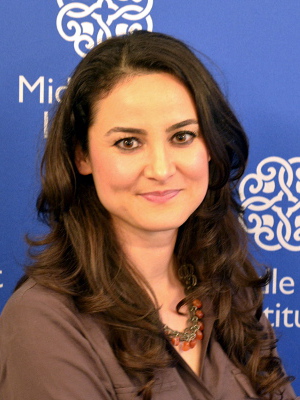
Gönül Tol is a senior fellow at the Middle East Institute (MEI), where she focuses on Turkish politics, US-Turkey relations and regional dynamics in the Middle East.
A frequent commentator, Dr. Tol has written extensively on Turkish domestic and foreign policy for publications such as Foreign Affairs, The New York Times, Foreign Policy, and TheFinancial Times. Her articles include “Turkey Is Now a Full-Blown Autocracy” in Foreign Affairs (March 2025), “The Indispensable Erdogan” in The New York Times and “Erdogan Sees Nothing But Opportunity in Syria” in TheFinancial Times (December 2024).
Is Turkey the New Iran — Or Is that the Wrong Question?
The balance of power in the Middle East is shifting. Iran is on the defensive — its military capabilities were badly degraded by last year’s 12 days of Israeli and US strikes, and growing protests at home have made the regime look more vulnerable than it has in years.
Ankara’s double win: Kurds, Israel, and the new Syria
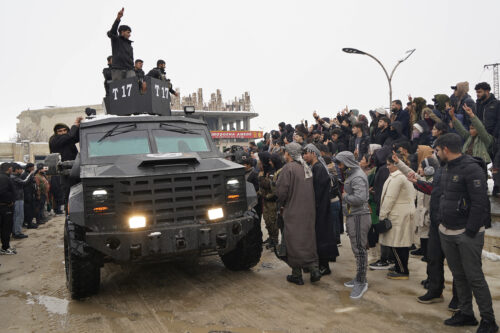
Whether the truce between Damascus and the Kurdish-led Syrian Democratic Forces holds or collapses will have major implications for neighboring Turkey, which has long-standing interests in Syria, but recent developments already point to a win for Ankara.
What Ankara sees in Riyadh — and why it still needs Abu Dhabi
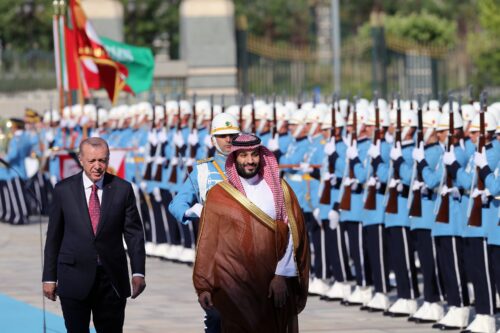
As the rivalry between Riyadh and Abu Dhabi sharpens in Yemen and beyond, Turkey has begun edging closer to Saudi Arabia, sparking claims that a new regional order is taking shape: a Turkey-Saudi axis backed by a NATO-like defense architecture, implicitly aligned against Israel and the United Arab Emirates. This reading overstates the case.
Iran is facing the largest demonstrations since 2022, when the death of Mahsa Amini in police custody ignited a nationwide uprising. This time, the unrest comes as the Islamic Republic is unusually exposed—still reeling from a bruising 12-day war with Israel last summer. What does this moment mean for the regime’s survival? How is this wave of protests different from those that came before? And is there anything the outside world can do to support Iran’s pro-democracy movement without backfiring?
Unfinished business will drive the Mideast agenda in 2026
Following another year of pivotal developments and transformational change, the Middle East could be poised to turn the page on many of its long-running conflicts and sources of instability. But lasting fruits of the processes begun in 2025 will require a determined, intentional focus by regional actors and the United States. Given current trends, MEI experts weigh in on where the region may be headed in 2026.
From Ballots to Bargains: The Struggle for Iraqi Democracy
Iraqis have just gone to the polls in a pivotal parliamentary election that could redefine the country’s political trajectory. What do the results tell us about the state of Iraqi democracy? What happens next? And is there still space for meaningful democratic reform?
In this episode of Middle East Focus, hosts Alistair Taylor and Matthew Czekaj are joined by MEI Senior Fellow Gönül Tol to discuss democratic backsliding in Turkey under President Recep Tayyip Erdoğan.
In September, just days after tens of thousands of Turks had poured into the streets to protest President Recep Tayyip Erdogan’s latest crackdown on his political opponents and a fal
From Protest to War: How October 7 Reshaped Israeli Democracy
For years, Israeli populist politicians have chipped away at the country’s democratic guardrails. But the Hamas attacks of October 7, 2023 accelerated Prime Minister Benjamin Netanyahu’s drive to consolidate power. The kind of societal pushback that once blocked his efforts to expand executive authority is now under severe strain. Israel’s multi-front conflict with Iran, Hamas, and other Iranian proxies has blunted protest movements and sidelined those who once filled the streets in defense of democracy. Defending checks and balances has been eclipsed by wartime priorities.
The US Role in Democracy Promotion: Continuity or Collapse?
For much of the past eighty years, the United States has seen itself — and often acted — as a global champion of democracy. Through the power of example, and through its diplomacy, security alliances, and aid programs, Washington has sought to strengthen democratic institutions and push back against authoritarianism.
The record, of course, has never been perfect. The US has at times backed autocratic leaders in pursuit of strategic or economic gain. But overall, it has been a net force for democracy worldwide.
Once hailed as a rare democracy in the Middle East, Lebanon has now slipped into the ranks of closed autocracies. Decades of corruption, sectarian rule, and foreign meddling have left the country reeling — and the past year brought assassinations, mass displacement, and Israel’s full-scale war against Hezbollah in the south. With its economy in free fall and its political system on life support, Lebanon stands at a crossroads: could shifts in regional power, efforts to disarm Hezbollah, and a change in leadership pave the way for recovery, or will instability deepen?
Markets, Mayors, and Crackdowns: Erdoğan’s High-Stakes Gamble
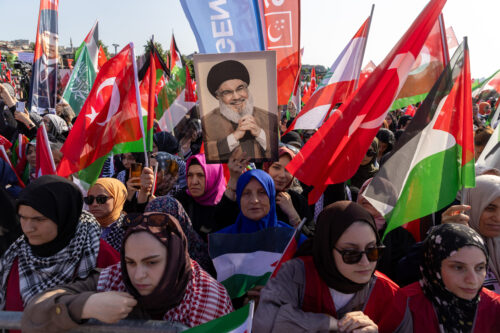
Turkey’s main opposition, the CHP, is facing its toughest test yet: mass arrests, sham court rulings, and the ouster of key leaders—including Istanbul’s mayor Ekrem İmamoğlu, Erdoğan’s chief rival. With trials looming that could replace CHP leadership with government loyalists, the party warns of a legal ‘coup.’ What does this crackdown mean for Turkey’s fragile economy, its 2028 elections, and the future of democracy itself?
When Syrian dictator Bashar al-Assad was toppled late last year, it looked like a golden opportunity for Turkish President Recep Tayyip Erdogan. For more than a decade, the war next door had burdened Ankara with problems that it could not fix: millions of Syrian refugees straining domestic politics, U.S.-backed Kurdish militias entrenching along Turkey’s border, and a battlefield dominated by Russian and Iranian influence that left Ankara exposed to Moscow’s and Tehran’s whims.
Iran at a Crossroads: War, Survival, and the Future of the Islamic Republic
Gönül Tol speaks with Dr. Vali Nasr, one of the world’s leading experts on the Middle East, to unpack the aftermath of the 12-Day War. Together, they examine the war’s domestic and regional fallout, the resilience of Iran’s regime under fire, and the shifting public sentiment that may shape the country’s political future. Does survival alone count as success for Tehran? And what becomes of protest movements and democratic aspirations when a nation is consumed by existential external threats?