A Strategic Conundrum: Pakistan’s Transit Corridor to Iran as Lifeline or Liability
June 17, 2026
Share
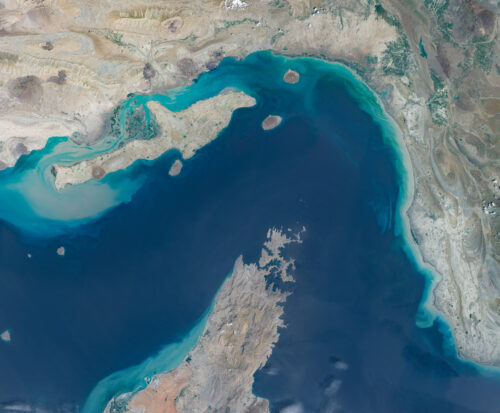
The US-Iran standoff over the Strait of Hormuz — disruptive to global trade and energy flows, and devastating for debt-burdened economies — has handed Pakistan an unexpected geoeconomic opportunity, one that may persist even if the framework agreement announced on June 14 results in a lasting peace and permanent reopening of the strait. But seizing it will have interlocking consequences for Islamabad’s ties with Tehran, Washington, and the Gulf states.
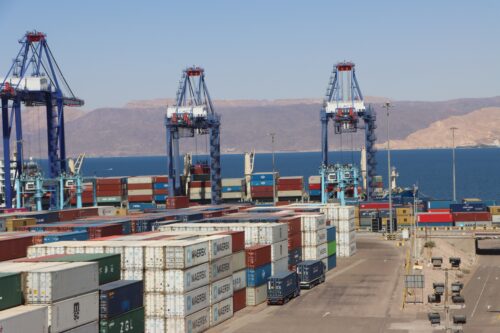
The Iranian closure of the Strait of Hormuz amid the war with the US and Israel and the subsequent US blockade of Iranian ports thrust Pakistan’s long-underutilized geostrategic location into the spotlight. With over 1,000 km of coastline along the Arabian Sea, Pakistan sits at the crossroads of critical sea lanes, energy corridors, and regional markets. In response to the crisis, the country moved swiftly to position itself as an alternative hub, offering its ports for transshipment and transit to international vessels rerouting away from disrupted Gulf terminals, while simultaneously formalizing overland corridors to Iran for cargo unable to move through maritime routes.
Though the recent US-Iran deal has eased immediate tensions and Iranian vessels have reportedly resumed passage through the strait, the structural opportunity this crisis revealed is unlikely to recede with it. Pakistani ports have begun securing new transshipment contracts, infrastructure upgrades are underway, and the country’s regulatory environment for transshipment has been permanently liberalized. The crisis, in other words, did not merely create a temporary windfall — it exposed and accelerated a latent potential. Pakistan’s unique dual access — maritime connectivity to Gulf states and a land bridge to Iran — creates an opportunity for Islamabad to position itself as an increasingly consequential player in the evolving regional order.
Reopening a Dormant Corridor
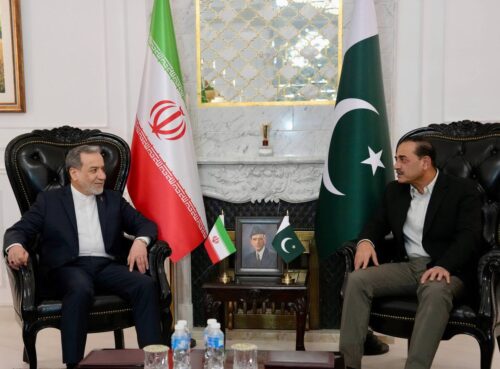
In April, Pakistan allowed thousands of Iran-bound cargo containers to offload at its seaports on the Arabian Sea. To relieve the backlog, Pakistan’s Ministry of Commerce issued a legal directive enabling Iran to import goods from third countries via six Pakistani overland transit routes connecting its seaports to the Iranian border crossing of Gabd-Rimdan through Balochistan. This legal mechanism is not new but rather revives a 2008 bilateral road transport agreement, originally designed from Islamabad’s perspective to gain access to Central Asian countries through Iranian territory but which had been dormant for nearly two decades. The move came directly in the wake of Iranian Foreign Minister Abbas Araghchi’s visit to Islamabad in April, the timing of which left little ambiguity about the urgency with which Tehran needed Islamabad to act. This was not a spontaneous Pakistani initiative but a response to a crisis that had arrived on its doorstep.
What made Pakistan’s offer of relief to Iran particularly consequential was the convergence of timing and circumstances that aligned with Washington’s intensification of its “maximum pressure” campaign through “Operation Economic Fury,” including the imposition of sanctions targeting Iran’s financial networks and a naval blockade of its ports, aimed at forcing Tehran to make a deal. Though the transit routes provided by Pakistan are one-way and Iran-bound according to the issued notification, leaving unaddressed whether Iran could export goods to third countries via Pakistan, the arrangement still technically occupies a legal gray zone. Any facilitation of Iranian trade, including transit, risks being construed by the US Department of the Treasury as “material support” that eases Iran’s economic isolation.
Yet Washington’s decision not to sanction Pakistan for opening these transit routes suggests at a minimum a tacit tolerance, and possibly a quiet strategic calculation, that this arrangement serves broader diplomatic ends. Crucially, this tolerance also bolstered Islamabad’s credibility as a mediator between Tehran and Washington, a role that has yielded tangible results. President Donald Trump has credited Pakistan, naming Prime Minister Shehbaz Sharif and army chief Field Marshal Asim Munir specifically, for diplomacy that advanced negotiations to the highest levels of Iranian leadership, ultimately leading to the announcement of a framework agreement to end the conflict on June 14. Islamabad pursued this diplomacy through direct high-level engagement, including by both Sharif and Munir, with the endorsement of leading Gulf actors like Saudi Arabia. Backed by Washington and key Gulf states, Pakistan required something to secure Iranian confidence; the transit routes provided precisely that — a tangible gesture of goodwill toward Tehran at a moment when Islamabad needed credibility on both sides of the table, while simultaneously advancing its own economic interests.
The Financial Logic of the Corridor
The financial dimension of this arrangement is significant. The International Affairs Department of the Iran Chamber of Commerce, Industries, Mines, and Agriculture (ICCIMA) laid out official cost estimates and customs clearance fees for shipping containers from Pakistani ports to the Iranian border crossings. The operational cost to import a 40-foot container from Karachi to Iran’s Rimdan border — excluding the security deposit — comes to around $3,500-$4,500. For the longer journey from Karachi to Iran’s Taftan border, that rises to $6,000-$7,000. Applied across the approximately 20,000 Iranian containers Pakistan received through May, these per-unit transit costs would translate into an estimated $70 million-$140 million in operational revenue, a significant initial return on Islamabad’s decision to open its corridors to Tehran. These figures must therefore be understood against the alternatives realistically available to Tehran.
Iran did not lack for alternatives entirely. The Caspian Sea remained accessible through Russia, Kazakhstan, and Turkmenistan, and land crossings through Turkey and Armenia also stayed open. But these alternatives share a fundamental limitation: they are geographically confined to Iran’s northern frontier, operationally suited to lower-volume trade, and structurally disconnected from the major global shipping lanes that feed through the Arabian Sea. None of these routes offers what Pakistan does: a formal, regulated corridor with direct Arabian Sea access, capable of handling high-volume civilian cargo arriving from the world’s primary commercial shipping arteries.
With the US Navy having intercepted or seized more than 100 Iranian vessels prior to the announcement of the June framework agreement, the maritime route did not merely cost more than routing through Pakistan; it risked total loss of cargo. Measured against that outcome, Pakistan’s operational fees are not a burden Iran reluctantly absorbed; they represent the cost of economic continuity, and Tehran appeared willing to pay them. Even with the June deal easing hostilities, a full reversion to pre-crisis trade architecture will not happen overnight — supply chains, once rerouted, take time to unwind, and the commercial relationships built through this corridor do not dissolve with a diplomatic agreement. What opened as a crisis management corridor between Iran and Pakistan carries every possibility of being retained as a long-term strategic asset.
Why the Corridor Has Not Yet Delivered
Despite the strategic logic on both sides, the transit route remains far from fully operational, raising the question of whether the delay is a product of deliberate strategic pacing by Pakistan, designed to avoid being seen as too accommodating toward Iran by the US and its allies while still signaling enough goodwill to demonstrate Islamabad’s commitment to help Tehran in its time of need, or is simply a matter of unresolved technical complexities and security issues. The latter explanation appears to be more plausible.
For years, Iran and Pakistan have relied on a complex non-currency barter mechanism for their bilateral trade, a system designed to bypass dollar-based transactions and US sanctions. The delay in full activation of the transit corridors appears to stem from Pakistan’s stringent new customs regulations and unresolved questions about how those costs will be settled. With no functioning banking channel between the two countries, it is unclear how Iran intends to pay Pakistan’s operational fees. Dollar-denominated transactions are effectively foreclosed by sanctions, and the financial architecture of the arrangement, whether settled in Chinese yuan or Pakistani rupees, has not been disclosed by either side.
A further complication lies in the scrutiny and vetting of the large volume of Iran-bound containers. Pakistan amended its barter trade mechanism only last year, tightening oversight of sanctioned entities and confining barter trade with Iran exclusively to non-sanctioned entities. Clearing these cargos requires mandatory inspection, compounding the already considerable workload of port customs authorities and further delaying delivery timelines.
Yet beyond regulatory friction, it is the security situation that poses the most formidable obstacle to the full operationalization of the Pakistani transit route to Iran. The route cuts through Balochistan, Pakistan’s most volatile south-western region, where the separatist Baloch Liberation Army (BLA) has waged a sustained campaign of militant attacks targeting cargo trucks and freight trains bound for Iran. The BLA has repeatedly claimed responsibility for shutting down key highways linking Pakistan to Iran, and since Islamabad announced the opening of its overland transit routes to Tehran, terrorist activities along the route have escalated sharply. On May 24, the group carried out a terrorist attack along a railway track in Quetta, the provincial capital of Balochistan, killing several people, injuring dozens, and derailing a cargo train.
The 559-km railway line between Quetta and Iran’s Taftan border, which serves as the principal artery of commercial activity between the two countries, has consistently faced operational problems due to attacks and deliberate sabotage of vulnerable railway infrastructure, especially in rural areas. Train service on the Pakistani side was suspended most recently on May 10 as a result of terrorist threats. The risks on the ground extend equally to road freight. Standard protocol requires all truck convoys transiting through Balochistan to employ armed security escorts, a requirement that also applies to Iran-bound cargo. Yet even these armed convoys have not proven immune to attack. Drivers operating along the route face persistent assaults on their vehicles and systematic extortion by militant groups. The cumulative toll of this insecurity has become impossible to ignore: the Balochistan Goods Truck Owners Association, responsible for the bulk of cargo haulage across the province, recently announced a significant curtailment of its operations.
Taken together, these compounding regulatory bottlenecks and entrenched security vulnerabilities paint a sobering picture. Pakistan’s much-touted reactivation of its transit corridors to Iran, for all its considerable promise, remains far from delivering the geopolitical and economic breakthrough it ostensibly represents.
From Crisis Response to Strategic Vision: The Geoeconomic Convergence
If these issues are overcome and Iran-bound containers begin moving, this arrangement could become more significant — the operational expression of two converging geoeconomic visions, one Iranian and one Pakistani, that long predate the current conflict. Both Tehran and Islamabad have historically viewed each other’s geostrategic location through an economic lens, and the present crisis has lent that shared understanding its most concrete expression to date. In September 2025, on the sidelines of their 22nd Joint Economic Cooperation Commission meeting, the two countries inked 13 memoranda of understanding (MoU) with the ambitious aim of lifting bilateral trade from $3 billion to $10 billion. During the May 2026 visit of Pakistan’s Interior Minister Mohsin Naqvi to Iran, border trade featured prominently in discussions with his Iranian counterpart, and both sides agreed to ease procedures and boost cross-border activity, including transit and the exchange of goods.
For Iran, the rerouting of its trade through Pakistani corridors is both a wartime adaptation and a concrete manifestation — one of the most significant outside of its Russia and China ties — of its “Look East” policy, a doctrine Tehran has quietly pursued for years, giving Pakistan a central role in its continental integration agenda. The clearest articulation of that doctrine came in August 2025, when Iranian President Masoud Pezeshkian visited Islamabad and signaled a fundamental reframing of the bilateral relationship. His call to transform the two countries’ shared frontier into a “border of prosperity” was a statement of strategic intent as much as a diplomatic aspiration. In Tehran’s vision, Pakistan is not a peripheral neighbor but a pivotal partner, serving as the western anchor of an overland connectivity architecture stretching from Iran through Pakistan into China and Central Asia.
That vision carries a broader regional ambition. For years, Iran has sought integration into the China-Pakistan Economic Corridor — a flagship Belt and Road Initiative project threading $62 billion worth of roads, railways, energy projects, and special economic zones from western China to Pakistan’s port in Gwadar — drawn by the dividends such access would bring. Tehran has already shifted a significant portion of its maritime trade with China to rail links passing through Central Asia. Assessments suggest that a fully activated Iran-Pakistan-China land corridor could generate substantial economic returns, with some estimates placing Pakistan’s potential annual revenue from Iranian trade rerouting through its ports and corridors at around $45 billion.
In 2025, Iran’s trade totaled some $110 billion. The United Arab Emirates alone accounted for $27 billion of that, making it Iran’s second-largest trading partner after China, with an estimated $41 billion. With Iran-UAE relations severely strained by the current conflict, a return to pre-war trade volumes appears unlikely, and that is precisely why the current moment creates an opening for Pakistan’s Gwadar Port. Though Gwadar lacks the scale and sophistication of the UAE’s Jebel Ali, it has the capacity to absorb a meaningful share of Iranian trade. The port has already seen a sharp surge in transshipment activity as marine routes to Jebel Ali, Fujairah, Khor Fakkan, and Salalah have been disrupted, processing around 11,000 standard shipping containers in a single month, compared to just 8,300 in the entirety of 2025. To attract global shipping traffic to Gwadar, Pakistan has cut tariffs on international transshipment container cargo by 40%, reduced transit container cargo charges by 31%, and introduced a one-month free storage facility for general cargo. While Gwadar is symbolically important, the port’s role remains smaller than that of Karachi, which has seen the most transshipment cargo activity, handling more than 14,000 twenty-foot containers since March.
Yet even as Gwadar’s volumes grow, the revenue-sharing terms of the port’s concession agreement mean Pakistan captures little of that windfall. Under the 40-year build-operate-transfer deal with China Overseas Ports Holding Company (COPHC), China retains 91% of gross port revenue, leaving Pakistan with just 9%. The agreement also grants COPHC sole discretion to set and alter tariff rates, meaning Pakistan’s May 2026 tariff cuts could not have been a unilateral decision. The timing points to prior Chinese consent: two weeks after the announcement, Prime Minister Sharif flew to Beijing, where he and President Xi Jinping reached a broad consensus on accelerating CPEC 2.0 and revamping Gwadar, with the port’s surging traffic presented as evidence that it was finally delivering on its long-promised potential.
With roughly 95% of its foreign trade carried out by sea, Islamabad has intensified efforts in recent years to attract investment into its long-neglected maritime and logistics sectors as part of a broader push to develop the blue economy (the sustainable economic use of its ocean and maritime resources, encompassing shipping, ports, fisheries, and offshore energy). This ambition is embedded in Pakistan’s national economic vision — Marq-e-Tariqi, meaning “Struggle for Progress, Prosperity and Economic Transformation” — which aims to build a $1 trillion economy by 2035, with Pakistan’s seaports and maritime economy playing a key role. The underlying logic is a deliberate shift: from survival economics to growth economics, converting diplomatic goodwill earned through mediation into tangible trade, investment, and financial cooperation.
The pressures driving this shift have grown more acute. Pakistan relies heavily on imported fuel, with 80-85% crude oil and petroleum products sourced from the Middle East. The prolonged closure of the Strait of Hormuz compounded an already difficult macroeconomic picture, driving up energy import costs, triggering fertilizer shortages that threaten food security, accelerating inflation, and depleting foreign exchange reserves. The International Monetary Fund (IMF) has formally flagged the war’s impact on Pakistan’s macroeconomic projections, and Pakistan’s own leadership has publicly acknowledged significant economic damage. In response, Islamabad is looking toward Central Asia and Russia to diversify its trade ties, seeking new suppliers of critical energy and fertilizer imports. Historically, Pakistan used Afghanistan as its primary corridor to Central Asia, but since the closure of the Pakistan-Afghanistan border due to cross-border tensions, Pakistan’s exports to five Central Asian countries fell by 9.59% in the first quarter of fiscal year 2025-26. That leaves Pakistan with only two viable overland alternatives: through China or through Iran. Keeping the Iranian border active is therefore not merely an act of neighborly solidarity; it is a strategic necessity for Pakistan’s own trade connectivity.
Iran’s Hormuz Gambit and the Trap It Sets for Pakistan
Yet for all the promise this Iran-Pakistan economic convergence holds, the present situation does not afford either country the conditions needed to fully realize these ambitions. The most consequential obstacle is not technical or financial. It is geopolitical, and it originates with Iran itself.
Tehran’s pattern of power projection and assertive behavior across the Middle East sits at the heart of that problem. Nowhere is that pattern more starkly on display than in Iran’s move to institutionalize its control over the Strait of Hormuz itself. Tehran proclaimed the establishment of a formal “Persian Gulf Strait Authority,” asserting Iranian armed forces oversight across more than 22,000 square kilometers of waterway, an area that extends into the territorial waters of both Oman and the UAE. Iran further announced the imposition of transit tolls on vessels passing through the strait, a move Trump publicly rejected, declaring that he wants the strait kept “open and free.” Vice President JD Vance underscored that point after the announcement of the June 14 framework agreement, saying, “Our expectation is that the strait is going to be opened in a toll-free way for the long term.”
The Gulf states have also voiced their opposition. At an International Maritime Organization meeting in London in mid-May, the UAE, joined by Bahrain, Kuwait, Qatar, and Saudi Arabia, categorically rejected Iran’s moves, including its proposed alternative transit route and the establishment of the Persian Gulf Strait Authority, declaring both a direct violation of international law and a threat to the sovereignty of regional states. At the UN Security Council, a Bahrain-led draft resolution calling for freedom of navigation through the strait and use of force against Iranian aggression awaits a vote. Iran has condemned these proceedings, characterizing them as politically motivated, and arguing that the deterioration of maritime safety in the Gulf is a consequence of what it describes as military aggression by the US and Israel.
This is the fault line on which Pakistan now stands. The Gulf states — Saudi Arabia, the UAE, Bahrain, Kuwait, and Qatar — are not peripheral actors in Pakistan’s foreign policy calculus; they are among its most vital relationships, anchoring its financial stability through remittances, deferred oil payments, and direct monetary support. The Pakistani diaspora and workforce in Saudi Arabia and the UAE alone accounted for more than half of Pakistan’s record $38.3 billion in remittances in fiscal year 2025. Riyadh maintains a $5 billion deposit with the State Bank of Pakistan, which Islamabad is seeking to convert into a 10-year facility on favorable terms, while also requesting an expansion of the Saudi deferred oil payment arrangement from $1.2 billion to $5 billion. Kuwait, too, has extended its own oil credit facility to Pakistan for an additional two years. These are not transactional courtesies but pillars of Pakistan’s external finances.
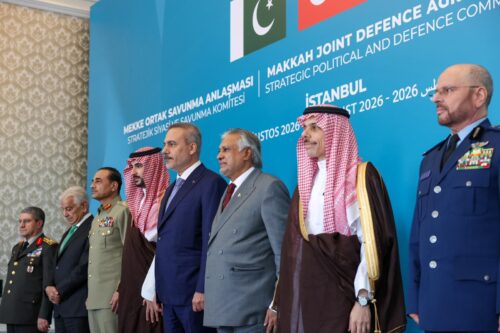
Compounding this pressure is the military dimension of Pakistan’s Gulf engagement. Under its mutual defense pact with Saudi Arabia, Pakistan has recently deployed approximately 8,000 troops, a squadron of JF-17 fighter jets, two drone squadrons, and a Chinese HQ-9 air defense system to the kingdom, a deployment triggered after Saudi Arabia detected drone activity targeting its territory. This carries a message to Tehran: any attack on Saudi Arabia would now compel Pakistan to retaliate on Riyadh’s behalf, transforming Islamabad from a neutral mediator into a direct party to the conflict. Yet that is precisely the outcome Pakistan is most determined to avoid. It is therefore actively pursuing a non-aggression pact between Saudi Arabia and Iran, a framework that Riyadh itself has reportedly floated with Tehran, as the most viable off-ramp from a trajectory that, if unchecked, could force Pakistan’s hand. Pakistan’s military commitment to Saudi Arabia is not in contradiction with this pursuit. It is what makes its mediation credible to Riyadh: Saudi Arabia trusts Pakistan to seek peace on its behalf precisely because it knows Islamabad will stand with it if diplomacy fails.
Yet these are the same states that have taken the most uncompromising institutional stand against Iran over the strait. For Pakistan to deepen its economic relationship with Iran at this precise moment is not a cost-free calculation. It is a choice that risks straining the very relationships that keep its economy afloat.
However, the consequences of failure must be stated plainly. If the Iran relationship were to collapse into open hostility, whether through Pakistan being drawn into a potential Saudi-Iran conflict or through diplomatic breakdown, Islamabad would not just lose a trade route. It would face a third active border crisis simultaneously with two existing volatile challenges. Its eastern border with India is already effectively closed following their military confrontation. Its northern border with Afghanistan has also ceased to function as a reliable artery since armed clashes shut the Torkham and Chaman crossings. Iran and China are the last significant overland corridors Pakistan has to the west — the routes through which its exports reach Central Asia and through which Central Asian energy reaches Pakistani ports. A country that cannot absorb one border crisis would then find itself asked to manage three. That would not be a strategic challenge. That would be an existential trap — and the most compelling explanation for why Pakistan’s pursuit of a Saudi-Iran non-aggression pact is not an issue of diplomatic ambition, but of national survival.
For now, Pakistan is carefully treading a calibrated line. But its approach has a limited shelf life. If the diplomatic efforts Islamabad has facilitated between Washington and Tehran, including the framework agreement announced on June 14, fall apart in the coming days or fail to truly end the conflict, Pakistan will face growing pressure from Washington and its Gulf partners to take a clearer position against Iran, and ultimately to sever a relationship that has become too structurally embedded in its strategic calculus to abandon.
If Washington and Tehran find their way to a lasting negotiated arrangement with Islamabad’s help, that would resolve only one layer of a far deeper and more intractable contest. The question of sovereign control over the Strait of Hormuz — who governs it, who collects tolls on it, whose jurisdiction extends across it — is not a dispute between Iran and the United States alone. It is fundamentally a confrontation between Tehran and its Gulf neighbors, rooted in competing claims over territorial waters, regional primacy, and the rules that govern one of the world’s most critical waterways. No bilateral US-Iran deal will resolve that underlying contest. The Gulf states have stated their position; Iran has demonstrated its ambitions. Where that leaves Pakistan, and whether Islamabad can preserve its geoeconomic ambitions in a region whose deeper fault lines are far from settled, remains the defining question at the heart of its most critical strategic conundrum.
Naade Ali is currently serving as a Research Assistant to MEI Senior Fellow Marvin G. Weinbaum. He has more than five years of involvement working with international organizations and think tanks as a political researcher, policy advisor, peace strategist, and human rights practitioner with experience in human and national security, democratization, conflict resolution, and political culture. Prior to joining MEI, Ali worked with Media Foundation 360, a think tank dedicated to strengthening democratic practices in Pakistan.
Photo by Iranian Ministry of Foreign Affairs / Handout /Anadolu via Getty Images.
The Middle East Institute (MEI) is an independent, non-partisan, not-for-profit, educational organization. It does not engage in advocacy and its scholars’ opinions are their own. MEI welcomes financial donations, but retains sole editorial control over its work and its publications reflect only the authors’ views. For a listing of MEI donors, please click here.