This article is part of a report outlining an actionable US roadmap to win in Lebanon, comprising eight chapters of specific policy interventions across the security, economic, and political dimensions needed to secure a sovereign Lebanon, lock in US gains against Iran, and permanently end the Israel-Lebanon conflict.
Key Takeaways
- Keeping Iran — whose interest is instability, not peace — out of any Israeli-Lebanese agreement is critical. In this way alone, the Trilateral Framework Agreement is an improvement over the US-Iran memorandum of understanding.
- Under the agreement, Israeli forces will clear areas of southern Lebanon of Hizballah forces and infrastructure, after which vetted Lebanese forces will assume control and keep the group out. The agreement’s success will largely depend on the creation of a US-led, third-party verification system to avoid the shortcomings the parties experienced trying to implement the November 2024 ceasefire agreement.
- Vetted Lebanese Armed Forces will require financial support from the international community, but the most critical support both Lebanese and Israeli forces will require is dedicated intelligence to verify implementation and prevent Hizballah attacks aimed at undermining the agreement.
- Beyond seizing weapons and destroying bunkers, the agreement calls on the Lebanese authorities to counter Hizballah financing and take legal measures against the group as part of the first phase of implementation. This too will require intelligence support, both to identify Hizballah illicit financing trends and to thwart the group’s violent operations aimed at undermining such efforts.
Introduction
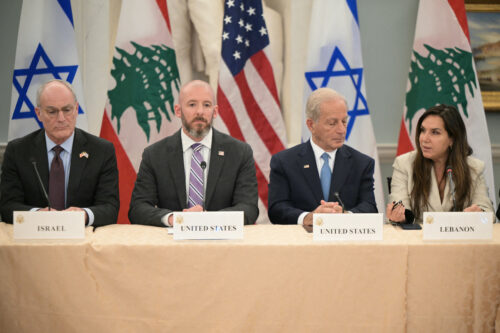
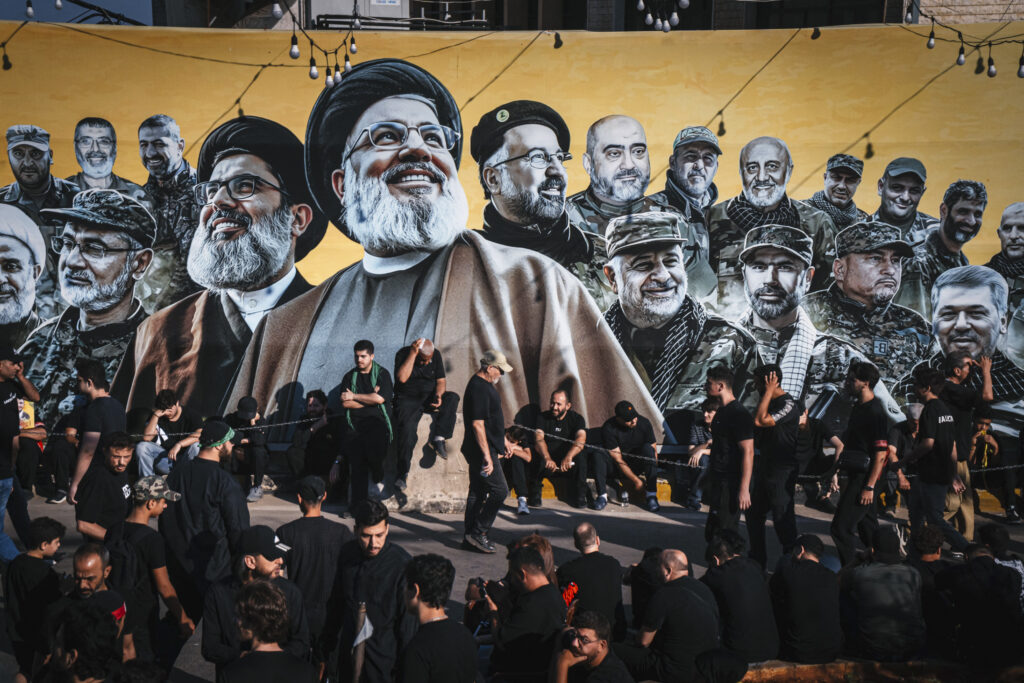
On June 26, 2026, after a series of five bilateral meetings hosted by the United States, representatives of the Israeli, Lebanese, and US governments signed the Trilateral Framework Agreement, declaring their shared “ambition to end conflict between them, ensure the sovereignty and security of both countries, and establish peaceful neighborly relations between the two countries.” The problem is that while Israel and Lebanon are parties to the agreement, the conflict in question is not being driven by either country but by Hizballah, which initiated attacks against Israel in support of Hamas right after October 7, 2023, and then again in March 2026 in the context of the war with Iran. And since neither Hizballah nor its patrons in Tehran subscribe to the agreement’s goals — the group’s leader, Naim Qassem, said the agreement is “null and void” and crossed all of its “red lines” — they should be expected to vigorously challenge its implementation.
Indeed, the whole agreement essentially comes down to implementation and verification. It maps out a series of sequential actions aimed at disarming Hizballah, enabling the Lebanese Armed Forces (LAF) to restore “effective Lebanese sovereign authority over all Lebanese territory,” and ultimately — pending verified disarmament of non-state armed groups and the dismantlement of their infrastructure — redeployment of the Israel Defense Forces (IDF) out of Lebanese territory. While it is clear the mission is intended to be carried out by sequenced IDF and LAF efforts, neither the agreement itself nor the leaked security annex provide much practical detail on the nuts and bolts of how the parties will implement it.
The agreement is clear on one key point, however: the US commits to work closely with both governments to monitor compliance and back implementation. Indeed, the US is itself effectively a partner to the agreement, not just its facilitator, as evidenced by the fact that it is officially a “Trilateral Framework between the United States of America, the State of Israel, and the Republic of Lebanon.” The agreement also commits Washington, along with Beirut, to combating the financing of Hizballah or other non-0state armed groups in Lebanon. With this critically important US commitment in mind, it is useful to look to two US observation and verification missions, both in the Sinai, for ways in which Washington could make tangible contributions to the implementation of the agreement.
Walling off the Arsonist from the Firefighters
The agreement is remarkable on several levels, first and foremost for the absence of one key actor: Iran. It was reached just days after Washington and Tehran signed a memorandum of understanding (MoU) aimed at ending hostilities and reopening the Strait of Hormuz. But Iran insisted that the MoU create an explicit linkage between the US-Israel war with Iran and Hizballah’s war against Israel, as well as demanded that Israel immediately withdraw from southern Lebanon with Hizballah intact. For unclear reasons, the US negotiating team led by Vice President JD Vance did not oppose such terms, and the MoU calls for “the immediate and permanent termination of military operations on all fronts, including Lebanon.” This is despite the fact that neither Israel nor Lebanon is a party to the MoU. Hizballah was informally represented by Iran, which is more interested in seeing the group rebuild than disarm, as required under the preexisting November 2024 cease-fire agreement between Israel and Lebanon. Indeed, Hizballah immediately tested the limits of the MoU, launching rockets into Israel as it was about to go into effect and then firing on Israeli positions in southern Lebanon.
The agreement disposes of this linkage, including only Israel, Lebanon, and the US as parties and excluding Iran and Hizballah. Instead of the MoU’s proposal for a deconfliction mechanism, which would see officials from US Central Command sitting together with officials from Iran’s Islamic Revolutionary Guard Corps (a US- and EU-designated terrorist organization) in Qatar, the security annex to the agreement calls for Israel and Lebanon to establish a Military Coordination Group for Lebanon (MCG4L) that will operate 24/7 to “manage deconfliction, verification, and overall implementation.” Speaking to the press, a State Department official concluded that “Iran cannot wage wars through its proxy organizations and complain when the proxies are required to disarm.”
And yet Iran should be expected to support its proxy and undermine the agreement, underscoring the need for a clear plan to verify the disarmament of Hizballah and other non-state armed groups in Lebanon.
Mission Roadmap: Disarmament, Dismantlement, Redeployment, Reconstruction
Under the Trilateral Framework Agreement, Israel and Lebanon “commit to a reciprocal, sequenced process, with clear conditions, whereby the LAF will restore effective sovereign authority over all Lebanese territory, pending the verified disarmament of non-state armed groups and dismantlement of associated infrastructure, enabling the Israel Defense Forces (IDF) to progressively redeploy out of the Lebanese territory.”
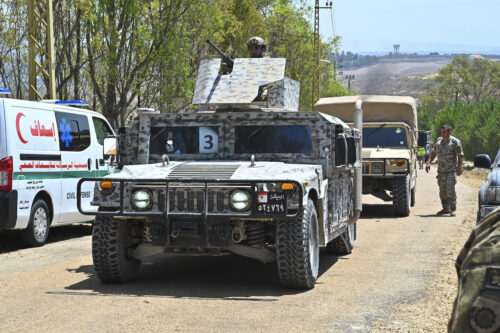
In practice, under this sequenced process the IDF will continue to clear areas in southern Lebanon of Hizballah fighters, weapons, tunnels, bunkers, and other infrastructure, and then, after an agreed-upon third party verifies they are clear of non-state armed groups, the areas will be handed over to vetted and “highly qualified” LAF forces, who will assume control and prevent any return or resurgence of Hizballah or other non-state armed activities.
Lebanon initially asked for initial pilot zones covering large swaths of territory along the Israeli border, with civilians allowed to return immediately to villages there. The parties settled instead on zones at the northeastern edge of Israel’s so-called security zone in southern Lebanon — spanning north and south of the Litani River and east and west of the IDF’s security zone line of June 18, 2026. This lets the LAF prove it can hold cleared territory and keep out Hizballah and other non-state armed groups before gradually expanding control to the south and the east, toward the Blue Line.
Identifying and preparing these zones is to follow a four-step process, according to the security annex to the agreement:
- First is “clearance,” which involves disarming non-state armed groups and “destroy[ing] or render[ing] inoperable associated infrastructure, including but not limited to weapons, weapons caches, tunnels, and command centers.” This goes far beyond what the LAF has been able to do thus far and will require close intelligence cooperation between the parties and broader support from the US and others.
- Second, the MCG4L will manage deconfliction, verification, and overall implementation. The MCG4L cell will report to Israeli and Lebanese political leaders through “indirect military-to-military channels,” meaning the role of third parties will be key. Verification of disarmament and dismantlement operations will take place simultaneously with other clearing operations.
- Third, only once pilot zones have been verifiably cleared will “highly qualified LAF” forces assume and maintain sole operational control of pilot zones, where they will be responsible for preventing the resurgence of any non-state armed activity.
- This leads to the fourth stage, when the Lebanese state — not Hizballah-affiliated companies or organizations, as occurred after the 2006 war — spearheads reconstruction efforts. The key to getting to this final stage, and to facilitate further Israeli withdrawals from Lebanese territory, is monitoring and verification, especially given the LAF’s mixed performance implementing the November 2024 cease-fire agreement.
The expectations laid out in the agreement mark a significant departure from what the LAF did and did not do under the November 2024 cease-fire agreement, when the force worked hard, but still fell far short of disarming Hizballah. Israeli operations targeting Hizballah decimated the group in the fall of 2024, with exploding pagers, airstrikes that targeted key personnel and weapons systems, and ground forces that swept the Lebanese side of the border for tunnels and underground bunkers. But the LAF’s disarmament of Hizballah was limited and was far outpaced by the group’s determined rearmament. The LAF declared it had established “operational control” over southern Lebanon, but in fact it was more focused on deconflicting with Hizballah than disarming the group or dismantling its infrastructure.
For this experiment to work, key measures of effectiveness must address Hizballah’s weapons and infrastructure, including (1) its weapons stored in private homes and on private property; (2) its network of tunnels and underground bunkers, weapons depots, and command centers; and (3) its smuggling networks.
Private property: Hizballah’s documented track record of storing weapons in private homes is no secret; it was long reported by UN peacekeeping forces and confirmed when Israeli ground forces went into Lebanon and found weapons stored in private homes in villages all along the Blue Line. As Gen. Rodolphe Haykal, head of the LAF, prepared to visit Washington in November 2025, Israeli and US officials pressed the LAF to follow up on information shared through the US-led mechanism and inspect private property where Hizballah was suspected of storing weapons, but LAF commanders refused. In some cases, LAF officials coordinated with Hizballah to give the group time to remove weapons before homes were searched.
Underground facilities: With the exception of a single site raided near the Lebanese village of Kafra in December 2025, the LAF has done nothing to uncover or dismantle Hizballah’s tunnel network. Israeli authorities say they have identified dozens of underground Hizballah facilities — in the south and elsewhere in Lebanon — that have yet to be inspected and destroyed. The number rises, however, when one includes the many cases in which Hizballah operatives return to areas hit by Israeli airstrikes to rebuild targeted infrastructure using large engineering vehicles.
Countering Hizballah smuggling via Syria: Tehran lost a key component of its “Axis of Resistance” when Bashar al-Assad’s regime fell in December 2024, but it continues to send weapons to Hizballah through Syria. The new leaders in Damascus are no friends of Hizballah and have seized multiple weapons shipments but cannot intercept them all; the LAF, however, has not matched that effort on the Lebanese side of the border.
Countering Hizballah smuggling via Beirut: Lebanese authorities will need to tighten their civilian oversight of goods coming into ports of entry, including dual use items. In the wake of the tragic 2020 Beirut port explosion, the Port of Beirut underwent a security upgrade, including an artificial intelligence (AI) element intended to help inspectors scan cargo. But the system was not programmed to compare imported items over time, so as long as dual-use items Hizballah uses to assemble first-person-view attack drones (such as rotor blades, lithium batteries, and fiber optic cables) were shipped separately and days apart, it did not detect suspicious activity.
Monitoring and Verification: “Eyes and Ears of Peace”
It remains to be seen who will monitor or assess efforts to contain Hizballah, but the need for verification is clear-not only confirming that the LAF has moved into areas the IDF has cleared, but, more critically, that the LAF keeps Hizballah out. That will require substantial intelligence, surveillance, and reconnaissance (ISR) to detect Hizballah movement into LAF-controlled areas, and signals intelligence (SIGINT) to surface plans and intentions, including communications between the IRGC and Hizballah.
After the November 2024 cease-fire, the LAF sought to be judged by metrics such as the number of patrols it conducted or sites it inspected, rather than measures of effectiveness like the number of seized and verifiably disposed weapons. This will no longer be the case. The current agreement explicitly calls for “the requisite measures, security arrangements, and verification mechanisms” to be established in a security annex “developed with the full support of the United States.” The security annex is clear that “mutually-agreed-upon third-party entities” will verify the clearance of non-state armed groups, weapons, and infrastructure. Still, it provides no further information on whether those third parties might be other governments, NGOs, civilian contractors, or some combination of these. It does make clear that the US will play a key role, though: “The United States intends to work closely with both countries to verify and support this process.” In practice, the US should take a leadership role in this effort.
So far, neither the agreement nor the security annex says anything about projected timelines, specific milestones, measures of effectiveness, or means of verification. Given the abject failure of the United Nations Interim Force in Lebanon (UNIFIL), resulting in the UN Security Council’s decision to end its mission as of December 31, 2026, none of the parties to the agreement has any appetite for — or faith in — another UN mission. Indeed, there is broad consensus, reflected in the agreement, that active American engagement — especially in the realms of intelligence and verification — will be key to the plan’s success. Two prior models of US-led verification after an interim agreement each offer something to officials now fleshing out the agreement.
The first is the Multinational Force and Observers (MFO) in and around the Sinai Peninsula, established as a peacekeeping mechanism following Israel’s withdrawal from the area. The MFO is tasked with monitoring military activities in the peninsula, conducting observation missions, and securing freedom of passage in the Strait of Tiran. The force is largely made up of two groups, military personnel and civilian observers, and operates within the four zones established in the 1979 Egypt-Israel Treaty of Peace. US citizens hold key leadership positions, including the director-general in Rome and the deputy directors-general in Cairo and Tel Aviv.
The MFO monitors compliance with voluntary demilitarization of Egyptian and Israeli forces according to the terms of a peace treaty, whereas Lebanon needs a force to verify implementation of an active and coercive disarmament campaign. Nevertheless, elements of the MFO model are still highly relevant. The MFO is a third-party entity, not a UN force; it operates with the consent of the parties; its mission is focused on monitoring, verification, and reporting; and it benefits from significant US leadership. Though the MFO covers a far larger territory than southern Lebanon, the basic concept could still apply. That said, an MFO-based approach would still require a strong US-led intelligence component capable of receiving sensitive intelligence from Israel, independently verifying information, and cueing operational responses.
Another model worth considering is the US Sinai Field Mission, which was established in 1975 to collect intelligence beyond Egyptian and Israeli surveillance, and intended to sound the alarm in the case of a violation of Israeli-Egyptian peace treaty terms. The success and expedience of the mission, which transferred its responsibilities to the MFO in 1982, was only possible due to the willing assistance and confidence of Egypt, Israel, and the UN. The US utilized private government contractors for the majority of the mission. The parties valued the involvement of the US as an intermediary, to verify compliance with the agreement and ultimately facilitate the withdrawal of the Israeli military.
The verification model for the agreement could borrow elements from each of these models, but whatever the specifics, it will require hands-on American leadership and engagement along with the participation of other allied actors.
Support for the LAF
The LAF will only be able to fulfill its end of the agreement if it receives significant support, but even the Lebanese government understands — and stipulated in the agreement — that “any new US assistance will be strictly conditioned on verifiable milestones, full transparency, demonstrated results, and ongoing oversight.”1 This must start with the vetting of LAF units deployed to the south and key LAF elements such as military intelligence, which have long been penetrated by Hizballah. Washington has expressed concern about “Hizballah influence,” leading it to suspend $100 million in military aid to the force over the past several years. In addition, vetted LAF units must get salary support. At any given time, about half the 8,000 or so Lebanese soldiers assigned to the south after the November 2024 cease-fire were out of uniform, working second jobs to put food on the table for their families.
Beyond Weapons and Bunkers: Countering Hizballah Finance
The agreement also commits Lebanon — and the US — to “preventing funds from flowing to any entity, organization, or individual affiliated with non-state armed groups” and “to take available legal measures to proscribe the activity of any such entity, organization or individual.” This is supposed to commence in the first phase of pilot zone activity, alongside coercive clearance operations.
Given the speed at which Hizballah has regrouped since the initial shock of the Israeli campaign against it, this is critically important. It is also significant that the agreement does not limit the commitment to counter non-state armed groups’ financing only to their expressly militant activities, but to any entity tied to such groups. For starters, the Lebanese government could take further concrete steps against Hizballah’s de facto bank, al-Qard al-Hassan (AQAH), and the money exchange houses through which Iran transfers funds to the group. AQAH is licensed to operate as a charity in Lebanon but not as a financial institution and is therefore not subject to financial regulatory oversight.
However, in July 2025, the Lebanese Central Bank banned financial institutions from dealing with AQAH, and the US did the same in 2007. In late June 2026, the Terrorist Financing Targeting Center (TFTC) — a joint US-Gulf Cooperation Council effort — designated five entities and 16 persons tied to AQAH. The Lebanese government would benefit from additional actions by the TFTC, its member states, and other Arab states in support of its efforts to assert control not only over non-state armed groups’ weapons but their illicit financing as well.
Beyond AQAH, the US should help Lebanon crack down on exchange houses traditionally used by Iran to skirt the formal financial system while funneling money to Hizballah — a practice that increased after Lebanon’s 2019 financial crisis. Given the generous financial terms the MoU granted Iran, Tehran could have plenty of funds available to support Hizballah; though the US-Iran MoU appeared to fall apart in early July, Tehran is sure to remain committed to finding ways to fund Hizballah through the sale of sanctioned oil, as it has for years. The Lebanese government should take additional steps against Hizballah’s abuse of Lebanon’s cash economy, its use of virtual currencies to receive funds from Iran, and its ability to run a shadow economy within the country. Shutting down AQAH and Hizballah exchange houses would be a strong first step.
Lebanon also commits, under the agreement, to prevent reconstruction funds from flowing to non-state armed groups or entities connected to them. In line with its commitment to take legal measures to proscribe the activities of persons or entities trying to fund Hizballah or other non-state armed groups, Lebanon will need to exclude Hizballah members from key positions involved in reconstruction. For example, President Joseph Aoun’s advisor for reconstruction, Ali Hamieh, reportedly served as a Hizballah appointed minister in the previous Lebanese government.
The Long Road Ahead
This landmark agreement aims to kick off a process through which the two countries “end conflict between them, ensure sovereignty and security of both countries, and establish peaceful neighborly relations between the two countries.” It should therefore be no surprise that Hizballah officials have already pledged to defeat the agreement, threatening to fight both Israelis and Lebanese. “We did not leave the battlefield in the most difficult circumstances,” Hizballah leader Naim Qassem warned, “and we will not leave it.” Hizballah officials have previously threatened civil war should Lebanese forces try to disarm them, pledging to fight until there is “no life” left in Lebanon.
Like Israel, Lebanon stands to gain a lot from this agreement. Beyond sovereign control over decisions of war and peace, the agreement offers Lebanon the opportunity to fully integrate into the regional economy, attract foreign direct investment, and become a hub for trade and business between Europe and the Middle East. But leaders in Beirut are assuming massive responsibility and risk and should be incentivized to press forward. That means going beyond promises of eventual reconstruction and assistance to near-term reconstruction in verifiably cleared areas and long-term investment in key sectors such as energy and infrastructure. Western and Arab states have a significant role to play here, but so does Israel. Lebanon’s success is in Israel’s interest, and Israel should see supporting Lebanon in timely and tangible ways as a wise investment in the future peace and prosperity of both countries.
For all the challenges that lie ahead, there is one very strong reason to believe this Trilateral Framework Agreement could work: it was reached “with the full support of the United States under President Donald J. Trump.” So long as Washington sees this effort as a viable and functioning path toward the parties’ shared goal of achieving lasting peace and security, and so long as other countries share the burden of any military, intelligence, and financial support mechanism, it just might work.
Endnotes
1. For a fuller discussion of how the US could provide such support to the LAF, see Essay 2, “Setting the Lebanese Armed Forces Up for Success.”
Dr. Matthew Levitt is the Fromer-Wexler Senior Fellow and director of the Reinhard program on counterterrorism and intelligence at The Washington Institute for Near East Policy. Levitt teaches at Georgetown and Pepperdine universities and is the author of Hezbollah: The Global Footprint of Lebanon’s Party of God. He also maintains an open-access map and timeline of Hizballah worldwide activities and hosts the podcast Breaking Hezbollah’s Golden Rule.
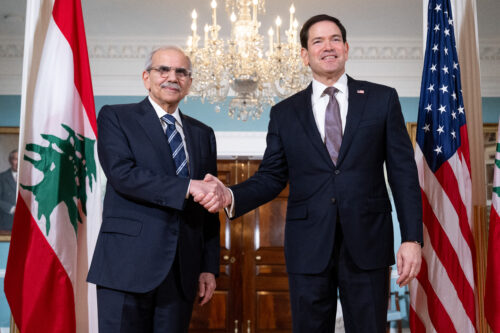
Top photo by Saul Loeb/AFP via Getty Images.
The Middle East Institute (MEI) is an independent, non-partisan, not-for-profit, educational organization. It does not engage in advocacy and its scholars’ opinions are their own. MEI welcomes financial donations, but retains sole editorial control over its work and its publications reflect only the authors’ views. For a listing of MEI donors, please click here.
How Lebanon can be Trump’s first success in a troubled region

Kim Ghattas on a Murder That Explains the Middle East