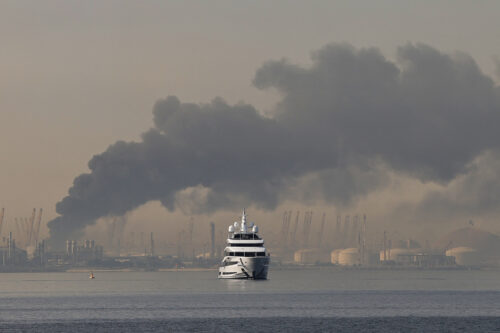
On March 1, 2026, debris from an intercepted aerial object ignited a fire at a berth in Jebel Ali, the Middle East’s largest container port. Port operator DP World temporarily suspended terminal operations, while Mediterranean Shipping Company (MSC) halted new bookings for regional cargo. Iranian drone strikes also damaged Amazon Web Services (AWS) facilities in the United Arab Emirates and Bahrain, disrupting cloud services used by financial institutions and commercial platforms. Together, these incidents exposed a vulnerability in global commerce: its dependence on interconnected infrastructure spanning multiple jurisdictions.
Ports, for example, rely on terminal software, communications networks, cloud computing, and satellite navigation, as well as physical facilities. Disruption to any one of these systems can cascade across the wider trading network.
Geopolitical influence over trade increasingly rests on controlling the systems that make them work. The Middle East illustrates the stakes. US ports, cable corridors, cloud facilities, artificial intelligence (AI) investments, and maritime routes connect regional economies to global commerce while exposing them to external decisions and disruptions. For the United States, the challenge is to translate technological advantage into resilient networks rather than rely on centrality that can itself become a source of vulnerability and coercion.
From Ports to Digital Infrastructure
Modern ports depend on software and shared data to coordinate vessel arrivals, cargo handling, berth allocation, and customs clearance. Digital coordination can make port calls more predictable, but it also creates dependencies among terminal operators, shipping lines, and public authorities.
Terminal ownership and software provision are distinct. COSCO Shipping Ports, a Chinese state-owned operator, has subscribed to Navis terminal operating software, from the US supply chain software provider Kaleris, for hundreds of berths across dozens of ports. The arrangement illustrates how the operator of a physical facility may rely on a foreign supplier for the systems that organize daily operations. In Morocco, Eurogate Tanger replaced Navis with a Korean-made system in 2021, demonstrating that alternatives exist but also that changing systems requires time, money, and operational adjustment.
These dependencies matter even when no adversary deliberately intervenes. A software failure, loss of connectivity, or restriction on access can slow cargo handling and disrupt schedules. Physical damage can produce similar effects, as the Jebel Ali incident showed. The strategic question is therefore not only who owns a port but who can keep it operating when the systems beneath it fail.
The Digital Arteries of Trade
Submarine cables carry most intercontinental data traffic. Their routes are therefore critical to commerce, finance, communications, and public services. Egypt is a major chokepoint between Europe, Asia, and Africa, while its position gives local authorities and cable operators an important role in access and repair. Concentration along a limited number of routes means that damage can affect users far from the point of failure.
In September 2025, cuts to three cables near Jeddah disrupted connectivity across parts of the Middle East and Asia, prompting Microsoft to warn Azure customers of increased latency. The cause was considered likely to be commercial shipping activity rather than deliberate sabotage. That distinction matters: infrastructure can be vulnerable without being targeted. Redundancy helps, but traffic can only be rerouted if spare capacity exists. Repairs depend on specialized vessels, favorable conditions, and permits; delays can prolong the disruption. Insecurity around Bab al-Mandab adds another risk, while proposed overland alternatives remain incomplete.
The relevant measure of resilience is not simply the number of cables or routes available. It is how quickly alternatives can absorb disrupted traffic, and whether operators can restore service before commercial consequences compound.
Cloud, Chips, and the Gulf
Saudi Arabia and the UAE are investing heavily in data centers and AI to diversify their economies. Yet investment does not automatically deliver technological autonomy. Advanced AI depends on specialized chips, computing platforms, software, and expertise that Gulf states cannot yet supply entirely on their own.
The UAE’s partnership with Microsoft and AI and cloud computing firm G42 illustrates both the opportunity and the dependence. Microsoft has announced major investment in the country, including a stake in G42. In November 2025, US authorities authorized exports of advanced computing chips to G42 and Saudi Arabian AI company HUMAIN, subject to security and reporting requirements. Those approvals followed G42’s break with restricted Chinese technology corporation Huawei and HUMAIN’s pledge not to purchase its equipment. The decisions show how Washington’s control over advanced technology can influence the pace and terms of Gulf AI development.
That leverage was reinforced, but recalibrated, by a July 2026 Bureau of Industry and Security (BIS) rule moving the UAE into Country Group A:5, which eases access to certain controlled technologies and allows approved entities to receive specified advanced computing items without individual licenses. License requirements for those items remain for any recipient not on the approved list.
These partnerships bring capital, expertise, and access to computing power. They also give foreign suppliers — and the governments that regulate them — a role in determining what can be built and how quickly. Other suppliers are available, but technologies are not always interchangeable. Switching providers can require costly changes to software, data management, security arrangements, and staff expertise.
The risk is not dependence in itself. It is dependence without credible alternatives or plans for continuity. Concentrated cloud services can become a single point of failure for banking, logistics, government services, and the commercial platforms on which everyday activity increasingly relies.
When the Cloud Becomes a Target
The March 2026 strikes on AWS facilities in the UAE and Bahrain underscored the physical exposure of digital infrastructure. Damage to data centers disrupted services used by banks and commercial platforms, demonstrating that a facility built to support routine economic activity can become a target during regional conflict. The consequences extended beyond the sites themselves because businesses rely on cloud platforms to manage inventories, process payments, coordinate shipping, and track goods. As of mid-September, more than six months on from the strikes, service to the AWS facilities had still not been restored.
The vulnerability is systemic. Cable damage can impair connectivity; attacks on data centers can interrupt computing services; and restrictions on access to advanced chips can constrain the development or replacement of systems. These layers reinforce one another. A backup cloud provider offers limited protection if it depends on the same vulnerable cable, power supply, or geographic corridor. The Gulf region is particularly exposed, with more than 90% of data capacity from Europe to Asia passing through the Red Sea. Its vulnerability was underscored once again in mid-October, when Iran threatened to target submarine cables, data centers, and AI facilities across the region if the war with the US resumed.
Governments face a related tension between resilience and data localization. Keeping data inside national borders may serve legitimate regulatory and security goals, but geographic concentration can leave services exposed to a single conflict or natural disaster. Distributing workloads across locations can improve continuity, provided governments and operators establish clear rules for data protection, access, and emergency recovery. The goal should not be to abandon local infrastructure, but to avoid designing systems whose essential functions can be disabled by one localized event.
Satellite Navigation and Positional Dependence
Satellite navigation supplies the positional and timing information that helps coordinate ships, aircraft, vehicles, port equipment, and telecommunications networks. The United States’ Global Positioning System (GPS), Europe’s Galileo, Russia’s Global Navigation Satellite System (GLONASS), and China’s BeiDou support civilian and commercial users both inside and outside their home jurisdictions. Their importance extends beyond telling a vessel where it is: navigation and timing services help synchronize activities across physical and digital infrastructure.
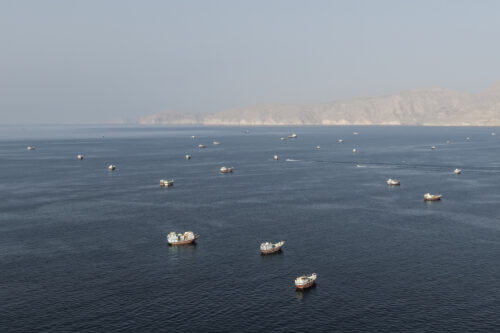
Unlike a port or cable, satellite navigation can be disrupted without damaging the underlying system. Jamming overwhelms legitimate signals; spoofing deceives receivers with false position or timing information. In March 2026, maritime advisories reported GPS spoofing in the Persian Gulf, the Strait of Hormuz, and the Gulf of Oman, warning mariners to verify satellite data independently.
The effects can spread beyond an individual vessel. Inaccurate positioning can distort tracking displays, complicate traffic management, increase collision risks, and disrupt port approaches. Access to multiple satellite constellations does not guarantee resilience if receivers, procedures, or supporting systems share vulnerabilities. Nor can alternative signals alone solve interference affecting several systems in the same area.
Resilience therefore requires layered safeguards: multi-constellation receivers, terrestrial and inertial navigation alternatives, radar and visual verification, and procedures for operating when satellite signals become unreliable. Governments should also improve incident reporting, technical attribution, and coordination on responses. The aim is to preserve safe civilian access to navigation services while reducing the opportunity to exploit interference for strategic gain.
What This Means for the United States
American exposure to the vulnerabilities of the Gulf is determined mainly by the country’s place in the networks that sustain global commerce. Disruption can spread through energy prices, shipping rates, delivery schedules, and inventory availability even when US firms do not import the affected goods directly.
The Strait of Hormuz normally carries roughly one-fifth of global oil consumption, so instability there affects energy markets well beyond the region. The 2026 disruption also coincided with higher container rates on Asia-US routes, emergency surcharges, and longer voyages as ships diverted around the Cape of Good Hope. Those costs can amplify existing supply-chain pressures.
The US occupies an unusual position in this infrastructure landscape. American firms provide port operating software and cloud services used internationally, including in facilities operated by companies from strategic competitors. Washington also influences access to advanced computing technology through export controls. This position creates leverage in the form of access to essential services, and equipment can shape what dependent organizations are able to do.
But centrality also creates exposure. American companies’ facilities and networks may become targets during geopolitical confrontation, while disruptions to their services can harm allies, commercial partners, and US businesses. Civilian commerce and military logistics can also rely on overlapping digital infrastructure. The same network position that gives Washington influence can therefore create pressure to protect systems whose users do not necessarily share American strategic priorities.
A further problem is visibility. Businesses may know their immediate shipping arrangements without knowing which cloud regions, terminal systems, cable routes, or navigation services support them. Such hidden dependencies make it difficult to assess cascading risks or plan realistic contingencies. US economic security must therefore look beyond individual assets and suppliers to the relationships among them.
Policy Priorities: Resilience Without Technological Autarky
The task is not to eliminate interdependence. Ports, cables, cloud platforms, and navigation systems are too interconnected — and too costly to duplicate completely — for technological self-sufficiency to be a realistic goal. The objective should instead be to ensure that no single supplier, route, or external actor can readily interrupt essential economic activity.
A useful way to frame this goal is relational sovereignty: the practical capacity of a state or coalition to maintain essential functions despite dependence on systems operated or regulated by others. It does not require autarky. It requires credible alternatives, coordinated planning, and agreements that make disruption harder to exploit.
First, Washington should work with Gulf partners, European allies, and willing Asian economies to map critical dependencies across port software, cloud computing, submarine cables, AI infrastructure, and satellite navigation. A proposed Critical Infrastructure Interdependence Compact could link existing efforts through shared protocols for identifying vulnerabilities, stress-testing cross-sector dependencies, and coordinating recovery, with safeguards for sensitive information.
Second, governments and infrastructure operators could strengthen redundancy across technological layers through geographically dispersed cloud capacity, alternative cable routes, backup navigation systems, and port software capable of sustaining essential operations during disruptions. Procurement standards, targeted financing, and joint exercises could promote recoverability and supplier flexibility, with progress measured by demonstrated recovery times.
Third, Washington could work with Gulf partners and other technology providers to develop voluntary principles protecting essential commercial infrastructure from arbitrary political interruption. Agreed rules on service continuity, transparency, and consultation could make restrictions more predictable while preserving legitimate security controls and avoiding demands that Gulf states exclude Chinese technology.
Finally, the US and participating Gulf governments could establish a joint infrastructure forum bringing together port operators, shipping companies, cloud and cable providers, and insurers. Confidential incident reporting, annual cross-sector exercises, and agreed procedures for sharing warnings and coordinating recovery could help identify cascading risks and improve responses to disruption.
These measures would shift US leadership away from a narrow emphasis on controlling technological chokepoints and toward providing trusted, resilient networks. In a multipolar environment, influence depends on convincing partners that the systems connecting them are reliable, legitimate, and resistant to coercion.
Conclusion
The geopolitics of trade is increasingly shaped by the technological relationships that make infrastructure work. Ports, submarine cables, cloud computing, AI, and satellite navigation are not isolated assets. They form an interconnected architecture in which physical access, digital connectivity, and technological coordination depend on one another. The Gulf shows how a disruption at one point can ripple across commercial networks, revealing the distance between territorial ownership and effective operational control.
For the US, this creates both leverage and a dilemma. American companies occupy pivotal positions in global commerce, and Washington can influence access to advanced technology. Yet that centrality leaves US firms, supply chains, and partners exposed when systems fail or become targets. Control over a chokepoint is not the same as security; concentrated dependencies can become sources of coercion.
The goal is to turn technological advantages into more resilient networks by identifying dependencies, developing alternatives, planning for disruptions, and agreeing on rules that partners consider fair. The aim is to keep essential services running even when relationships within global networks deteriorate.
Ultimately, US leadership will depend on its ability to shape critical technologies and help ensure that the systems underpinning global commerce continue to function under strategic pressure. The most consequential form of power may lie in keeping essential networks open, resilient, and trusted even when others have the means to disrupt them.
Alex Saltout is a political scientist, geopolitical analyst, and author pursuing doctoral research in Political Science. His work focuses on geopolitical competition, European governance, Middle Eastern and Eastern Mediterranean security, strategic deterrence, and the intersection of technology and international security.
John Calabrese is a senior fellow at the Middle East Institute (MEI) and book review editor for The Middle East Journal. His work focuses on the international relations of the Middle East, with a particular emphasis on cross-regional ties between the Middle East and Asia. He also teaches US foreign policy at American University.
Photo by Fadel Senna / AFP via Getty Images
The Middle East Institute (MEI) is an independent, non-partisan, not-for-profit, educational organization. It does not engage in advocacy and its scholars’ opinions are their own. MEI welcomes financial donations, but retains sole editorial control over its work and its publications reflect only the authors’ views. For a listing of MEI donors, please click here.