Crude oil is flowing out of the Gulf again, but the market is no better prepared for another disruption in the Strait of Hormuz. It has assembled a temporary system for managing one. Crude exports from the Gulf, excluding Iran, returned to pre-war levels in September, while total Gulf shipments reached 15.5 million barrels a day, more than 80% of the pre-conflict volume.
More than seven months into the U.S.-Israeli war with Iran, the market has coped with a closed or contested Strait of Hormuz by drawing down inventories, curbing consumption, and leaning on U.S. military power. Each has limits: inventories are finite, replenishment takes time, and reliance on U.S. military power carries strategic costs. Four indicators—onshore inventories, exposed importers, European gas storage, and U.S. naval capacity—will show whether this workaround is holding.
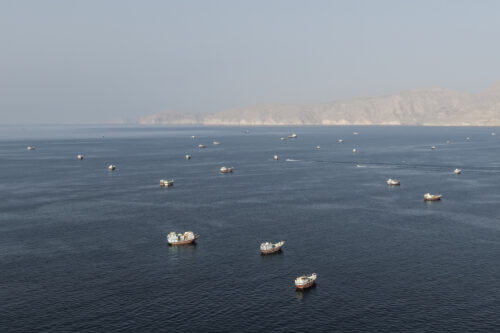
Photo by AFP via Getty Images
The Middle East Institute (MEI) is an independent, non-partisan, not-for-profit, educational organization. It does not engage in advocacy and its scholars’ opinions are their own. MEI welcomes financial donations, but retains sole editorial control over its work and its publications reflect only the authors’ views. For a listing of MEI donors, please click here.


The Americans Are Gone. Will Iraq’s Militias Disarm?