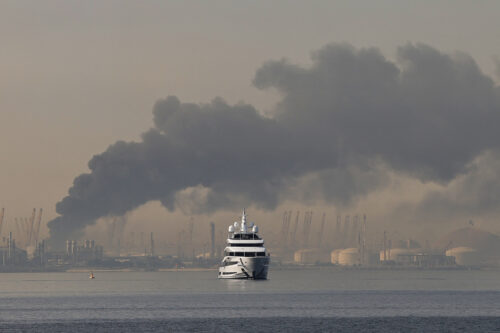
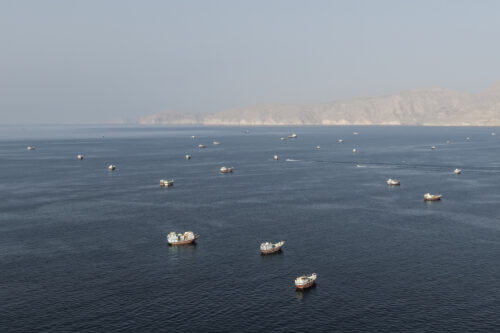
Crude oil is flowing out of the Gulf again, but the market is no better prepared for another disruption in the Strait of Hormuz. It has assembled a temporary system for managing one. Crude exports from the Gulf, excluding Iran, returned to pre-war levels in September, while total Gulf shipments reached 15.5 million barrels a day, more than 80% of the pre-conflict volume.
More than seven months into the U.S.-Israeli war with Iran, the market has coped with a closed or contested Strait of Hormuz by drawing down inventories, curbing consumption, and leaning on U.S. military power. Each has limits: inventories are finite, replenishment takes time, and reliance on U.S. military power carries strategic costs. Four indicators—onshore inventories, exposed importers, European gas storage, and U.S. naval capacity—will show whether this workaround is holding.
الصورة من وكالة فرانس برس عبر غيتي إيمدجز
معهد الشرق الأوسط (MEI) هو منظمة تعليمية مستقلة وغير حزبية وغير ربحية. لا يشارك المعهد في أي أنشطة دعوية، وآراء الباحثين فيه تعبر عن آرائهم الشخصية. يرحب المعهد بالتبرعات المالية، لكنه يحتفظ بالسيطرة التحريرية الكاملة على أعماله، ولا تعكس منشوراته سوى آراء المؤلفين. للاطلاع على قائمة المتبرعين للمعهد، يرجى النقر هنا.


The Unavoidable Neighbor: Managing Iran Beyond the War