Jordan’s Economy Weathers Iran War’s Shocks and Finds New Opportunities
In the summer of 2003, King Abdullah II told Bloomberg Jordan sits “between Iraq and a hard place,” a play on words designed to describe the kingdom’s challenging environment to an American audience amid the US-led Iraq war to the east and the lingering Palestinian-Israeli conflict to the west. Jordan is grappling with a much “harder place” today.
Gulf Political Economy: The Cost of Accommodating Iran
There may be no near-term resolution to the conflict between the United States, Israel, and Iran. The cease-fire and memorandum of understanding (MoU) signed on June 18 have broken down, there is little diplomatic engagement, and new flare-ups in early September indicate a further round of escalation. Gulf states may have no choice but to protect their assets and populations while trying to deter Iran by finding mechanisms of both containment and accommodation.
Gulf Energy Markets: The Region’s Edge Will Survive — At a Price
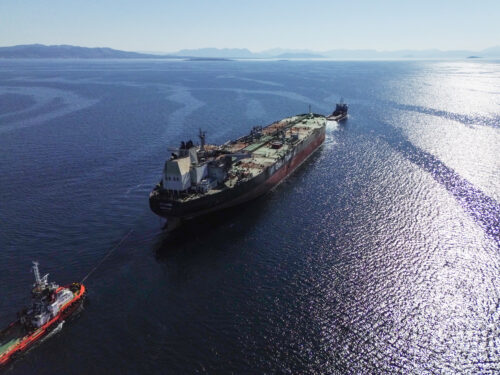
Across the Gulf, views differ widely on how the Iran war can and should end, and what the region will look like once it does. Yet on the crisis over the closure of the Strait of Hormuz, the view is near-unanimous that a repeat is not only possible but likely. That expectation, more than any single incident over the past year, is becoming a major driver of decision-making in industry and policy circles alike.
Jordan’s Economy Weathers Iran War’s Shocks and Finds New Opportunities
In the summer of 2003, King Abdullah II told Bloomberg Jordan sits “between Iraq and a hard place,” a play on words designed to describe the kingdom’s challenging environment to an American audience amid the US-led Iraq war to the east and the lingering Palestinian-Israeli conflict to the west. Jordan is grappling with a much “harder place” today.
Gulf Political Economy: The Cost of Accommodating Iran
There may be no near-term resolution to the conflict between the United States, Israel, and Iran. The cease-fire and memorandum of understanding (MoU) signed on June 18 have broken down, there is little diplomatic engagement, and new flare-ups in early September indicate a further round of escalation. Gulf states may have no choice but to protect their assets and populations while trying to deter Iran by finding mechanisms of both containment and accommodation.
Gulf Energy Markets: The Region’s Edge Will Survive — At a Price
Across the Gulf, views differ widely on how the Iran war can and should end, and what the region will look like once it does. Yet on the crisis over the closure of the Strait of Hormuz, the view is near-unanimous that a repeat is not only possible but likely. That expectation, more than any single incident over the past year, is becoming a major driver of decision-making in industry and policy circles alike.
Gulf AI: The War as a Catalyst for Deepening Regional-US Strategic Tech Cooperation
When Iranian drones struck two Amazon Web Services data centers in the UAE on March 1, 2026, and damaged a third in Bahrain the same morning, many thought this could spell the end of the Gulf’s AI ambitions. Whatever the intent, the attacks highlighted the new reality that data centers have now become targets in inter-state wars.
Egypt: How the Iran War Has Affected Egypt’s Calculations
Egypt, which is not party to the war on Iran, has become a target as well as an intermediary in the conflict. As a result, the war has affected Egypt’s future calculations, particularly in three major areas: its economy, its security, and its regional alliances.
Unlocking the Levant: Why the United States and Syria Must Pursue a Bilateral Trade and Investment Agreement
Apart from the brief honeymoon period between 1961 and 1963 under President John F. Kennedy and President Nazim al-Qudsi, US-Syria relations have never held such optimistic potential as they do today. Today, following the fall of Bashar al-Assad regime and the rise of a new government under President Ahmad al-Sharaa at the end of 2024, a new geopolitical window has opened.
North African governments have sought to remain outside the US-Iran conflict, regardless of their differing alignments and preferences. Geography insulates them from the fighting, but not from the consequences. That duality is the region’s predicament: what makes North Africa useful to others is what leaves it exposed.
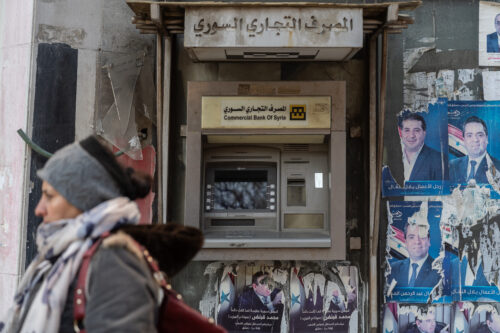
With sanctions repealed, Syrian policymakers must ensure that growing volumes of credit reach beyond the narrow political and commercial networks that have generally dominated Syrian finance. That will require a credit strategy aimed at sectors and regions historically excluded from formal finance. Syria’s specialized state banks offer an imperfect but ready-made mechanism to do so.
MENA Energy Recap, Q2-2026: Mideast Energy Confronts its Hormuz Era
The MENA Energy Recap is a quarterly review of key energy developments that took place in the region from April through June of 2026 and what they signal in the months ahead. The Recap views these developments through the lens of policy and strategy, energy security, and markets.
This report outlines an actionable US roadmap to win in Lebanon, comprising eight chapters of specific policy interventions across the security, economic, and political dimensions needed to secure a sovereign Lebanon, lock in US gains against Iran, and permanently end the Israel-Lebanon conflict.
The oldest peer-reviewed publication dedicated to the study of the modern Middle East, MEI’s flagship journal covers politics, society, and culture in the region.