Gulf Political Economy: The Cost of Accommodating Iran
September 28, 2026
Share
This article is part of a collection of short essays written by the Fellows of the Middle East Institute to explore aspects of the ongoing war with Iran. The intent of the collection is to help readers see new and unexpected elements of the dynamics and impact of the ongoing hostilities and to think harder, deeper, and broader about the implications of the conflict. To read the other essays from this collection, as well as download the full report, please click here.
There may be no near-term resolution to the conflict between the United States, Israel, and Iran. The cease-fire and memorandum of understanding (MoU) signed on June 18 at Versailles by President Donald Trump have broken down, and the path to a negotiated settlement has narrowed considerably. There is little diplomatic engagement, and Iran’s demands for administrative control of the Strait of Hormuz, sanctions relief, and access to frozen assets are all now non-starters for the Trump administration. Since the MoU’s collapse after July 10, US reprisals for Iranian attacks on ships attempting to transit the southern route of the Strait of Hormuz have escalated, and the fighting has inflicted further infrastructure damage across Iran and the Gulf Arab states. New flare-ups in early September indicate a further round of escalation. This may become the new normal.
In these circumstances, in which rounds of negotiations may carry on for some time, interrupted by renewed attacks or even a return to war, the Gulf states will have no choice but to protect their assets and populations while trying to deter Iran. The region and the world now enter a holding pattern, with intermittent violence that reconfigures trade and energy flows, while also forcing Iran’s neighbors to find mechanisms of both containment and accommodation.
There is little expectation in the Gulf of a return to the pre-war equilibrium. Even if diplomacy succeeds in producing a durable cease-fire and Iran gradually re-enters regional markets with sanctions relief, the Gulf Arab states appreciate that peace is expensive. The era of containing Iran through military deterrence is giving way to one of accommodating it through economic statecraft, diplomatic engagement, and strategic investment. That accommodation carries significant costs, limiting the economic prosperity of the Gulf Arab states, their ability to sustain their role as both allocators and magnets of capital, and their stature as superpowers in the global energy system.
Rebuilding Defenses and Economies
The next phase of Gulf strategy is therefore likely to rely as much on military build-ups as on economic resilience, including spending on defensive capabilities and hardening of both civilian and military infrastructure. Accommodation should not be mistaken for reconciliation. Rather, it reflects a pragmatic recognition that Iran’s disruptive capacity cannot be eliminated at an acceptable political or economic cost. Iran may change and transform, but its path and velocity are unknown. The objective for the Gulf Arab states is therefore to reduce the incentives for confrontation while simultaneously investing in the infrastructure, institutions, and fiscal capacity necessary to absorb future shocks. Beyond any Gulf-led $300 billion reconstruction fund for Iran, payments to the US as investments in lieu of Trump’s briefly proposed 20% fee to manage the Strait of Hormuz, the release of frozen Iranian assets, or outright cash transfers, each state’s domestic fiscal position is the most important indicator of its ability to weather the conflict and prepare for the shocks that might come next.
First on the bill will be military capacity, both defensive and offensive. Deterrence will mean building up significant air and missile defenses and other weapons systems, along with the hardening of energy and industrial infrastructure (including pipelines, oil storage, airports, ports, data centers, and aluminum smelters). Localizing defense manufacturing will be more of a priority, especially for critical technologies such as air-defense systems, new sources for drones, and electronic-warfare capabilities. The United Arab Emirates’ new defense-focused free zone is one policy tool already in use to both ease imports and support local production, while Saudi Arabia’s Vision 2030 target of localizing 50% of its military spending will further encourage domestic investment in the defense sector. Pre-conflict military spending was already rising in the Gulf. Saudi Arabia spent $83 billion in 2025, equivalent to 6.5% of GDP and about 3% of global military expenditure — an increase of 3.5% year-on-year. Kuwait spent $8 billion, or 4.7% of GDP, in 2025. Some estimates project a possible 20% rise in Gulf Cooperation Council (GCC) military expenditure as a result of this year’s conflict.
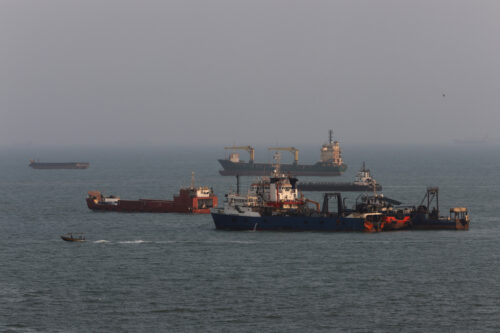
Second, the cost of recovery will include the risk that oil and gas production and export traffic through the Strait of Hormuz may not return to normal. How that shock is distributed will shape how each state recovers and responds. From February to May, Kuwait’s crude production was down 78% and Bahrain’s 73% — effectively offline. Saudi Arabia lost roughly a third of its production, falling from 10.1 million barrels per day (bpd) to 6.9 million bpd, but began to stabilize in June. For the UAE, oil production was down 38% from March to May 2026 before surging 80% in June, enabled by the MoU, the diversion of exports via its pipeline to Fujairah, and most importantly, its exit from the Organization of the Petroleum Exporting Countries (OPEC) and its quotas. Oman, by contrast, has been the only GCC state to raise production during the war, with output up roughly 10%. In short, without alternative export routes or the ability to bypass the strait completely, the impact on production has been severe.
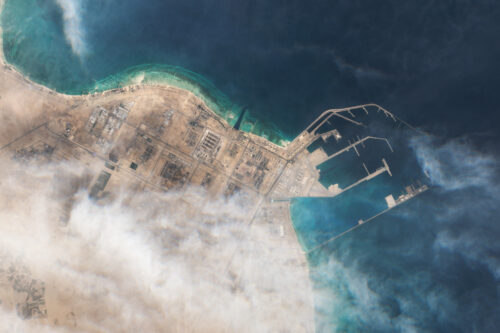
The International Monetary Fund (IMF) revised its GCC GDP growth forecast in May to 1.8% for 2026, down from its earlier estimate of 4.4%, and projected the regional fiscal balance at -1.4% of GDP. But the regional average masks very different country-level outlooks. If the conflict continues, Goldman Sachs estimates that Kuwait and Qatar could face the sharpest contractions, of 14% this year, while Saudi Arabia and the UAE would likely see GDP drop by about 3% and 5%, respectively. Qatar’s lack of alternative export routes for its liquefied natural gas (LNG), the centrality of gas export revenue to its government budget, and the nature of its shared offshore gas fields with Iran all heighten its vulnerability and willingness to make accommodations. The Iranian attack on Qatar’s Ras Laffan facility in March 2026 caused at least $20 billion in damage and will reduce Doha’s LNG export capacity by nearly 20% for several years, even if the strait reopens safely.
There is a debate among oil market analysts and traders about the severity of the disruption and whether we should expect shortages of oil and refined products to resolve quickly and lead to a surplus within a year. Many continue to see a surplus of supply going into 2027, meaning futures prices are lower than today’s spot or physical-delivery prices, a situation known as “backwardation” in trading terminology. A dominant sentiment among oil market participants is that the strait has to open, that production will return to pre-war levels, and that the market will be oversupplied by 2027 by as much as 5 million bpd, according to International Energy Agency estimates. If that scenario holds, which depends entirely on the normalization of Hormuz traffic and the resumption and repair of Gulf production, some market analysts and various banks expect Brent prices to settle in the mid-$60 per barrel range next year, down from the mid-$70 per barrel range in early August 2026. But while oil prices surged again over the $100 per barrel threshold in early September 2026, analysts estimate the 2026 average price will edge higher.
The problem for GCC governments in that scenario is that just when the recovery picks up speed with normalization of the strait and reduction in tensions with Iran, the amount of money available for them to spend falls as they earn less on oil exports. This means that fiscal policy will be challenging, especially for those states that experienced the sharpest declines in oil or gas revenue and the greatest damage to energy infrastructure. It bears stressing that oil market participants may be treating “normalization” of flows as a given precisely because they see how disastrous a long-term disruption and conflict would be for global markets. Yet cooler heads may not prevail, and disruption and violence could persist far longer than expected.
The Drive for Differentiated Infrastructure
The third factor to consider regarding the impact of the war on Gulf economies is the extent to which they are able to insulate themselves against a sustained disruption to energy flows in the Strait of Hormuz by building redundancy. The traditional assumption — that production capacity itself constitutes energy security — is no longer sufficient. Export redundancy has become equally important. Every major Gulf producer will now reassess its pipeline network, export terminals, storage facilities, and alternative shipping routes. Saudi Arabia is likely to accelerate investment in its East-West Pipeline and a parallel line, while expanding Red Sea export infrastructure. The UAE will continue strengthening Fujairah as a strategic outlet beyond Hormuz and has announced progress on building a parallel pipeline for oil as well as plans for a third pipeline for refined products. Oman will become increasingly valuable as an alternative export platform. Kuwait and Qatar, by contrast, remain among the most exposed producers because of their continued dependence on Gulf shipping lanes, though there is renewed interest and US support for pipelines through Iraq and into Syria to the Mediterranean.
The result is likely to be a decade of investment in regional oil infrastructure at a time when inflationary pressure keeps construction costs high and borrowing costs even higher. Energy-security concerns have driven a sharp U-turn in how consumers, industry, and investors view new oil infrastructure: just a few years ago, fears about stranded assets fueled widespread skepticism toward new exploration as well as new extraction and export infrastructure. Goldman Sachs estimates pipeline projects could replace over 45% of pre-war Gulf oil exports through Hormuz by 2027, reaching 60% by 2028.
This analysis assumes effective bypass pipeline capacity increasing by 3.8 million bpd by the end of 2027 and by a cumulative 7.3 million bpd by the end of 2028, which would take total effective bypass capacity to more than 14 million bpd (with pre-war volumes crossing Hormuz closer to 20 million bpd). Goldman based the estimate on a median construction period of around two and a half years but noted that the crisis could speed this up, with as much as 75% of volumes bypassing the strait by the end of 2028. Financing and costing the construction of these pipelines are more complex, with estimates of more than $55 billion for just one such super-Gulf pipeline, according to research by the Baker Institute. JP Morgan and others share estimates of the post-war infrastructure investment need at $100 billion or more for the region. New pipelines, additional LNG terminals, expanded storage facilities, alternative ports, and greater interconnection across regional transport networks will all become permanent features of Gulf economic planning.
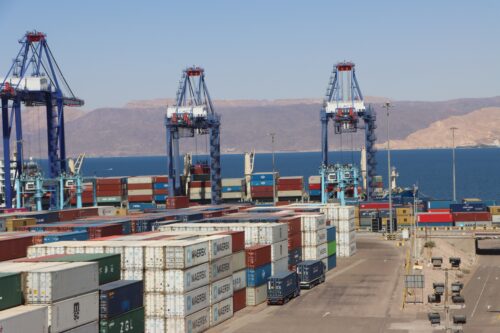
Fourth in fiscal outlays will be logistics and transport investments. As new port facilities at Fujairah, Yanbu, and Jeddah indicate, Gulf governments plan to diversify ports, strengthen regional trade linkages, and build supply-chain redundancy. This also includes investment in trucking and railways. For a long time, GCC rail links were considered a political and economic integration aspiration difficult to execute. The Iran war and its attendant energy crisis are making them a reality. DP World has expanded its port-to-trucking capacity, operating fast-track bonded corridors connecting east-coast gateways directly into Jebel Ali Port, establishing a bonded corridor from Sohar in Oman, and leveraging Red Sea routing options through Jeddah Islamic Port’s South Container Terminal. Following the disruption of maritime traffic, it has routed more than 350,000 twenty-foot equivalent units (TEUs) overland, with over 3,000 truck movements per day. For decades, globalization rewarded efficiency through lean supply chains and concentrated infrastructure. In the current era, duplicate pipelines, duplicate ports, multiple logistics corridors, and backup electricity systems all impose costs while generating little immediate return, functioning as insurance rather than productivity investments.
Psychological Factors
Finally, there are the less visible but equally important human and social costs. The attractiveness of the Gulf to expatriate workers is vital to the region’s economies and labor force. There are signs of resilience and revival, as Dubai residency visa medical checks recovered to around 80% of pre-conflict levels by end-June 2026, indicating a rebound in expatriate hiring after new visas fell 70% in March. However, renewed attacks may again spur exits and affect families returning after the summer holidays.
Governments are also spending more to increase the social welfare and security of citizens, including food security. The fiscal pressures and uneven buffers of GCC states are compounded by the fact that all must consider spending on social welfare mechanisms. Oman will subsidize 50% of transport and insurance costs for food imports through the end of 2026 to strengthen food security and protect consumers from higher prices caused by the Iran war. State-run shipping company Asyad Group said it received a royal directive from Sultan Haitham to implement the subsidy, which applies to all logistics companies importing food into the country. The government of Dubai has secured central bank support for loans to tourism businesses affected by the wartime downturn.
Ultimately, the largest long-term consequences are likely to appear not just in oil markets but in government budgets. Every Gulf government now confronts a wider definition of national security. Defense spending alone is no longer sufficient. Governments must finance hardened energy infrastructure, cybersecurity, food security, strategic reserves, intelligence capabilities, border management, drone offense and defense, and resilient logistics systems. Energy infrastructure itself will require redesign and redundancy. Protective barriers around storage facilities, underground communications networks, hardened control systems, dispersed processing capacity, and redundant power supplies will become standard components of future investment. These expenditures arrive precisely as oil revenues face increasing uncertainty. Even if Gulf production fully recovers, oil prices are unlikely to return to the levels that financed earlier waves of public investment. Lower long-term prices combined with permanently higher security spending create a more difficult fiscal environment.
Karen E. Young is a senior fellow at MEI, where she leads the Economics and Energy Initiative. She is also a senior research scholar at the Columbia University Center on Global Energy Policy. A political economist, her work focuses on the Gulf and broader Middle East and North Africa region, with particular attention to the intersection of energy, finance, and security.
Top image: Satellite view of Ras Laffan Industrial City in Qatar, March 19, 2026. Photo by Gallo Images/Orbital Horizon/Copernicus Sentinel Data 2026.
The Middle East Institute (MEI) is an independent, non-partisan, not-for-profit, educational organization. It does not engage in advocacy and its scholars’ opinions are their own. MEI welcomes financial donations, but retains sole editorial control over its work and its publications reflect only the authors’ views. For a listing of MEI donors, please click here.