Gulf AI: The War as a Catalyst for Deepening Regional-US Strategic Tech Cooperation
September 28, 2026
Share
This article is part of a collection of short essays written by the Fellows of the Middle East Institute to explore aspects of the ongoing war with Iran. The intent of the collection is to help readers see new and unexpected elements of the dynamics and impact of the ongoing hostilities and to think harder, deeper, and broader about the implications of the conflict. To read the other essays from this collection, as well as download the full report, please click here.
When Iranian drones struck two Amazon Web Services data centers in the United Arab Emirates on March 1, 2026, and damaged a third in Bahrain the same morning, many thought this could spell the end of the Gulf’s artificial intelligence (AI) ambitions. Investors and multinational companies are often risk-averse, and AI infrastructure is in demand all around the world; however, the Gulf states occupy a unique role in the global AI buildup because of their ability to allocate capital, their sizeable energy resources, and their proximity to key markets in South Asia, East Africa, and the Mediterranean. The Iranians were certainly trying to strike targets that they knew the Gulf countries and the United States valued. They may also have been trying to put an end to the Gulf’s geo-technological ambitions. Whatever the intent, the attacks highlighted the new reality that data centers have now become targets in inter-state wars, a shift that began with Russian attacks on Ukrainian infrastructure.
The UAE, Saudi Arabia, and Qatar are collectively planning 8-10 gigawatts (GW) of computational capacity, or compute, in near-term deployments across announced projects and national targets, with considerably more to follow in the long term. That puts the Gulf on track to become one of the fastest-growing regions globally and among the few outside the US and China building the capacity to run advanced software and AI systems at scale. The Gulf’s long-term objective is to build the ecosystem and compute capacity that will make these regional states — individually and collectively — the best place to deploy today’s microchip workhorses for AI processing, so-called graphics processing units (GPUs), bypassing the severe electricity grid constraints and political hurdles facing data center development in the US and Europe. Thus, the Iranian strikes threatened (possibly intentionally) to shake the region’s standing as a preferred destination for that infrastructure and to undermine the American partnership that would empower the Gulf’s AI ambitions. Instead, the attacks accelerated the very alignment they were meant to disrupt.
The US and Israel launched this latest war with Iran without prior consultation with America’s Gulf allies, but regional capitals absorbed the fallout and moved, however unevenly, toward deeper security alignment with Washington, even as the pace and depth of that shift varied considerably from capital to capital. Moreover, Moscow and Beijing aligned with Tehran during its extensive strikes against American assets and Gulf infrastructure, disrupting the Gulf’s traditional strategy of hedging with Russia and China alongside its US relationship. This created an urgent need for the US to establish an incentive structure that rewarded the Gulf states for their stance during the war and anchored them within the US strategic architecture. In practice, this meant advancing their primary techno-economic objectives — specifically, AI infrastructure for the UAE and a civil nuclear deal for Saudi Arabia.
On July 10, 2026, the US Commerce Department’s Bureau of Industry and Security (BIS) released a final rule officially reclassifying the UAE under the Export Administration Regulations (EAR) system. Under that schema, countries are sorted into lettered groups that determine what American technology they can receive and under what conditions, with “D” designations flagging proliferation or diversion concerns and “A” designations reserved for trusted partners. The rule removed the UAE from the two D-tier classifications it had carried and elevated it to Country Group A:5, the highest tier of trusted status, placing it alongside partners and allies like India, Japan, and Australia, as well as members of the North Atlantic Treaty Organization. The two D-tier designations the UAE had previously carried — D:3, covering chemical and biological weapons controls, and D:4, covering missile technology — had for years restricted Washington’s ability to export sensitive military equipment, unmanned aerial vehicles, and dual-use technology to Abu Dhabi without individual export licenses. Their removal, combined with the A:5 elevation, significantly expands what the UAE can receive from the US and under what conditions.
Effective upon publication on July 14, this A:5 designation covered the Emirati government and two commercial firms, giving them “enhanced favorable treatment” and making them eligible for License Exception Strategic Trade Authorization (STA) across specified dual-use technologies. Advanced computing hardware was carved out of that broader change and handled separately, through a list of specifically named approved entities that received license-free access. This regulatory update operationalizes the bilateral commitments established under the May 2025 US-UAE Artificial Intelligence Cooperation framework, and the ruling has both short-term and long-term strategic implications for US-UAE technological integration.
Saudi Arabia and Qatar are both carrying out large-scale buildouts of compute; both will want what the UAE received, and both are watching to see whether the upgrade to A:5 status is a bilateral favor extended to one capital or an established pathway available to any Gulf state willing to meet its conditions. If this aligns with Washington’s approach and long-term view, the framework should grant an A:5 designation to the Gulf states more broadly — creating an incentive structure for their support during the Iran war while solidifying the US-Gulf security architecture and broader techno-economic alignment.
Iran Miscalculates, the Gulf Doubles Down on American AI
The Iranian strikes on Gulf data centers were seen as coercive signaling from day one. The Islamic Revolutionary Guard Corps (IRGC) claimed responsibility and justified the attacks by pointing to the role the facilities played in supporting American military and intelligence networks. Iranian state media framed the operation as an effort to degrade what those facilities contribute to enemy military capability, and the Iranian news agency Tasnimpublished a list of what the IRGC asserted to be legitimate targets, covering AWS, Google, Microsoft, IBM, Oracle, and Nvidia. Weeks later, the IRGC released a video that zoomed in on the Stargate campus in Abu Dhabi and declared that all technology companies in the region would be treated as legitimate targets.
Data centers are large and physically fragile, and at the start of the war they lacked dedicated air defenses, making them vulnerable in a way that hardened military sites were not. The intended message was that alignment with Washington carries a military cost Gulf countries and investors would have to price into every subsequent decision. The strikes created the risk that fear of future Iranian attack might deter the Gulf states from further entrenching within the American technology stack — the layered architecture running from chips at the hardware level up through cloud infrastructure and, ultimately, the AI models built on top of it — and might instead steer them away from partnering with the US.
To no Gulf expert’s surprise, the attacks were quickly dealt with, and Gulf leadership doubled down on the buildout. Of the 233 data centers operating across the Gulf, only three were affected, and while some workloads were rerouted, the system absorbed the strikes. Brookfield Asset Management confirmed within a week that its $20 billion AI infrastructure partnership with the Qatar Investment Authority (QIA) would proceed on schedule, and Abu Dhabi stated publicly that it was not scaling back. The Gulf treated the attacks as a stress test, not a halt in its plans, and is likely to recalibrate how data centers are designed and sited rather than whether they get built.
Why the US Should Double Down on the Gulf in Return
The Gulf’s commitments to the US are government-to-government national investment frameworks, making them more resilient to geopolitical tensions and uncertainty. These are strategic bets that demonstrate the Gulf’s trust in American industry and alignment with American interests. The UAE agreed to a 10-year, $1.4 trillion framework covering AI infrastructure, semiconductors, energy, and American manufacturing, announced after Emirati officials, including the national security advisor and the heads of the major sovereign funds, met with President Donald Trump in Washington in March 2025. During the US president’s state visit that May, Saudi Arabia similarly pledged $600 billion, spanning industries from AI to critical minerals.
The AI-specific deployments tell a clear story of partnership between the Gulf states and American industry. The UAE has directed $148 billion into AI at home and abroad since the beginning of 2024. American hyperscalers — the major tech companies that operate data centers to provide cloud computing services — are investing alongside it, with Microsoft alone committing $15.2 billion to the country through 2029. In May 2025, the UAE announced the development of a 5 GW US-UAE AI Campus in Abu Dhabi, the largest outside the US. The massive data center complex is anchored by Stargate UAE, a 1 GW compute cluster built by the Emirates’ G42 and American firms OpenAI and Oracle, with Nvidia, SoftBank, and Cisco as additional partners. Saudi commitments run through Humain, a vehicle backed by the kingdom’s sovereign wealth fund, the Public Investment Fund (PIF), that Nvidia is supplying with several hundred thousand GPUs, alongside Amazon’s $5.3 billion AI hub in Riyadh. Qatar’s principal vehicle is the previously mentioned $20 billion AI infrastructure joint venture between the QIA and Brookfield Asset Management.
The sheer scale of the American AI buildout puts it in a different league from every other country — as well as Europe collectively. According to RAND, the US is projected to add approximately 82 GW of net available power capacity for AI data centers by 2030, against an installed base of around 50 GW of operating data center capacity at the end of 2025. The new capacity will consist of 33 GW from grid-connected resources and 49 GW from customer-built-and-operated resources. Despite the momentum behind such plans, the aforementioned limited availability of power in the US, supply chain constraints, and surging political opposition to data centers — present across both main American political parties and all demographic groups — are making it increasingly difficult to build them in the country.
American companies seem to be adapting to this changing environment. In August 2026, US firm Together AI announced a 250-megawatt data center in Saudi Arabia with Humain. Its CEO, Vipul Prakash, pointed directly to the growing domestic backlash as a rationale, noting that local communities increasingly do not want data centers nearby, cancellations and moratoriums are multiplying, and US capacity is becoming more constrained as a result.
American industry, specifically American hyperscalers and stakeholders within the AI industrial complex, knows that the Gulf has structural advantages that cannot be replicated easily almost anywhere else. Building a gigawatt of compute costs between $30 billion and $50 billion, and few actors outside China can deliver both the power and the capital at that scale. Geography compounds the advantage as AI shifts from training toward inference, since round-trip latency — the time it takes for data to travel from a user to a server and back — from Gulf infrastructure to South Asian users runs at roughly 25-40 milliseconds against 150-200 milliseconds from the US East Coast. To serve East Africa, South Asia, and the Mediterranean at those speeds, the data centers have to sit in the region itself. Nowhere else can supply that on the timeline the market requires. Speed, magnitude, and security alignment make the case for the Gulf states as a pillar of the US strategy of building compute at scale globally.
Another reason is the displacement of Chinese hardware, which is a notable concession from the Gulf. As a condition of American chip export approvals, G42 in the UAE and Humain in Saudi Arabia were required to phase out Huawei equipment and divest from Chinese technology platforms. A regional stack rebuilt around American chips and operated by American labs creates switching costs that outlast any particular administration in Washington or any phase of the war. Every gigawatt that comes online under those terms is a gigawatt that China does not supply, helping with the overarching American goal of diffusing US technology around the world.
This is why it is notable that the BIS framework excluded advanced computing from the broader country-level opening it granted the UAE. The rule expressly maintains licensing requirements for all such items destined for export, re-export, or transfer to or within the UAE except where the ultimate consignee and all end users are approved entities. These include UAE government agencies, G42 and Core42, and eight US-headquartered AI companies together with their UAE-based subsidiaries, namely Amazon, Apple, Google, Meta, Microsoft, OpenAI, Oracle, and xAI. Entry onto the list requires an advisory opinion request to BIS, decided case by case on US national security and foreign policy interests, including the applicant’s compliance capabilities and track record, with the determination made by the secretary of commerce in consultation with the secretary of state and the national security advisor within 30 days. The authorization granted to G42 and Core42 expires automatically on April 6, 2027; if the two have not become US companies by that date, they must reapply through the same process to keep their status. This is less a blanket A:5 designation than a conditional designation with broad security parameters. The rule imposes an entity-specific vetting process with expiring approvals that require the Emirati entities to satisfy layered security requirements to maintain access. That architecture directly addresses objections on national security grounds or fears of technology reaching America’s adversaries.
It should be noted that the US-Gulf technological expansion was under way prior to Iran’s recent attacks. Qatar signed the Pax Silica declaration on January 12, 2026, and the UAE followed as the ninth signatory to this US-led international initiative to secure supply chains for AI, semiconductors, and critical minerals two days later, joining Australia, Israel, Japan, South Korea, Singapore, and the UK.
Below the state level, national champions are already tied into American capital and vendors. G42 and Core42 hold the Emirati positions on the BIS whitelist. MGX co-founded the AI Infrastructure Partnership with BlackRock’s Global Infrastructure Partners and Microsoft, a vehicle structured to mobilize $30 billion in equity and up to $100 billion, including debt, with Nvidia, xAI, and Cisco joining as technology partners. The Kuwait Investment Authority joined that partnership in June 2025 as its first non-founder financial anchor. Humain operates as the Saudi PIF’s AI vehicle under a November 2025 Commerce Department authorization for the equivalent of 35,000 Nvidia Blackwell GB300s — advanced GPUs for AI training and inference workloads. These are the same allocation and conditions that UAE firm G42 received that same month. Qatar established Qai as a QIA subsidiary in December 2025, and the QIA took a position in Anthropic in September 2025. The Gulf AI sector is organized around a small number of state-owned entities, each of which already holds deep commercial relationships with American labs and hyperscalers.
Other objections often raised against continued AI buildout in the Gulf are that wartime costs, and the risk that the current state of low-level conflict will persist indefinitely, have made the economics uncompetitive and that a migration-based labor market cannot retain its technical workforce under fire. Both of these arguments rely largely on evidence from the opening months of the war rather than the current reality. On the economic front, the most careful published model of data center returns finds that a six-month construction delay, a 10% rise in non-IT construction costs, and an annual war insurance premium of 0.5% of capital expenditure are enough to reduce the life cycle value of an Emirati data center — which integrates both construction and operational returns over a 12-year timeline — to roughly 1.7% below the American level, as compared to 3.5% above it in normal circumstances. But the same model shows that demand and pricing power matter more than the cost shocks the war has introduced, and the variable that dominates everything else is speed of delivery, which is where the Gulf’s institutional advantage lies. The capital funding for the buildout is sovereign, native to the region, and committed on a generational basis to an industry the Gulf leaders treat as the foundation of their post-oil economy, often summarized as “compute is the new oil.” This suggests that these investments will not be repriced against commercial hurdles or reallocated when the risk premium rises because of the Iran war.
Paradoxically, the Iranian attacks themselves cleared up any confusion around major concerns that previously clouded the discussion on elevating the Gulf in its partnership with the US. Primarily, the conflict has shown that the Gulf is more aligned with the US vis-à-vis China and Russia — as Russia supplied the IRGC with intelligence that helped it target American troops in the Gulf and China was not neutral between the Gulf and Iran. Regional capitals believe that Beijing is complicit.
How the United States Should Buttress the Alliance
The Gulf response to the Iranian attacks should bolster confidence in the future of AI there. The region did not significantly slow the buildout, did not renegotiate its American partnerships, and did not hedge toward alternative suppliers. Instead, it moved in the opposite direction, supporting the American war effort directly enough that the Commerce Department cited that support in the rule that reclassified the UAE in July. Despite the damage, the buildout continues unhindered while inducing closer alignment between the US and its regional partners.
If the US does not return to its regional military bases at the scale it maintained before evacuating amid the war, will that change the calculation? The answer lies in the Gulf, which is building anti-drone capacity to protect both its energy and compute infrastructure, suggesting the region is hedging against a smaller US military footprint by developing indigenous air defense.
Given the extent of US-Gulf partnership on AI, the larger and logical next step is to open the same pathway to Saudi Arabia and Qatar that has already been created for the UAE, meaning both A:5 placement and a whitelist equivalent to the one BIS created for Abu Dhabi, since the country group alone does not deliver license-free access to advanced computing items. Both countries have absorbed the costs of the war directly, as the UAE has. Still, there remains a gap between what Riyadh and Doha have delivered and what they have received. Gaps of that kind give governments a reason to keep alternatives open, which is exactly what the US wants to avoid as it seeks to diffuse its tech stack around the world and make it the foundational layer for other nations’ AI buildup.
Publishing a pathway with the conditions the UAE accepted would convert a wartime exception into a standard other partners can qualify for, directly addressing objections that American technology access in the Gulf hinges on a single bilateral relationship that would not survive a change of administration in the US. The July rule tied license-free access to named companies rather than to the country and set out the process by which others can apply. The Commerce Department can publish a list of what an applicant must demonstrate to qualify, such as the divestment from Chinese hardware that G42 and Humain both accepted, the security and reporting conditions that accompanied the November 2025 authorizations, physical protection of the facilities receiving the equipment, and the ownership and governance tests that the current rule leaves vague. Applicants that meet the threshold would receive the same treatment as G42 and Core42, while applicants that do not would remain under a transaction-level, ad hoc licensing regime.
Riyadh, Kuwait City, and Doha absorbed Iranian strikes on their territory during the war and still aligned with the American effort. Under the current structure, the return on that alignment has been dragged out, frictional, case-by-case, and granted at Washington’s discretion. Under a fleshed-out, well-defined threshold, the return would be properly defined, settled in advance, and available to any Gulf state that meets the prerequisites, aiding the proliferation of the American tech stack globally. That would give the Gulf states something to work toward during a war they did not choose but supported anyway and would establish a clear threshold for A:5, offering an incentive structure for greater alignment.
In the aftermath of the strikes, the US introduced a mechanism to reward deeper security and geopolitical alignment: a whitelist of specific approved entities and an upgrade to the UAE’s country group designation. Washington gave less than was requested, but it gave enough to establish a template for the broader region. It must now institutionalize it.
Mohammed Soliman is a Senior Fellow at the Middle East Institute.
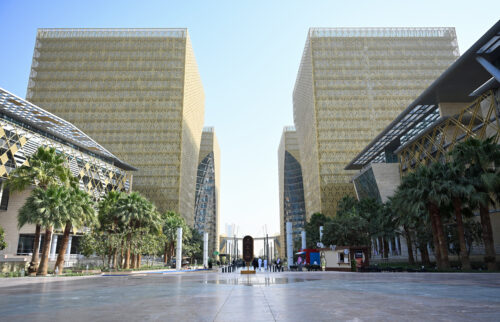
Top image: A view of “Digital City” in Riyadh, Saudi Arabia, on February 1, 2026. Photo by Elisa Schu/picture alliance via Getty Images.
The Middle East Institute (MEI) is an independent, non-partisan, not-for-profit, educational organization. It does not engage in advocacy and its scholars’ opinions are their own. MEI welcomes financial donations, but retains sole editorial control over its work and its publications reflect only the authors’ views. For a listing of MEI donors, please click here.