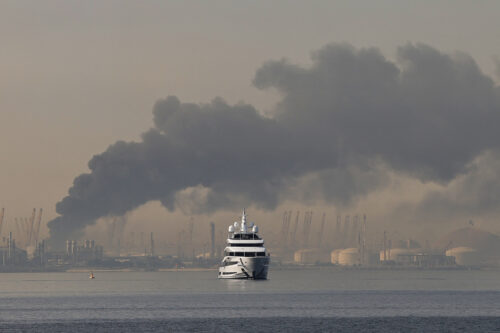

Wars are decided by those who hold military power, but their costs are increasingly borne by those who have little or no voice in the decisions that start them. The US–Iran war shows this imbalance very clearly. Its economic consequences have gone far beyond the battlefield and have disrupted energy markets, trade routes, food supplies, public finances and investment in the Gulf, Europe, Africa and Asia. The most striking feature of the conflict, however, is not only the size of the damage but its very unequal distribution. Major hydrocarbon exporters have suffered severe economic contractions in spite of higher oil prices. Poorer importing countries face growing fiscal pressure. The United States, relatively protected at the aggregate level, has passed a substantial part of the costs to its own consumers and to economies far beyond its borders. China, for its part, was able to draw on its strategic reserves, which shows that economic resilience does not necessarily follow from military superiority.
The most lasting consequences of the war may, in the end, be political rather than economic. The war has exposed the limits of American security guarantees, put in question the economic model of the Gulf, and further weakened confidence across the Atlantic. The central paradox is that military power can start and sustain a conflict without controlling its economic consequences, or deciding who finally pays for them. In an increasingly interconnected world, the capacity to wage war and the capacity to absorb its costs have become dangerously separated.
(Photo by AFP via Getty Images)
The Middle East Institute (MEI) is an independent, non-partisan, not-for-profit, educational organization. It does not engage in advocacy and its scholars’ opinions are their own. MEI welcomes financial donations, but retains sole editorial control over its work and its publications reflect only the authors’ views. For a listing of MEI donors, please click here.