







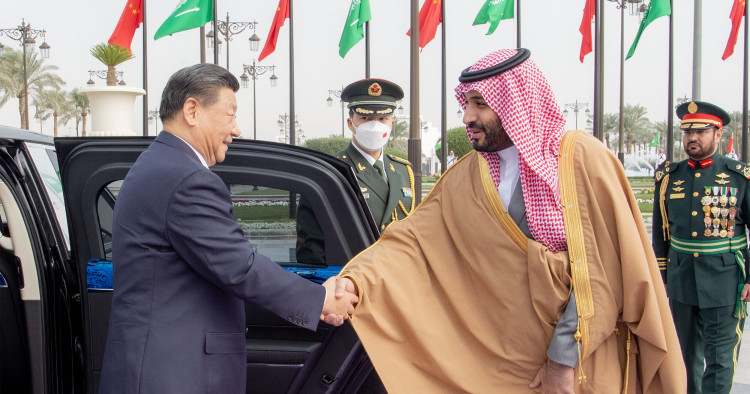
This article examines the changing volume and allocations of investment flows between China and the Gulf Cooperation Council (GCC) states over the last two decades, roughly from 2003 to the present. It argues that the synergy of both trade and investment with China, and Asia more broadly, fits into a current need of energy export revenue, as well as a future-proofing strategy of renewable energy supply chain access and securing new markets and trade routes connecting the Gulf to India, East Asia, and beyond. The Gulf states increasingly pair their ambitions for diversification with an outward investment and connectivity strategy, resting on infrastructure and energy projects from fossil fuels to their byproducts in petrochemicals, and the ability to build and develop renewable power assets, that is eastward in orientation. The traditional relationship between China and the GCC states has centered on oil and gas trade and contracting awards, but new data reveal this interdependence changing to one in which investment matters. The ability to deploy capital via sovereign investment vehicles, whether through firms partially or fully owned by governments, or via sovereign wealth funds makes the Gulf states both key political and financial actors across a burgeoning geoeconomic faction of South-South ties. New investment streams from China to the Gulf are creating synergies in Gulf domestic manufacturing capacity and outward co-investment in third countries, embodying broader geopolitical shifts of increasing trade and investment between emerging market economies or the Global South. We can read the Gulf’s eastward orientation in its economic ties as a strategic shift embracing expected trade and investment flows in growing markets.
Read this journal article (requires subscription)
Photo by Royal Court of Saudi Arabia/Anadolu Agency via Getty Images
The Middle East Institute (MEI) is an independent, non-partisan, non-for-profit, educational organization. It does not engage in advocacy and its scholars’ opinions are their own. MEI welcomes financial donations, but retains sole editorial control over its work and its publications reflect only the authors’ views. For a listing of MEI donors, please click here.