The deal to end Iran’s war with the United States was made by one part of the hardline establishment and might be savaged by another. To judge whether the peace holds, watch the fight among the hardliners and not the reformists.
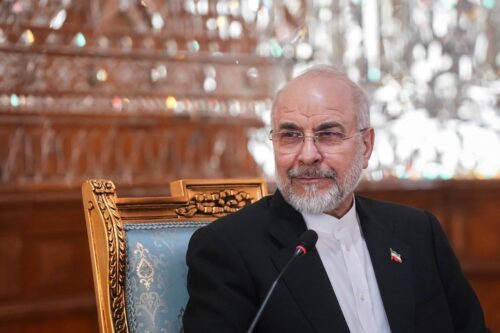
In the nights after Iran and the United States agreed to end their war, crowds gathered in Tehran. The rallies were organised, and their target was strikingly precise: not the agreement’s terms but two men: Foreign Minister Abbas Araghchi and the parliament speaker, Mohammad Bagher Ghalibaf, who led Iran’s negotiating team. The demonstrators called them traitors who had struck a bargain with America while forgetting the killing of the country’s supreme leader, Ali Khamenei.
Photo by Iranian Parliament Speaker Office/ Handout/Anadolu via Getty Images
The Middle East Institute (MEI) is an independent, non-partisan, not-for-profit, educational organization. It does not engage in advocacy and its scholars’ opinions are their own. MEI welcomes financial donations, but retains sole editorial control over its work and its publications reflect only the authors’ views. For a listing of MEI donors, please click here.
Iranian Elites Are Not in Agreement About What to Do Next
Beyond the Strait of Hormuz: How War Is Redrawing Trade Routes—and Elevating Pakistan