This individual is a guest contributor. MEI is not able to assist with contact requests.
Ali El Yassir is a Middle East analyst and researcher focusing on political and security developments in the region, especially the Levant. Recently his work has focused on assessing the state of the conflict in Syria and its regional impact. He was formerly a researcher at Globesight, a Dubai-based strategic advisory firm, and at the Carnegie Middle East Center in Beirut. He is currently a Masters candidate in international affairs at the Fletcher School of Law and Diplomacy at Tufts University, concentrating in international security studies and political economy. He received a B.A. in political science from the American University of Beirut with an emphasis on Middle East politics. Follow him on twitter @alielyassir.
The Kurdish PYD & the Challenge of Rebuilding a Syrian State
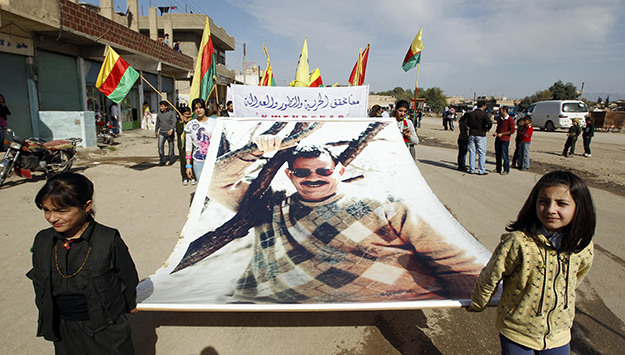
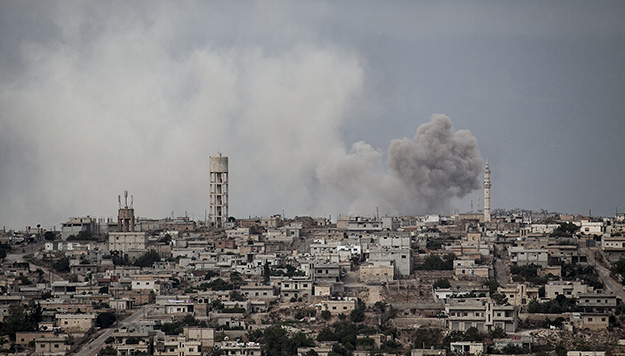
The United States’ unprecedented close air combat support to the PYD, a Syrian Kurdish political party and its associated militia, has helped the PYD drive back the Islamic State’s forces from a long strip along the Turkish border, handing ISIS its greatest defeat in Syria to date. The airstrikes have also enabled the PYD to consolidate its hold on Syrian Kurdish territories, and it has launched an ambitious autonomous governance project creating new administrations to manage local affairs.
Probably the most important group fighting the Syrian regime now is Ahrar al-Sham (Free Men of the Levant), a Salafi group fighting mainly in the north but also in central and southern Syria. Contrary to Western reports suggesting that the al-Qa‘ida-linked Nusra Front led the battle to capture the northwestern Syrian provincial capital of Idlib last March, Ahrar had more fighters in the battle—a fact demonstrated by its predominance in the subsequent military oversight council established for Idlib.