Skip to Content

Attiya Ahmad

Post-Doctoral Fellow

This individual is a guest contributor. MEI is not able to assist with contact requests.

Attiya Ahmad is Georgetown University’s 2009-10 Center for International and Regional Studies Post-Doctoral Fellow. She recently completed her PhD in Cultural Anthropology at Duke University. Dr. Ahmad’s work brings together scholarship on Islamic studies, globalization, diaspora and migration studies, economic anthropology, and political economy.


The Latest from Attiya Ahmad

Filter by
9997 Results
The Middle Kingdom and the Middle Corridor: Prospects for China-Turkey ties
  • Analysis
  • The Middle Kingdom and the Middle Corridor: Prospects for China-Turkey ties

    As part of Beijing’s broader strategy of seeking out new markets and cultivating strategic partnerships with countries beyond its backyard, China has been seeking to expand its economic and political ties with Black Sea states. While Beijing’s involvement in the region is still at a nascent stage, it has already prompted fears that its economic engagement masks a political agenda that could hurt Western interests.

    Patriarchy and the pandemic: Rethinking “women’s work” in a post-COVID world
    Photo by ANWAR AMRO/AFP via Getty Images
  • Analysis
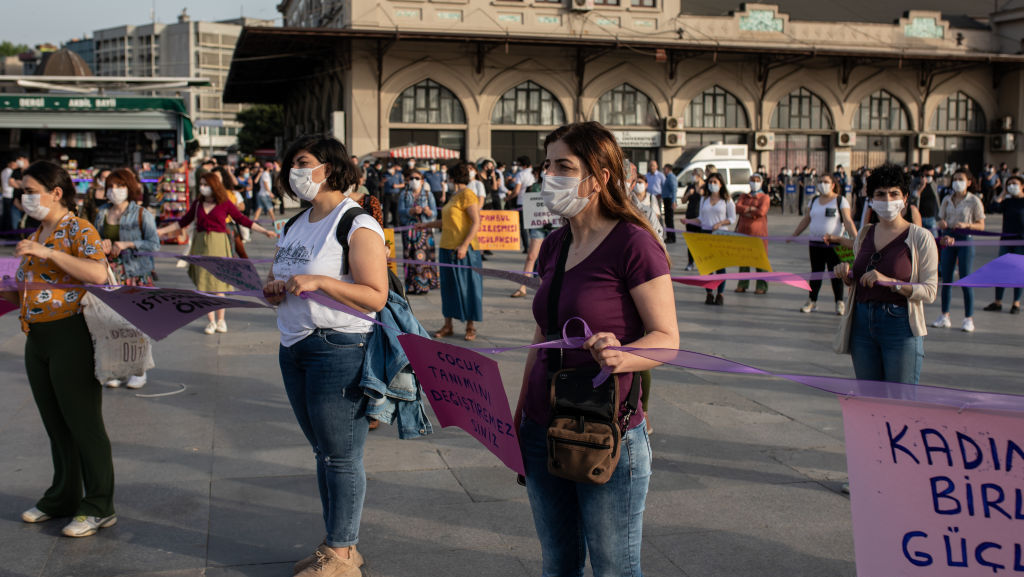
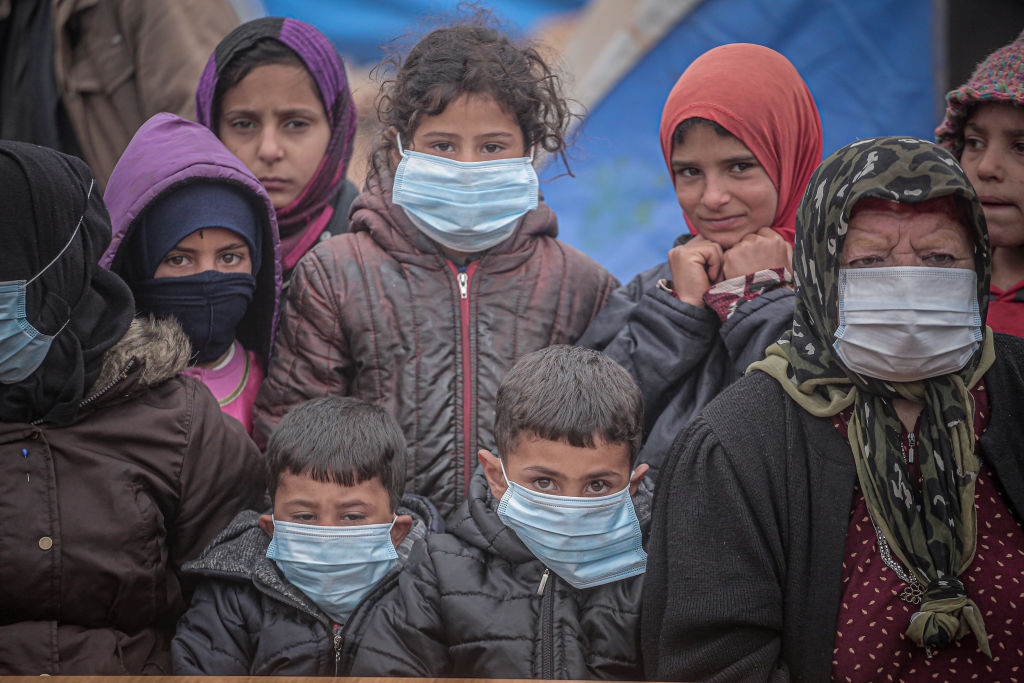
  • Patriarchy and the pandemic: Rethinking “women’s work” in a post-COVID world

    The current COVID-19 pandemic has had an unprecedented global impact. In many ways, everyone has been affected by this collective crisis, and everyone is at risk. However, both the virus and its aftermath discriminate strongly against women and girls.

    May 29, 2020

    How the battle over energy will reshape Eurasia relationships
  • Analysis
  • How the battle over energy will reshape Eurasia relationships

    The conflict between Turkey and the anti-Turkey bloc is hurting everyone’s energy interests, making an investment in the region costlier for energy companies. Without compromises on all sides, everyone stands to lose.

    The Libyan Conflict at a Turning Point
    Middle East Institute
  • Podcast
  • The Libyan Conflict at a Turning Point

    MEI’s Gonul Tol and Jonathan Winer join host Alistair Taylor to discuss the state of the conflict in Libya, where the internationally recognized Government of National Accord (GNA) forces supported by Turkey have made significant gains in recent weeks over Khalifa Haftar’s Libyan National Army (LNA) forces, which are backed by Russia, the UAE, Egypt, and France.

    May 29, 2020

    How Russia made Hemeimeem air base its African hub
    Photo by MAXIME POPOV/AFP via Getty Images
  • Analysis
  • How Russia made Hemeimeem air base its African hub

    The satellite images published on May 26 by AFRICOM appear to confirm reports that Russian MiG-29 jet fighters had flown to Libya. In fact, the MiG-29s travelled to Libya via Russia’s Hemeimeem air base in Syria, and as this latest episode makes clear, Hemeimeem plays a central role in Russia’s growing involvement in both the Mediterranean and Africa.

    Parviz Tanavoli, the nightingale of Iran
    Photo by Hadani Ditmars
  • Analysis
  • Parviz Tanavoli, the nightingale of Iran

    Far from his native Tehran in bucolic West Vancouver, Parviz Tanavoli, the 83-year-old “father of modern Iranian sculpture,” contemplates the fate of his homeland. “My heart breaks when I see what is happening in Iran now,” says the renowned artist, who divides his time between a life of relative obscurity on Canada’s Pacific coast, and Tehran, where he is referred to simply as “Master Tanavoli.”

    May 27, 2020

    Are the foreign patrons of the Libyan war ready to end it?
    Photo by Amru Salahuddien/Anadolu Agency via Getty Images
  • Analysis
  • Are the foreign patrons of the Libyan war ready to end it?

    Absent major military escalation by his foreign patrons, Khalifa Hifter has now lost the war he initiated against Libya’s internationally recognized government in Tripoli. The question remains, however, of how to end Libya’s proxy war and restart the necessary political process to bring about sustained peace.

    Natural gas in the Black Sea: Strengthening cooperation and balancing power
  • Analysis
  • Natural gas in the Black Sea: Strengthening cooperation and balancing power

    After the collapse of the Soviet Union, Russia used its dominant position as a natural gas supplier to wield outsized influence in the region. But recent changes in the natural gas market have eroded that dominance. Under increasingly globalized and interconnected natural gas markets, Russia has been losing its ability to use its dominance as a gas supplier to influence the region geopolitically and economically.

    May 26, 2020

    Returning Foreign Fighters: Is Malaysia Ready?
    MOHD RASFAN/AFP via Getty Images
  • Analysis
  • Returning Foreign Fighters: Is Malaysia Ready?

    It has been more than a year since the fall of Baghouz. Eleven Malaysians have returned from Syria under the Malaysian government’s offer, conditional upon compliance with checks and enforcement, and a one-month rehabilitation program. Since then, the authorities are optimistic that more will be able to return. However, the anticipation of more returnees raises questions about Malaysia’s readiness to receive incoming batches of Malaysia Islamic State (IS) fighters. Given Malaysia’s lack of experience dealing with battle-hardened terrorists and questions about the efficacy of existing deradicalization efforts, can these structures tackle issues that Malaysia has never faced?

    May 26, 2020

    Algeria: Toward an economic collapse?
    Photo by Billal Bensalem/NurPhoto via Getty Images
  • Analysis
  • Algeria: Toward an economic collapse?

    Even as a growing number of Arab and African states look to the International Monetary Fund (IMF) for assistance to help counter the economic fallout of the coronavirus pandemic, Algeria has made it clear it will not follow suit. Despite the fiscal challenges, economic crisis, social unrest, and public health emergency, President Abdelmadjid Tebboune has insisted that Algeria will not seek a loan to ease the country’s socio-economic woes.

    May 26, 2020

    The economic impact of COVID-19 on Turkey
    Photo by Burak Kara/Getty Images
  • Analysis
  • The economic impact of COVID-19 on Turkey

    COVID-19 is a humanitarian problem, and containing the pandemic as soon as possible is an urgent obligation to save human lives. Yet we have to deal with the economic fallout from the pandemic just as urgently because the costs are substantial.

    May 26, 2020