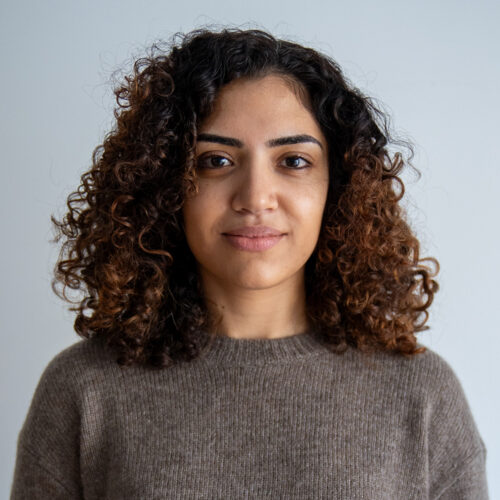
This individual is a guest contributor. MEI is not able to assist with contact requests.
Attiya Ahmad is Georgetown University’s 2009-10 Center for International and Regional Studies Post-Doctoral Fellow. She recently completed her PhD in Cultural Anthropology at Duke University. Dr. Ahmad’s work brings together scholarship on Islamic studies, globalization, diaspora and migration studies, economic anthropology, and political economy.
Supporting Democratic Movements in the Arab World: An Economist's Perspective
The global community was surprised by the suddenness and intensity of democratic movements in the Arab countries. While universally welcomed, the global response in support of these movements has so far been reactive, uncertain, and slow to build up. The only coherent rendering of such an initiative is the declaration of Deauville Partnership by the Group of 8 countries on May26-27, 2011.
This Commentary was first published as an op-ed in the Washington Post on July 29, 2011
With debt talks at an impasse, foreign policy is the last thing on many American minds. But how Congress and the president deal with the debt will affect US relations with other countries and our national security for years to come.
Egypt's Revolutionary Elite and the Silent Majority
It was a small group that set out on January 25, marching on National Police Day to decry the quotidian indignities they suffered at the hands of Husni Mubarak’s abusive police. Public protest in Egypt had long been a minority practice, rarely mustering more than a few hundred, or at best a few thousand, core movement activists. The organizers of the January 25 march expected the same base of dedicated demonstrators, and were shocked when the crowd swelled to more than 10,000.
Looking across the Middle East and North Africa (MENA), there is a real fear that both reform movements and revolutions risk snatching defeat from the jaws of victory. The momentum that made so many inspirational gains a few months ago is slowing, and the forces of conservatism remain in control. The only hope is that stamina, vigilance, and strategy will lead to a complete transition to democracy in at least one of the region’s countries. Not one revolution has yet been completed. If such a success is to happen soon, I hope it will be in Egypt.
The Syrian Revolution: The Role of "Emerging Leaders"
In January 2011, Syrian President Bashar al-Asad granted an interview to The Wall Street Journal in which he claimed that, because he was so close to the beliefs and aspirations of his people, Syria was “immune” to the revolutionary fever of nearby Arab lands.
Syria has the same preconditions for revolution as Tunisia and Egypt: poverty, unemployment, corruption, and repression. What Syrians were looking for was the spark.
The recent uprisings in Bahrain, Egypt, Libya, Syria, Tunisia, and Yemen share associated economic grievances and a common call for responsive government and a more dignified way of life; however, their underlying social dynamics are the product of diverse encounters with the outside world and years of oppression under very different political regimes. This is particularly true in the Libyan case, where socioeconomic and political structures and institutions shaped before as well as during the Qadhafi years have combined to produce a unique political economy.
People Power: The Real Force behind the "Bad Year for the Bad Guys"
It has been a bad year for bad guys. The events and political changes that marked 2011 were previously thought to be impossible. Yet, before July 1, 2011, Egyptian President Husni Mubarak and Tunisian President Zine el-‘Abidine Ben ‘Ali were out of power and prosecuted, Libyan leader Colonel Muammar Qadhafi and Yemeni President ‘Ali ‘Abdullah Salih were on their knees, Syrian President Bashar al-Asad was seriously challenged, and, unrelated but equally significant: Usama bin Ladin dead and Ratko Mladic in jail.
The Power of Strategic Nonviolent Action in Arab Revolutions
The largely nonviolent pro-democracy insurrections that have swept the Arab world in recent months have succeeded in toppling dictators in Tunisia and Egypt and have threatened the survival of autocratic regimes in Yemen, Bahrain, and Syria.
Two big misconceptions have been circulated about the Egyptian revolution in January 2011: first in the international media, research, and policy circles, and second inside Egypt itself through the Egyptian media. In the international sphere, the misconception was that the Egyptian revolution was a “cute” Facebook, social media, social network, or internet revolution (in which scrappy youths banded together over the internet to create change). Inside Egypt, the second misconception is that it was a pre-planned, organized, orchestrated, well-led revolution.
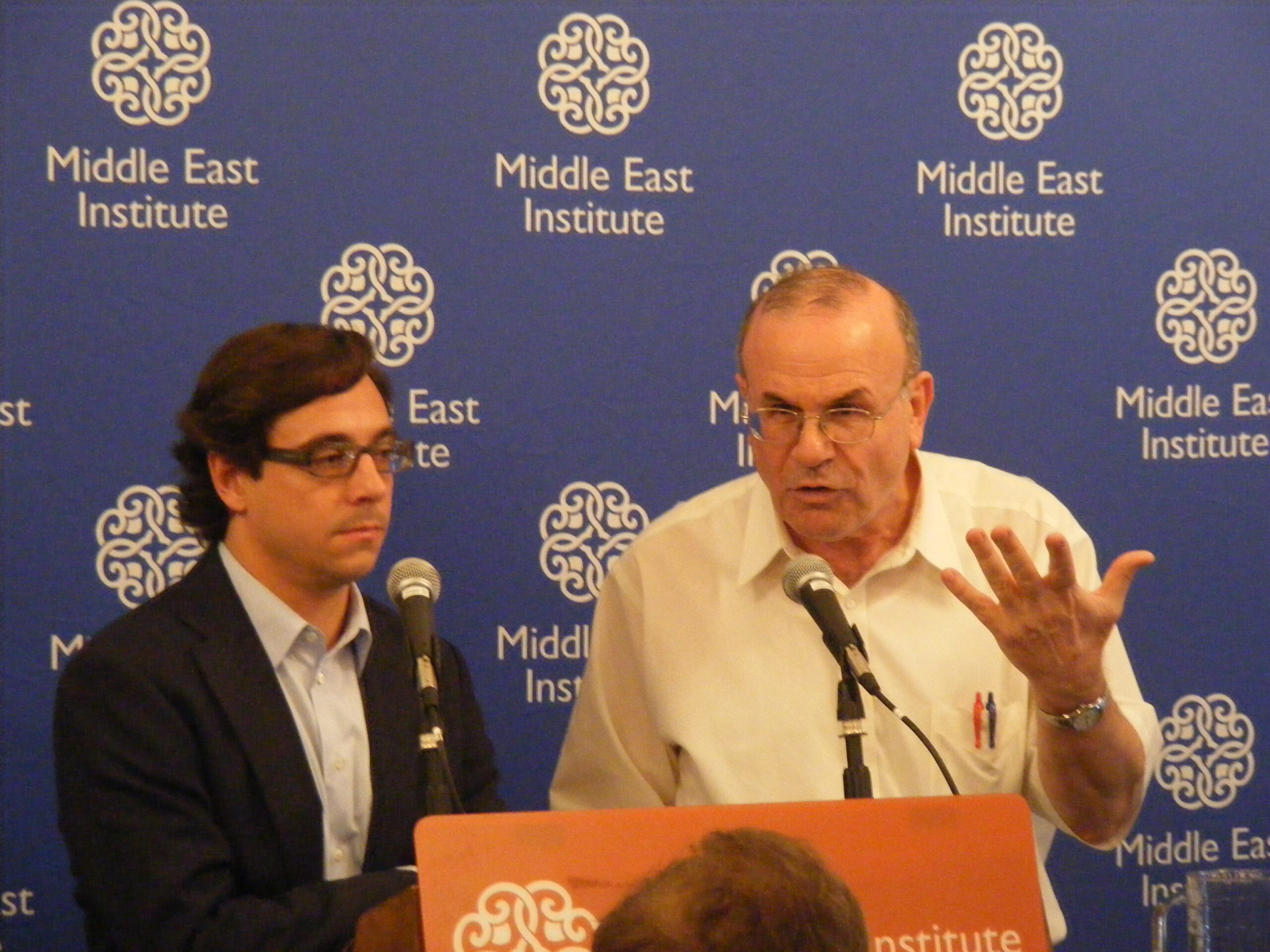
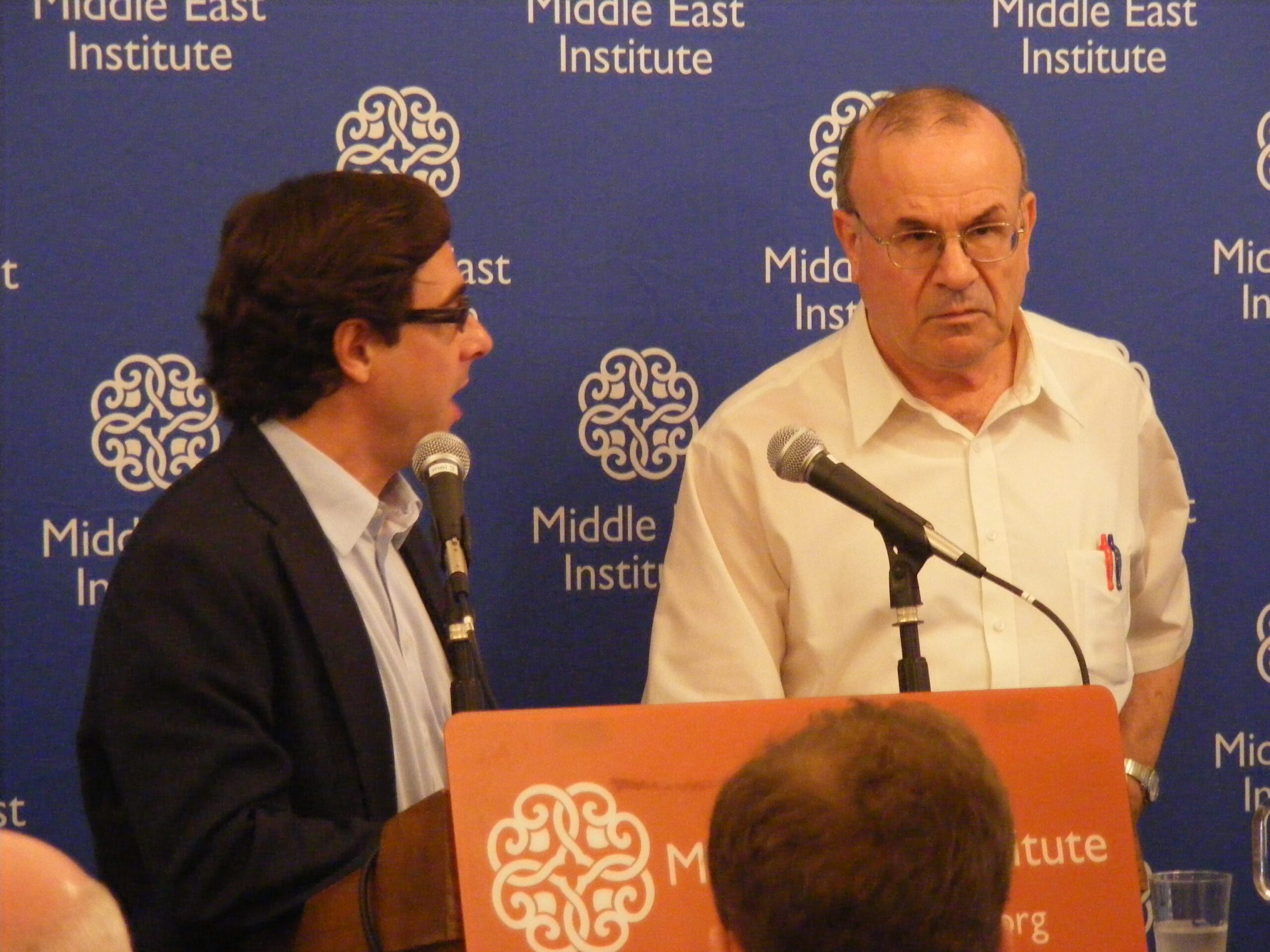
The Middle East Institute is proud to host Ilan Peleg and Dov Waxman, authors of the book Israel's Palestinians:The Conflict Within (Cambridge, 2011), for a discussion about their findings. One in five citizens of Israel are Palestinian. Often overlooked by outside observers, the challenges facing the Palestinian minority in Israel are an inseparable part of the Israeli-Palestinian conflict. Resolving this conflict – a central concern of U.S. foreign policy and current international diplomacy – requires more than the establishment of a Palestinian state.
The Middle East Institute is proud to host Ilan Peleg and Dov Waxman, authors of the book Israel's Palestinians:The Conflict Within (Cambridge, 2011), for a discussion about their findings. One in five citizens of Israel are Palestinian. Often overlooked by outside observers, the challenges facing the Palestinian minority in Israel are an inseparable part of the Israeli-Palestinian conflict. Resolving this conflict – a central concern of U.S. foreign policy and current international diplomacy – requires more than the establishment of a Palestinian state.
*This Commentary first appeared on neimanwatchdog.org on July 8, 2011
While political debate still roils over the legality of the American role in Libya, other questions have grown more pressing. Those questions include whether the European side of the NATO operation can be sustained and whether the Libyan opposition truly has the ability to achieve their goal of taking down the regime of Muammar Qaddhafi & Co.
These issues are critical for those favoring US participation in NATO operations as well as those opposed.