ISIS Recruitment of Malaysian Youth: Challenge and Response
This essay discusses ISIS recruitment methods that target Malaysian youth and critically examines the measures that the authorities have thus far put in place to counter them.
Monday Briefing: Iraq's Political Storm and U.S. Efforts to Salvage the Syrian Cease-fire
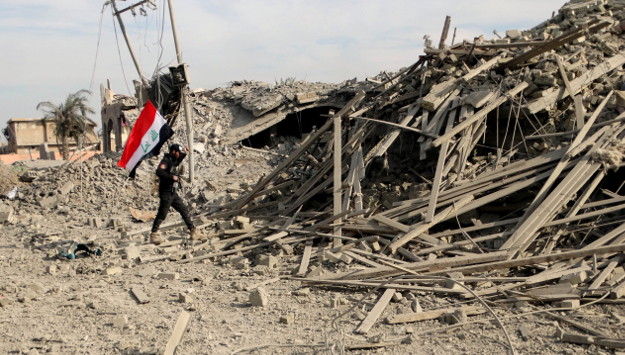
In this week’s Monday Briefing, MEI experts Hassan Mneimneh, Robert S. Ford, and Mabrouka M’Barek provide analysis on recent events including Iraq’s political storm, efforts to salvage the Syrian cease-fire, and the first Tunisia-U.S. Joint Economic Commission meeting starting later this week.
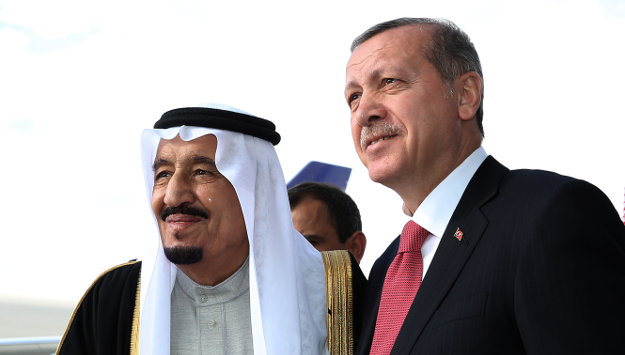
Turkey’s Choices: Muslim Brotherhood or Regional Isolation
In the latest attempt to break Turkey’s regional isolation, Turkish Foreign Minister Mevlut Cavusoglu wrapped up last week what he described as a watershed visit to the United Arab Emirates. He held meetings with high-ranking leaders and successfully improved ties with a key Arab state that has opposed Turkey’s pro-Muslim Brotherhood regional policies. The U.A.E. announced during the visit that it has decided to appoint an ambassador to Turkey after three years of coldness in ties.
The Colbert Held Archive: A Portrait of the Middle East
The Colbert Held Archive at the Middle East Institute is an impressive and unique collection of over 18,000 color Kodachrome slides donated by Colbert Held in 2014. A former foreign service officer and later professor of political geography, cultural geography, and Middle East history at Baylor University, Held captured a stunning variety of photographs of the Middle East during his many travels to the region between 1957 and 2005.
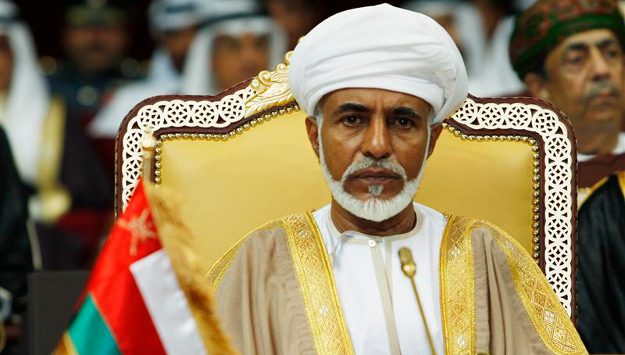
As political and humanitarian crises destabilize many Arab states, the Sultanate of Oman is a beacon of tranquility in a tumultuous region. The nation’s unique cohesion and stability is largely attributable to the legitimacy of Sultan Qaboos bin Said Al Busaidi, the longest serving Arab ruler still in power. Since ascending to the throne in 1970, Qaboos has transformed Oman from an impoverished state into a wealthy country with first-world infrastructure, a vibrant tourism industry and a military alliance with the United States and Britain.
Holy Crossings: Making Desirable Refugees for Resettlement from Turkey
The focus of this essay is on the practice of the Christianisation of refugees in Turkey. The essay shows that the politics of conversion can be interpreted as part of a struggle to be mobile and to increase resettlement prospects to the United States, the main country of resettlement for refugees in Turkey.
Recent additions to America’s fighting contingent in Iraq and Syria show U.S. determination to beat ISIS militarily. President Barack Obama announced Monday that 250 more U.S. special forces will enter Syria to help anti-ISIS fighters, and Defense Secretary Ashton B. Carter said last week that Apache helicopters and more special operations forces will be sent to Iraq.
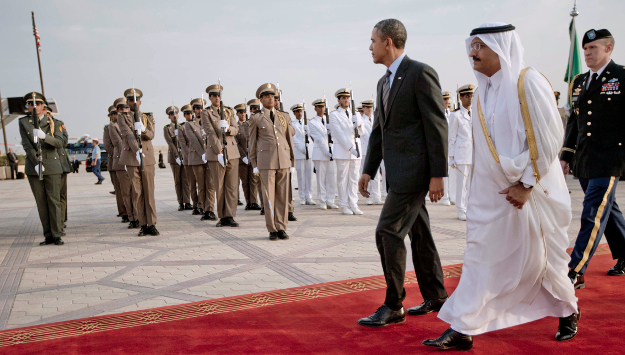
President Barack Obama has turned over the table of orthodox foreign policy theory and practice in the Middle East. The United States may now have choices before it that are better grounded in fact, but has roiled the region in the process. It is the short-term consequences of the American shift that have attracted the most attention, but it is the long-term that will produce the most important outcomes. Four of America’s traditional allies—Israel, Egypt, Turkey and Saudi Arabia—are now estranged partners. To make it more complicated, each has its separate reasons for distrusting America.
Monday Briefing: Syria Cease-fire, Yemen Talks, and Iran Elections
In this week’s Monday Briefing, MEI experts Charles Lister, Charles Schmitz, and Alex Vatanka provide analysis on recent events including the Syrian cease-fire, Al-Qaeda losses in Yemen, and Iran’s parliamentary elections.
Asian Boat People and the Challenges of Migration Governance: A Source Country Perspective
To what extent does the boat migration phenomenon demonstrate the limits of migration governance? The purpose of this essay is to address this question by focusing on Bangladesh as a source country. There are compelling reasons for looking into the boat migration phenomenon through the lens of migration governance. Despite the growing contribution of foreign remittances to the national economy, establishing a fairer migration regime has emerged as a challenging task for Bangladesh. An analysis of the boat migration phenomenon provides an opportunity to investigate the nature of the problem and its underlying causes.