Gönül Tol is a senior fellow at the Middle East Institute (MEI), where she focuses on Turkish politics, US-Turkey relations and regional dynamics in the Middle East.
A frequent commentator, Dr. Tol has written extensively on Turkish domestic and foreign policy for publications such as Foreign Affairs, The New York Times, Foreign Policy, and TheFinancial Times. Her articles include “Turkey Is Now a Full-Blown Autocracy” in Foreign Affairs (March 2025), “The Indispensable Erdogan” in The New York Times and “Erdogan Sees Nothing But Opportunity in Syria” in TheFinancial Times (December 2024).
Unpacking Turkey’s Failed Coup: Causes and Consequences
Who was Behind the Coup?
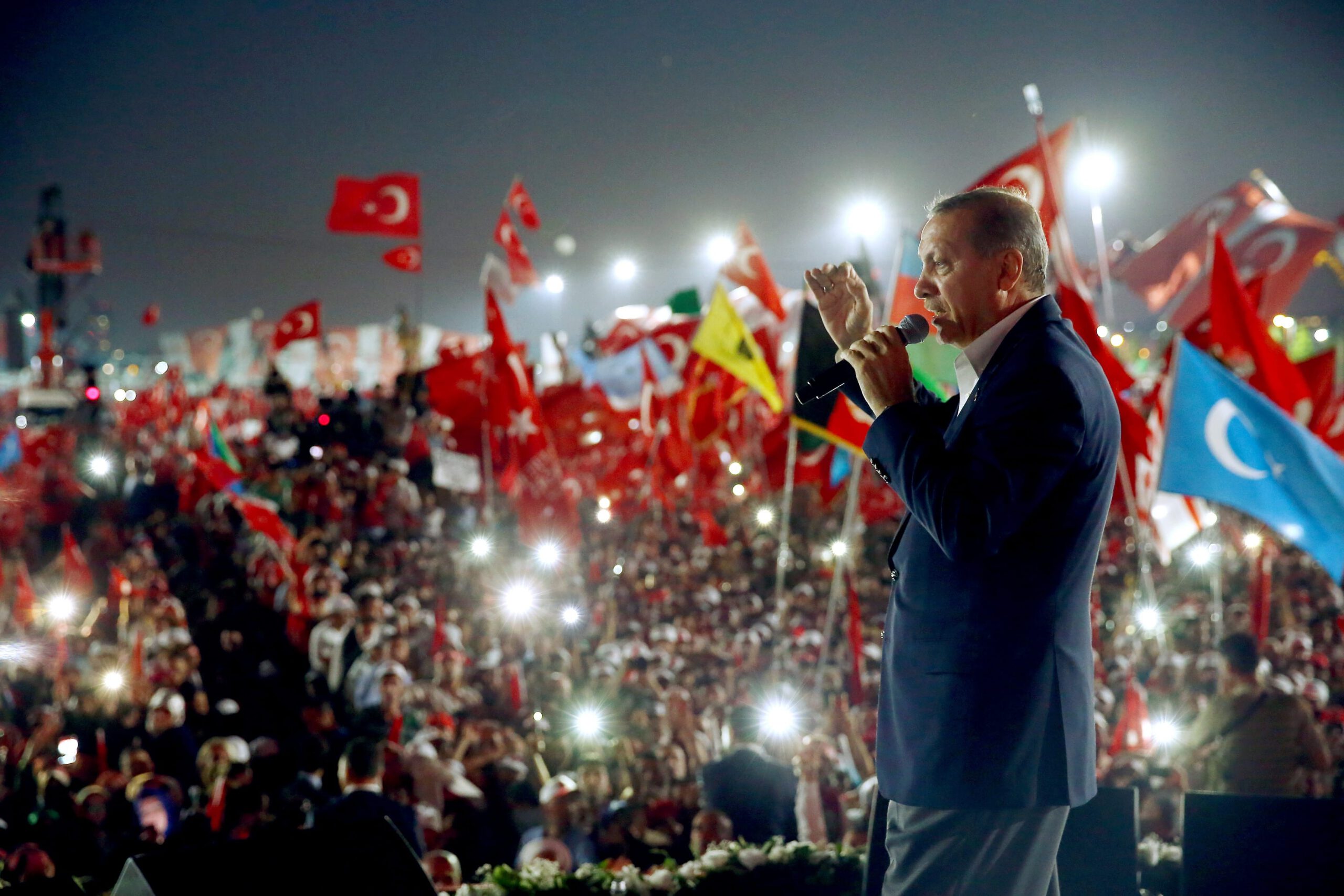
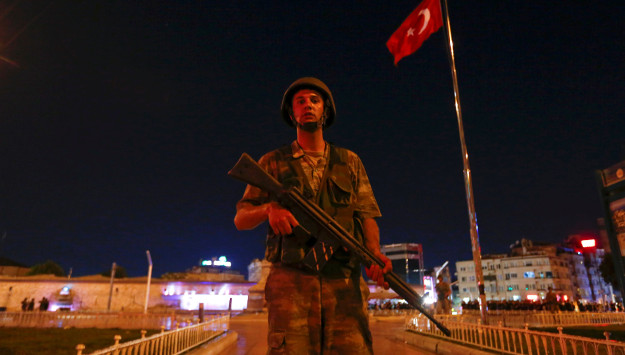
When President Recep Tayyip Erdogan addressed the Turkish people via FaceTime on the night of July 15, he pointed the finger of blame for the coup attempt squarely at Fethullah Gulen and his followers in the military.[1]
Monday Briefing: The Battle for Aleppo, Turkey's Gulen Extradition Request, and IMF talks in Cairo
In this week’s Monday Briefing, MEI experts Charles Lister, Gonul Tol, and Paul Salem provide analysis on recent and upcoming events including the battle for Aleppo, Turkey’s extradition appeal for Fatullah Gulen, and IMF talks in Cairo this week on Egypt’s request for more than $12 billion in loans.
Monday Briefing: Turkey's Post-Coup Military Restructuring and US-Russia Meeting in Geneva on Syria Coodrination
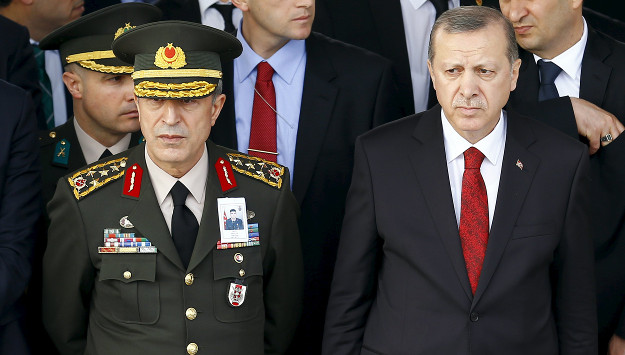
In this week’s Monday Briefing, MEI experts Gonul Tol and Randa Slim provide analysis on the restructuring of Turkey’s military following the recent failed coup attempt and the meeting between U.S. and Russian officials in Geneva tomorrow to discuss counterterrorism coordination in Syria.
Turkey is a country of ironies. A president who has called Twitter “the worst menace to society” and frequently expressed his “hatred” of the Internet, used both to prevent the coup against his rule when he called on his followers to take to the streets using Twitter and Facetime. The first TV network he called to reach out to his followers was CNN Turk, a channel he repeatedly accused of “terrorism propaganda” and “supporting coup against his government” and that has been the target of physical attacks by pro-Erdogan supporters.
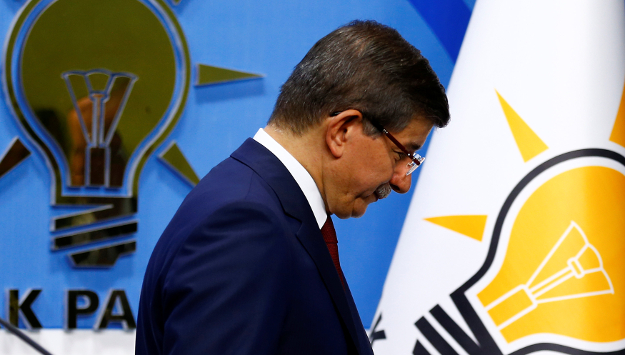
Turkish Prime Minister Ahmet Davutoglu has announced his resignation after 20 months in office. The decision has exposed a rift with Turkish President Recep Tayyip Erdogan, with whom tension has been building for some time. Erdogan handpicked Davutoglu as the country’s next prime minister after he became the president in August 2014, expecting that he would play a backseat role as Erdogan pushed ahead with plans to make the largely ceremonial presidency into an all-powerful executive position.
Turkey’s Choices: Muslim Brotherhood or Regional Isolation
In the latest attempt to break Turkey’s regional isolation, Turkish Foreign Minister Mevlut Cavusoglu wrapped up last week what he described as a watershed visit to the United Arab Emirates. He held meetings with high-ranking leaders and successfully improved ties with a key Arab state that has opposed Turkey’s pro-Muslim Brotherhood regional policies. The U.A.E. announced during the visit that it has decided to appoint an ambassador to Turkey after three years of coldness in ties.
The United States has been pushing Turkey for a campaign to eject ISIS from a 60-mile stretch of border that it still controls between the Syrian towns of Jarabulus and Azaz. However, the joint U.S.-Turkey operation has faced several roadblocks. From the outset, the United States and Turkey have had different goals. Washington wants Ankara to close the border, which is the sole remaining crossing point for ISIS militants.
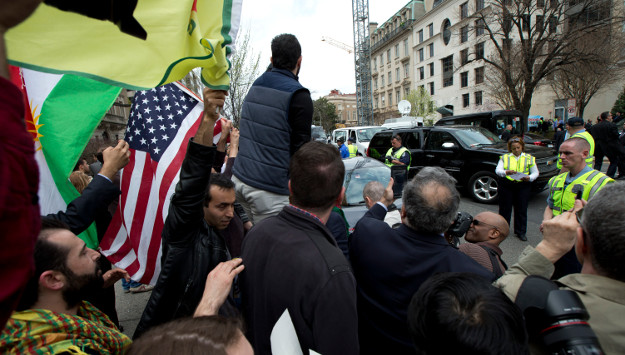
Monday Briefing: Erdogan's Failed Washington Trip, Iraq's Cabinet Reshuffle, and Other Key Issues in Week Ahead
In this week’s Monday Briefing, MEI experts Gonul Tol, Robert S. Ford, Charles Lister, and Paul Salem provide analysis on recent events including Turkish President Erdogan’s visit to Washington, the reshuffling of Iraq’s cabinet, King Salman’s forthcoming visit to Egypt, and the latest attempts by Jabhat al-Nusra over the weekend to disrupt the Syrian political process.
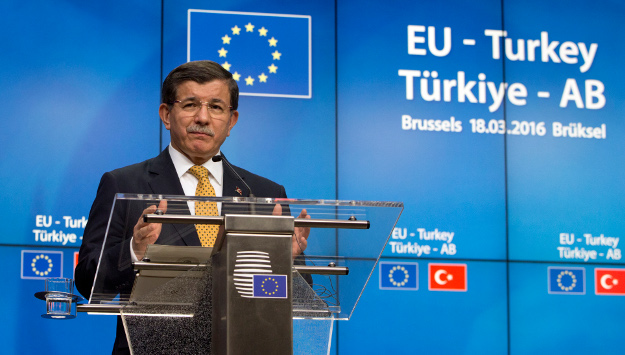
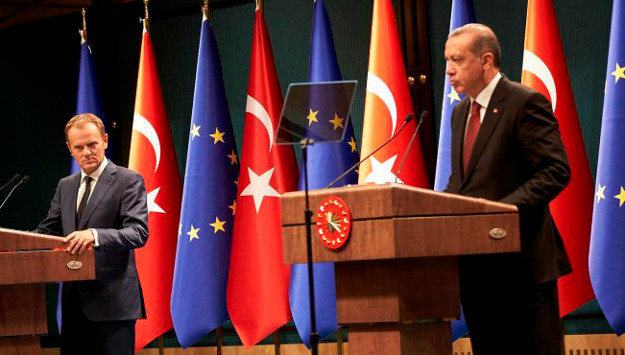
The European Union and Turkey agreed March 17 on a plan to address the Syrian refugee crisis. Under the deal any migrants arriving in Europe, starting next week, will be sent back to Turkey. Ankara, in exchange, will receive expedited aid intended to help Syrians in Turkey, as well as the promise of reignited E.U. membership talks.
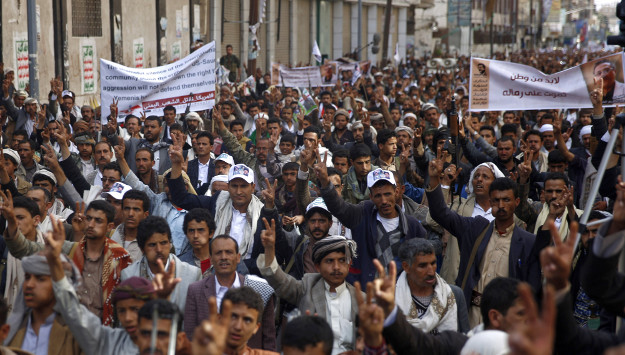
Monday Briefing: Latest Analysis on Yemen, Turkey, and Syria
In this week’s Monday Briefing, MEI experts Charles Schmitz, Gonul Tol, Randa Slim, and Charles Lister provide analysis on recent events including the announced cease-fire between the Saudi’s and Yemen’s Houthis, the consequences of the recent terrorist attacks in Turkey and the P.Y.D’s move to declare an autonomous Kurdish zone in northeastern Syria, expectations for Secretary Kerry’s visit to Moscow this week to discuss the Syrian conflict, and the impact of the cease-fire on conditions on the ground in Syria.
Turkey first applied for associate membership in the European Economic Community in 1959, and Europe has ever since had the upper hand in relations with Ankara. But the EU’s relationship with Turkey has been turned upside down by the Syrian refugee crisis, and the alarm it has caused in European countries.
Monday Briefing: Syria Talks, Ankara Bombing, Mosul Dam, and Donald Trump
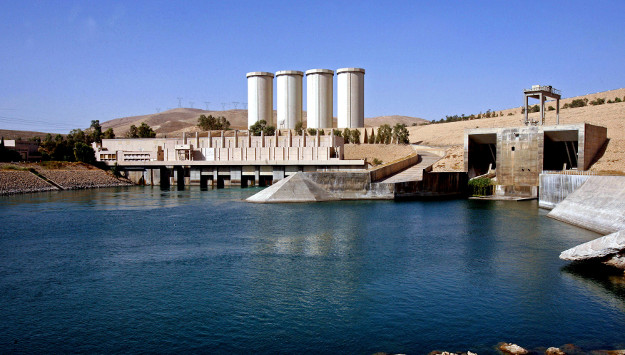
In this week’s Monday Briefing, MEI experts Charles Lister, Gonul Tol, Paul Salem, and Allen Keiswetter provide analysis on recent events including the planned Syria peace talks in Geneva, the fallout of this weekend’s bombing in Ankara on Turkey’s Kurdish issue, the urgent need for attention on the Mosul Dam, and Arab alarm at Donald Trump’s anti-Islam rhetoric.
Turkey is confronting a nightmare as its two archenemies, President Bashar al-Assad’s regime and the Kurdish Democratic Union Party (PYD), gain ground in Syria with the help of U.S. and Russian air cover. Turkey has long called for a no-fly zone in northern Syria to protect areas held by the opposition and a halt to the PYD advances west of the Euphrates. Frustrated with U.S. cooperation with the PYD, Ankara has insisted that the PYD is a terrorist organization and poses a grave danger to Turkey’s national security.