This individual is a guest contributor. MEI is not able to assist with contact requests.
Jean-Pierre Cassarino holds a professorship at the Robert Schuman Center for Advanced Studies (RSCAS/European University Institute, Florence) where he directs the Return migration and Development Platform (http://rsc.eui.eu/RDP/). He is also research associate at the Tunis-based Institut de Recherche sur le Maghreb Contemporain (IRMC). Since the mid-1990s, he has published extensively on international migration, particularly on return migration and has carried out numerous field surveys investigating returnees’ manifold patterns of reintegration. Selected publications include: (ed.) Unbalanced Reciprocities: Cooperation on Readmission in the Euro-Mediterranean Area, The Middle East Institute Press, Washington, 2010; (ed.) “Conditions of Modern Return Migrants”, International Journal on Multicultural Societies, Vol. 10, Issue 2, UNESCO, Paris, 2008; (ed.) Return Migrants to the Maghreb Countries: Reintegration and development challenges, RSCAS, European University Institute, Florence, 2008; Tunisian New Entrepreneurs and their Past Experiences of Migration in Europe: Networks, Resource Mobilisation, and Hidden Disaffection. Ashgate Publishers, Aldershot, 2000. Email: [email protected]
Iran-backed group says Hashd al-Shaabi will not merge into Iraq’s security institutions
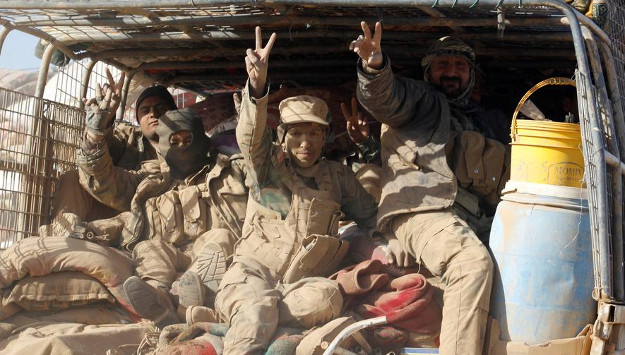
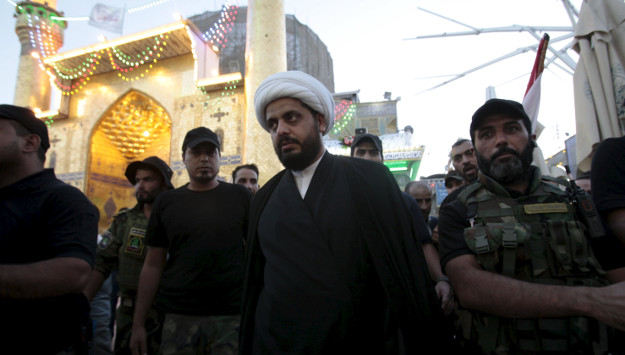
The spokesman of Asa’ib Ahl al-Haq, a militia unit within Iraq’s Popular Mobilization Force (PMF) with close ties with Iran’s Revolutionary Guards, welcomed Iraqi Prime Minister Haider al-Abadi’s decree giving PMF members equal salaries and benefits as those of regular military personnel, but emphasized that the PMF paramilitary forces will will not be merged into any of the country’s security institutions. According to AAH spokesman Naim al-Abudi, the PMF – also known by its Arabic name Hashd al-Shaabi – has 140,000 members, including 122,000 combatants.
The way forward for Palestine: Fatah, Hamas and Dahlan
As Palestinians confront U.S. President Donald Trump’s “deal of the century,” the debilitating effect of endemic, internal division within their ranks continues to define their domestic political landscape.
Sub-Saharan Africa must respect North Africa's water rights
The Middle East is the world’s most arid region and the one most dependent on renewable freshwater resources that originate outside its territories. These resources are largely contained in the Nile, Euphrates-Tigris, and Jordan river basins. An international law-based approach to transboundary watercourse development and management is vital for human security and regional stability. Applying legal principles in the Nile Basin is imperative, as unilateral actions by upstream countries can harm livelihoods on a large scale in downstream countries and destabilize their economies.
Iranian protesters clash with police over water dispute in Isfahan
Scores of angry Iranian farmers clashed with local security forces in the central province of Isfahan over a water dispute, the BBC Persian reported. The police used tear gas to disperse the protesters, who were chanting antigovernment slogans.
Arab summit calls on Iran to end “expansionist policies”, return disputed islands to UAE
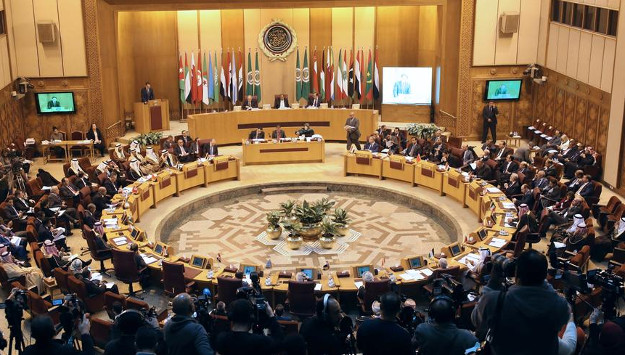
A summit of Arab foreign ministers in Cairo called on Iran to stop its “expansionist policies” and interference in the internal affairs of the Arab countries – drawing an angry response from the Iranian foreign ministry.
Iran-backed militia groups will receive full military benefits under new decree
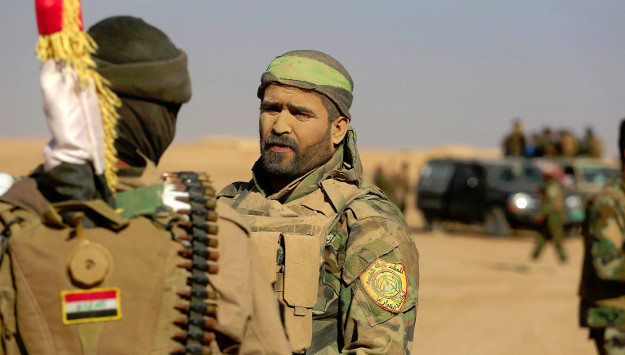
Iraqi Prime Minister Haider al-Abadi yesterday issued a decree on the inclusion of the Popular Mobilization Forces (PMF) in the country’s security forces, the Iranian and Lebanese media reported. According to the Abadi’s order, the paramilitary forces, also known by its Arabic name Hashd al-Shaabi, will receive equivalent salaries and other benefits as the country’s military personnel under the Ministry of Defense. The PMF forces from now on also can enroll in military colleges and institutions and will be subject to the country’s military service laws and regulations.
U.S.-Russia Dialogue and Preventing Regional Confrontation
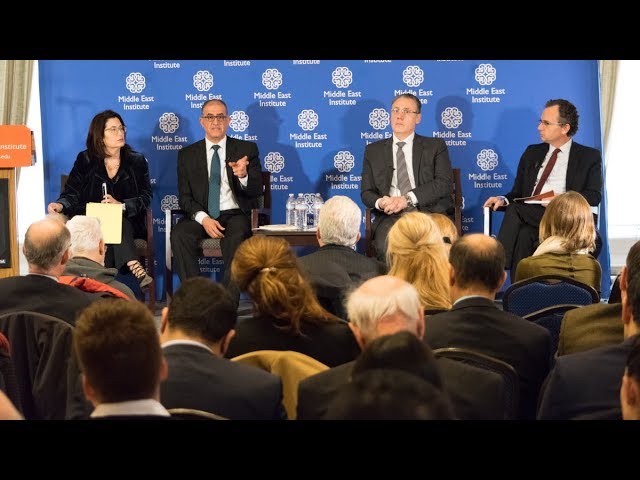
Irina Zvyagelskaya, of the Institute of Oriental Studies of the Russian Academy of Sciences in Moscow and Randa Slim, director of MEI’s Program on Conflict Resolution and Track II Dialogues, join host Paul Salem to discuss U.S. and Russian efforts to find shared interests in the region, from Syria to Yemen, and to avoid confrontation and escalation.
Saudi-Turkish relations hit a new low point this week after Saudi Crown Prince Mohammed bin Salman referred to Turkey as part of a “triangle of evil” alongside Iran and Islamic extremists.
Regional cooperation in the Middle East: the Baghdad Declaration
Since 2014, the Middle East Institute (MEI) has convened the Middle East Dialogue, a Track 1.5 initiative involving current and former officials and senior experts from across the Middle East as well as from China, Europe, Russia and the United States. These meetings focus on the conflicts in Syria and Iraq, and on the principles and architecture of a new regional cooperation framework in the Middle East. At the Dialogue’s most recent meeting in Baghdad, the group issued a consensus document outlining Good Neighborhood Principles for the Middle East.
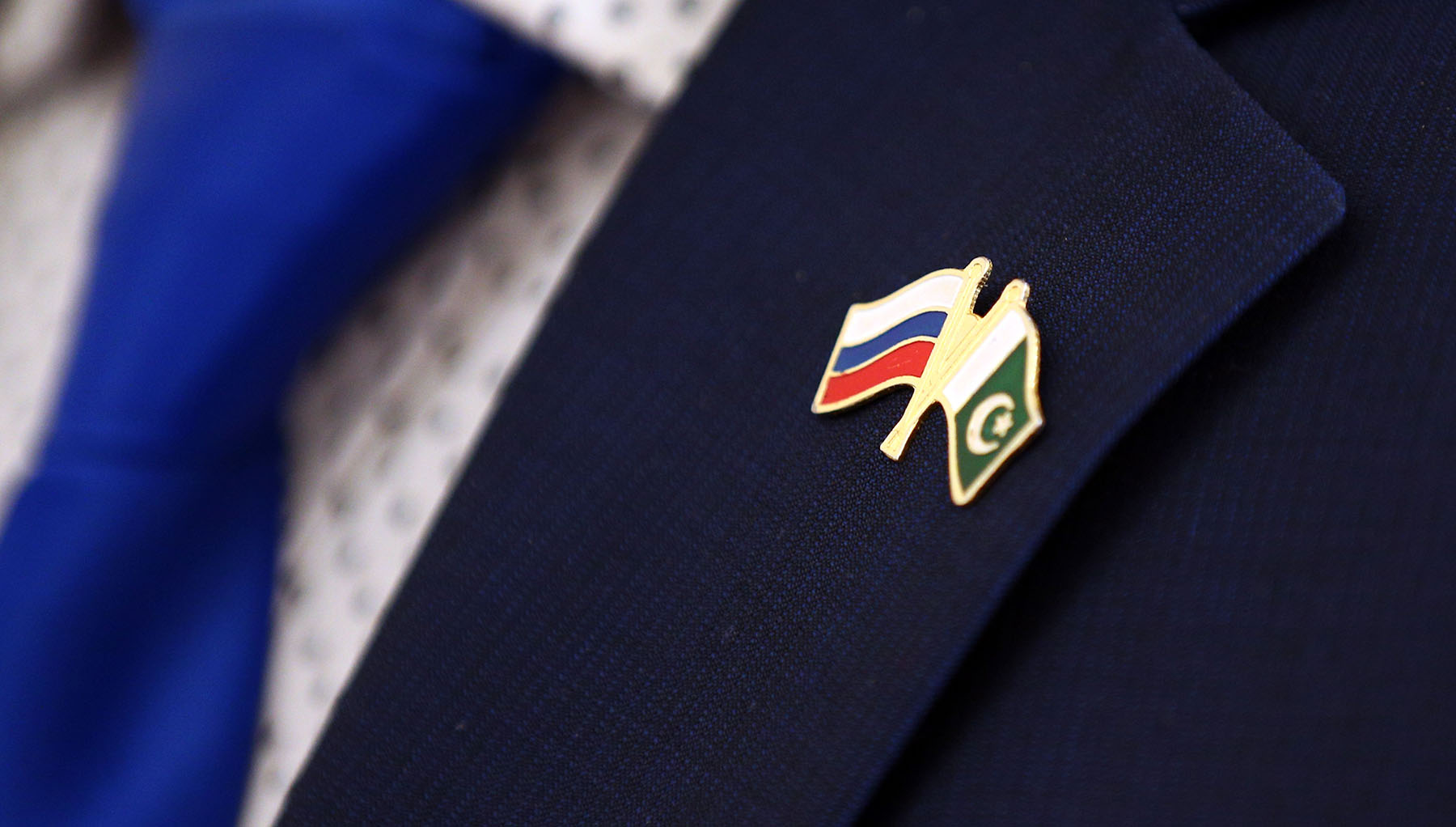
Russia and Pakistan align their Afghanistan policies
Pakistani foreign minister Khawaja Muhammad Asif’s visit to Russia from Feb. 19 to Feb. 22 was a desperate attempt by Islamabad to woo Moscow into countering mounting American pressure on Pakistan to close safe havens used by the Taliban, most notably the Haqqani network. However, the growing Moscow-Islamabad bonhomie is not good news for Washington’s current Afghan strategy, as it unmistakably signifies changing Russian perceptions and priorities in South Asia.
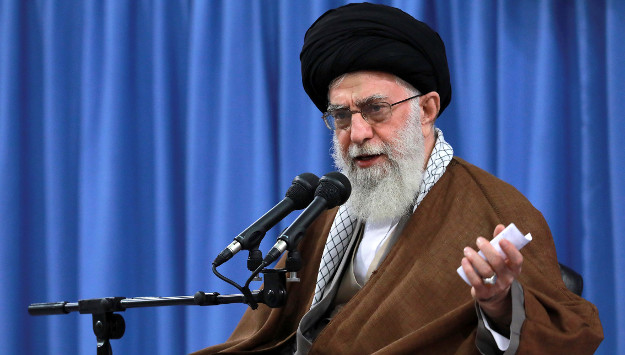
Khamenei rules out negotiation with West over Iran’s regional role
Iran’s Supreme Leader Ali Khamenei said today that the Islamic Republic will not negotiate with the West regarding its presence and policies in the Middle East,
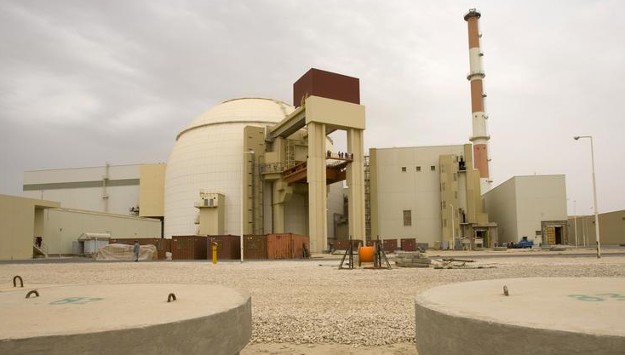
AEIO spokesman: Iran can resume 20% enrichment, builds nuclear-powered ships
Iran can resume 20 percent uranium enrichment within two days using new enrichment machines the country has developed, the spokesman of the Atomic Energy Organization of Iran (AEOI) has said. Behrouz Kamalvandi further warned that if the Trump administration cancels the 2015 nuclear agreement, Tehran will further enhance the scope of its nuclear enrichment capabilities.
Iran-backed Iraqi militia group says it’s “legitimate” to confront US forces
The spokesman of Asa’ib Ahl al-Haq (AAH), an Iraqi militia group with close ties with Iran’s Revolutionary Guards and the Lebanese Hezbollah, described the US presence in Iraq as “illegal” and called for the withdrawal of American troops from the country. His remarks were the latest in a series of similar statements against the US presence in Iraq by Iranian-backed groups in recent months.
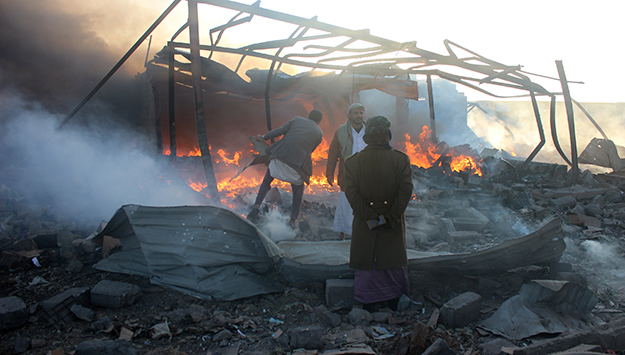
Turmoil in Aden over the past few weeks has underlined the existential crisis confronting Yemen. The alliances that have been at the center of the three-year-old civil war—the Hadi government and its Saudi-led coalition of supporters versus the Houthi alliance with former President Ali Abdullah Saleh—have fractured.