This individual is a guest contributor. MEI is not able to assist with contact requests.
Jean-Pierre Cassarino holds a professorship at the Robert Schuman Center for Advanced Studies (RSCAS/European University Institute, Florence) where he directs the Return migration and Development Platform (http://rsc.eui.eu/RDP/). He is also research associate at the Tunis-based Institut de Recherche sur le Maghreb Contemporain (IRMC). Since the mid-1990s, he has published extensively on international migration, particularly on return migration and has carried out numerous field surveys investigating returnees’ manifold patterns of reintegration. Selected publications include: (ed.) Unbalanced Reciprocities: Cooperation on Readmission in the Euro-Mediterranean Area, The Middle East Institute Press, Washington, 2010; (ed.) “Conditions of Modern Return Migrants”, International Journal on Multicultural Societies, Vol. 10, Issue 2, UNESCO, Paris, 2008; (ed.) Return Migrants to the Maghreb Countries: Reintegration and development challenges, RSCAS, European University Institute, Florence, 2008; Tunisian New Entrepreneurs and their Past Experiences of Migration in Europe: Networks, Resource Mobilisation, and Hidden Disaffection. Ashgate Publishers, Aldershot, 2000. Email: [email protected]
After the Summit: Assessing Iraq's Relations with its Arab Neighbors
MEI Podcast, 12 July, 2012After the Summit: Assessing Iraq’s Relations with its Arab NeighborsJohn Desrocher, Gregory Gause, Ken Pollack, Amb. Samir Sumaida’ie, Phebe Marr
Saudi Professor Faces Charges After Fighting for Free Speech
This Opinion was first published on Al-Monitor.com on June 28, 2012
What are the limits of free speech and open dissent in the Kingdom of Saudi Arabia? They are often unclear and seemingly arbitrary, but there is no doubt that Dr. Mohammad al-Qahtani, a professor and activist, went well beyond them, and he knew it. He was hardly surprised when Saudi prosecutors, finally fed up with his vociferous denunciations of the regime, hit him with a long list of criminal charges. He had predicted it, and in the context of Saudi Arabia, he was asking for it.
The Third Annual Conference on Turkey: Regional and Domestic Challenges for an Ascendant Turkey
The Middle East Institute’s Center for Turkish Studies in collaboration with the Institute of Turkish Studies present:”Regional and Domestic Challenges for an Ascendant Turkey” June 27th, 20129:00am-5:00pmNational Press Club529 14th Street, NW 13th FloorWashington, DC 20045 Conference Schedule:8:45am – 9:00am: Registration9:00am – 9:15am: WelcomeAmb. Wendy J. Chamberlin, Middle East InstituteGönül Tol, MEI’s Center for Turkish StudiesRoss Wilson, Institute of Turkish Studies 9:15am – 10:00am: Opening KeynoteSenator John McCainUnited States Senate 10:00am – 10:30am: KeynoteAmb.
The Third Annual Conference on Turkey: Regional and Domestic Challenges for an Ascendant Turkey
The Middle East Institute’s Center for Turkish Studies in collaboration with the Institute of Turkish Studies present:”Regional and Domestic Challenges for an Ascendant Turkey” June 27th, 20129:00am-5:00pmNational Press Club529 14th Street, NW 13th FloorWashington, DC 20045 Conference Schedule:8:45am – 9:00am: Registration9:00am – 9:15am: WelcomeAmb. Wendy J. Chamberlin, Middle East InstituteGönül Tol, MEI’s Center for Turkish StudiesRoss Wilson, Institute of Turkish Studies 9:15am – 10:00am: Opening KeynoteSenator John McCainUnited States Senate 10:00am – 10:30am: KeynoteAmb.
The Third Annual Conference on Turkey: Regional and Domestic Challenges for an Ascendant Turkey
The Middle East Institute’s Center for Turkish Studies in collaboration with the Institute of Turkish Studies present:”Regional and Domestic Challenges for an Ascendant Turkey” June 27th, 20129:00am-5:00pmNational Press Club529 14th Street, NW 13th FloorWashington, DC 20045 Conference Schedule:8:45am – 9:00am: Registration9:00am – 9:15am: WelcomeAmb. Wendy J. Chamberlin, Middle East InstituteGönül Tol, MEI’s Center for Turkish StudiesRoss Wilson, Institute of Turkish Studies 9:15am – 10:00am: Opening KeynoteSenator John McCainUnited States Senate 10:00am – 10:30am: KeynoteAmb.
The Third Annual Conference on Turkey: Regional and Domestic Challenges for an Ascendant Turkey
The Middle East Institute’s Center for Turkish Studies in collaboration with the Institute of Turkish Studies present:”Regional and Domestic Challenges for an Ascendant Turkey” June 27th, 20129:00am-5:00pmNational Press Club529 14th Street, NW 13th FloorWashington, DC 20045 Conference Schedule:8:45am – 9:00am: Registration9:00am – 9:15am: WelcomeAmb. Wendy J. Chamberlin, Middle East InstituteGönül Tol, MEI’s Center for Turkish StudiesRoss Wilson, Institute of Turkish Studies 9:15am – 10:00am: Opening KeynoteSenator John McCainUnited States Senate 10:00am – 10:30am: KeynoteAmb.
The Third Annual Conference on Turkey: Regional and Domestic Challenges for an Ascendant Turkey
The Middle East Institute’s Center for Turkish Studies in collaboration with the Institute of Turkish Studies present:”Regional and Domestic Challenges for an Ascendant Turkey” June 27th, 20129:00am-5:00pmNational Press Club529 14th Street, NW 13th FloorWashington, DC 20045 Conference Schedule:8:45am – 9:00am: Registration9:00am – 9:15am: WelcomeAmb. Wendy J. Chamberlin, Middle East InstituteGönül Tol, MEI’s Center for Turkish StudiesRoss Wilson, Institute of Turkish Studies 9:15am – 10:00am: Opening KeynoteSenator John McCainUnited States Senate 10:00am – 10:30am: KeynoteAmb.
Senator John McCain was uncharacteristically subdued in a key note address yesterday to the Middle East Institute/Institute of Turkish Studies conference on Turkey. He prodded President Obama to be more outspoken in denouncing the Assad regime and advocated a “safe zone” inside Syria along the Turkish border, but only in response to a question. He discounted the likelihood of NATO action, which the Europeans oppose, and suggested that the U.S. and Turkey should form the core of a coalition of the willing to support the Syrian opposition with arms and training.
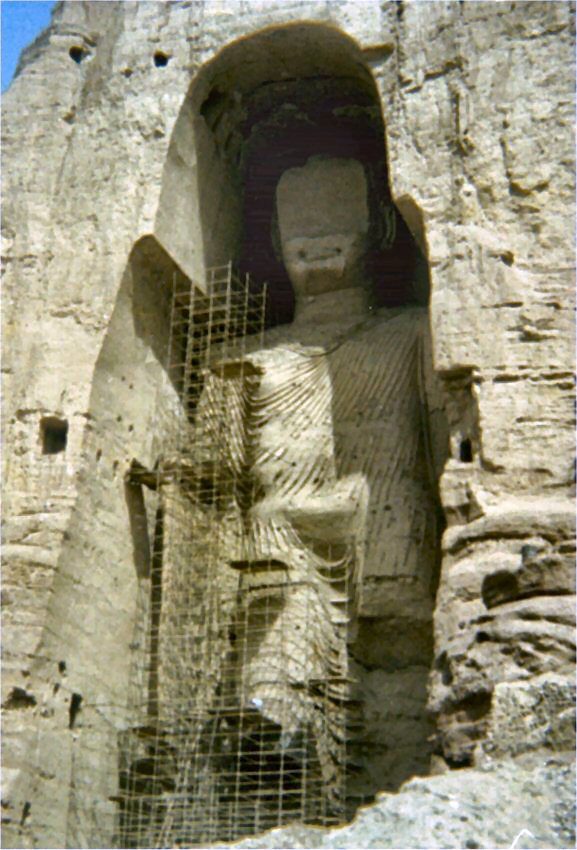
Bruce Richardson raises an important issue regarding the protection, trafficking, and exploitation of cultural patrimony. Aspects of this issue range across research, polemics, and litigation in attempts to document loss, return treasures, or on the other hand prevent restitution or repatriation. Richardson properly decries cultural looting, but we must distinguish among causes to reach agreement on protective steps.