Israel/Palestine: What the Iran War Broke and What May Yet Be Salvaged
September 28, 2026
Share
This article is part of a collection of short essays written by the Fellows of the Middle East Institute to explore aspects of the ongoing war with Iran. The intent of the collection is to help readers see new and unexpected elements of the dynamics and impact of the ongoing hostilities and to think harder, deeper, and broader about the implications of the conflict. To read the other essays from this collection, as well as download the full report, please click here.
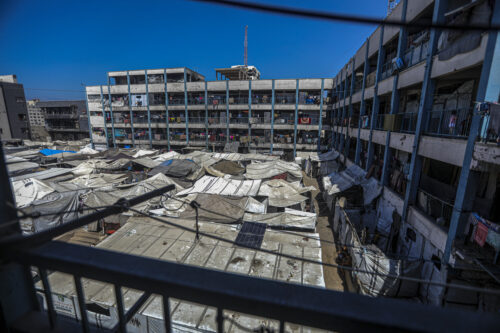
Before the 14-point United States-Iran Memorandum of Understanding (MoU) in June that failed to end the Iran war, there was the 20-point plan for Gaza that similarly failed to end that war. Although it was endorsed by the United Nations Security Council and built on months of diplomatic groundwork by European and regional partners, the plan has languished, with no meaningful recovery, reconstruction, Hamas disarmament, governance transition, or Israeli withdrawal. Roughly 2 million Gazans are living without adequate shelter, food security, healthcare, economic opportunity, educational infrastructure, and psychosocial support.
Hamas’ offer to disarm in the late summer was a positive development on paper, but the practical significance remains to be seen, especially given Israel’s rejection as well as persistent sequencing and logistical challenges. Meanwhile, conflict drivers in the West Bank are intensifying, and the multilateral energy behind the 2025 Franco-Saudi initiative that aimed to breathe life into a diplomatic path for a resolution of the Israeli-Palestinian conflict has largely dissipated. Viewed through the lens of its impact on that conflict’s trajectory, the war with Iran has accelerated negative trends and narrowed diplomatic openings, as regional and international stakeholders recalibrate their priorities and hedge against uncertainty.
Yet the diplomatic pivot back to Gaza in late July and early August suggests that the Iran war’s stubborn persistence may be causing the US and regional actors to seek wins on other fronts. And while the already-fragile prospect of Saudi-Israeli normalization may have suffered a setback with the US-Saudi nuclear cooperation agreement, the ambiguity around the terms of that agreement leaves open the possibility that normalization remains a US card to play. Against this backdrop, a more self-reliant regional architecture is emerging with both pitfalls and possibility for US diplomacy. The question is whether, and how, the US can seize these openings.
Iran’s Deflection, Israel’s Distraction, and the Question of Palestine
The threat assessment of Iran that is variably shared by Israel, its Arab neighbors, and the US is largely tangential to the Israeli-Palestinian arena. However, Iran has long exploited the Palestinian cause through support for partners and proxies, whether direct conflict stakeholders like Hamas or foreign actors like Hizballah and the Houthis. Its modus operandi has been to subsidize, rally, or activate violent spoilers under the banner of a “unity of fronts,” keeping Israel militarily overextended while burnishing its credentials as the standard-bearer of a cause that resonates across the region and beyond.
Nevertheless, Iran’s strategy has come back to bite it as it suffered a series of compounding setbacks to its partners that began with Hamas’ seemingly independent choice to launch the October 7, 2023, attack and continued with Israel’s retaliatory operations against Hizballah, the fall of the supportive Bashar al-Assad regime in Syria, and the Israel-US 12-day war in June 2025. Weakening Iran was never sufficient to put the Israeli-Palestinian conflict on a more positive trajectory, but it did represent a modest opening that the February 2026 Iran war has partially closed.
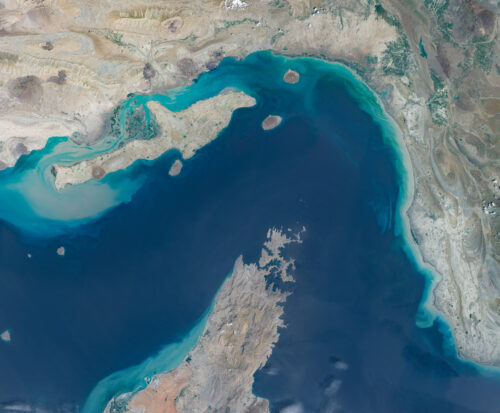
Iran is militarily battered but strategically strengthened for having withstood a US-Israeli attack. The June MoU validated Iran’s role as sponsor of Hizballah and arbiter of Lebanon’s fate. Whether the subsequent Israel-Lebanon-US tripartite agreement sufficiently remediates that problem is as yet unclear. The Houthis, while a partner rather than a proxy, have used Iran’s control of the Strait of Hormuz to reemerge as capable, Tehran-aligned disruptors. Iran appears to have bet that Hamas is more trouble than it is worth, but Hamas’ internal elevation of Khalil al-Hayya as head of the movement’s political bureau and the swift congratulatory messages from both Hizballah and Iranian officials suggest a mutual hedging over each other’s future. Should Hamas prove its staying power, and should Iran continue to consolidate its leadership, Iranian reinvestment in its Palestinian partner remains a possibility.
The late-July Board of Peace disarmament roadmap signed by Hamas, and mediated by Egypt, Qatar, Turkey, and the US, complicates this picture. It commits Hamas to surrendering its weapons in stages, in parallel with a phased Israeli withdrawal, and beginning with the Gaza police handing arms to the National Committee for the Administration of Gaza (NCAG), the independent Palestinian administrative body under the Board of Peace’s auspices. Taken at face value, Hamas’ commitment should not be underestimated for a movement whose raison d’être is armed resistance. It may be some time before it is tested. In early August, Prime Minister Benjamin Netanyahu formally rejected the framework, insisting that Israeli forces will hold their positions until Hamas is completely disarmed, to include all heavy weaponry. The sequencing impasse that dates to the original cease-fire persists. The roadmap stalled on arrival. Lost in the mutual finger-pointing are the Gazans for whom human development has been set back an estimated 77 years, according to a joint study by the UN, the World Bank, and the EU, yet for whom recovery and reconstruction remain hostage to the absence of diplomatic progress.
In the meantime, Hamas may be so weakened that it has no choice but to negotiate the terms of its own survival, but it remains the only Palestinian party at the table with the US and regional mediators. The Palestinian Authority (PA), the internationally recognized alternative, has played little more than a bystander role since October 7. It is squeezed economically and politically by the occupation and is suffering a legitimacy crisis with a Palestinian public that sees it as feckless, authoritarian, and corrupt, having failed to deliver statehood, security, or even adequate services. This absence of a legitimate Palestinian actor perpetuates Hamas’ relevance and reinforces the vacuum Iran has exploited for two decades.
Meanwhile, Iran’s weaponization of the Palestinian cause has provided Israelis with a frame through which to misinterpret the Palestinian question as a function of Iranian revisionist ambitions, rather than occupation and the absence of Palestinian self-determination. Whether as a matter of conviction or calculated distraction, Netanyahu has long preferred to focus exclusively on Iran as Israel’s immediate and longer-term security concern. The war with Iran has made that focus easier to sustain at precisely the moment the Palestinian question most demands attention — for both Palestinian and Israeli security alike.
Israel’s upcoming October election is fueling this dynamic. Israelis are heading to the polls for the first time since Hamas’ October 7 attack on their country, in which approximately 1,200 were killed, thousands more injured, and close to 250 taken hostage, on Netanyahu’s watch. His opponents commonly point to the fact that he enabled the flow of funds to Hamas prior to October 7. Netanyahu undoubtedly prefers to keep the national conversation fixed on Iran: a threat perception that unites Israelis more than the Palestinian question does. His opponents are waging their political battle on these same terms, contesting who can address the Iran threat most effectively rather than staking out positions on the Palestinian file that are inevitably either unpopular with Israeli voters or unworkable with the Palestinians and the Arab states.
In the background, the war has provided cover for the most extreme actors within the current government to accelerate destabilizing trends with less regional and international scrutiny or response than they might otherwise draw and that, by design, threaten to foreclose the option of Palestinian statehood.
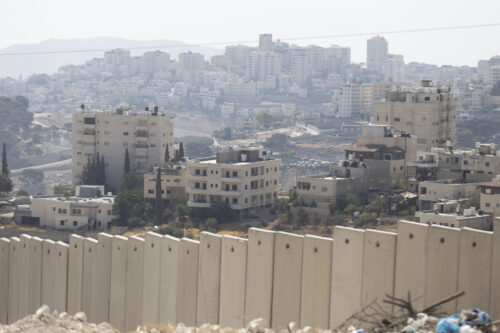
In February 2026, Israel’s security cabinet transferred civil administrative authority over the West Bank from the military to government ministries: a bureaucratic step that moved de facto annexation appreciably closer to de jure status, which President Donald Trump’s administration has stated it opposes. Finance Minister Bezalel Smotrich has called openly for annexing the entire territory, building on his 2025 plan to place 82% of it under Israeli sovereignty under the avowed logic of “maximum land, minimum Arabs.” He has also advanced plans for construction in the so-called E1 corridor east of Jerusalem: plans that have effectively been frozen under international diplomatic pressure for over two decades given that they would geographically bifurcate the West Bank and cut off East Jerusalem from any Palestinian state that may yet emerge. National Security Minister Itamar Ben Gvir has presided over — and enabled — a surge in settler terror that UN monitors link to hundreds of Palestinian deaths and the displacement of tens of thousands.
In Gaza, the cease-fire exists in name only, as Israeli operations and the collapse of civilian order continue to produce significant Palestinian casualties. UN-verified data indicates over 1,200 killed and thousands wounded by Israeli military operations since the cease-fire. In the earliest months of the cease-fire alone, similar sourcing reported at least 80 fatalities at the hands of Hamas via summary executions or in clashes for power with rival clans. This combination of unenforced cease-fire, Hamas’ staying power, Israeli extremists’ emboldenment, and the resultant desperate conditions and deteriorating political options for Palestinians is rapidly reproducing the conflict drivers that contributed to the cataclysm of October 7 and the ensuing war.
International Bandwidth and the Cost to US Credibility
Beyond Israel and Iran, the war has stretched thin the diplomatic, economic, and military bandwidth that Trump’s 20-point Gaza plan requires from Washington, the Gulf, Egypt, and Jordan alike. The plan has languished, with the NCAG and envisioned International Stabilization Force awaiting deployment, and its reconstruction and governance provisions starved of funding as these relevant actors absorb the war’s shocks.
Jordan, a frontline ally for the US in the Israeli-Palestinian conflict, faces a particular challenge. The kingdom has navigated a tricky balancing act since October 2024, when many Jordanians criticized their government’s decision to shoot down Iranian missiles aimed at Israel. The government took pains to insist that the action was taken to uphold Jordan’s sovereignty rather than to defend Israel, underscoring the fragility of the two countries’ relationship, heightened during the Gaza war. With a substantial Palestinian population and a border with the West Bank, Jordan is vulnerable to domestic unrest in relation to strong pro-Palestinian and anti-Israel public sentiment, and destabilization from potential mass West Bank displacement. Many Jordanians increasingly interpret the Jordan-US alliance as compromising their nation’s security on Israel’s behalf rather than protecting against threats that include Iranian destabilization efforts. If this persists alongside unchecked Israeli behavior in the West Bank, it will constrain Jordan’s ability to work with the US and play the forward-leaning diplomatic role any serious movement on the Israeli-Palestinian file requires.
All of this comes at a cost to Washington’s credibility. The US and Israel launched the February 2026 Iran war without consulting Gulf partners, betting on a quick knockout blow. Instead, Iran came out swinging, striking Gulf civilian infrastructure and wielding the Strait of Hormuz as an economic cudgel. The Gulf (like Israel) viewed the subsequent US-Iran MoU as a significant capitulation. A pattern of reversals followed: the administration announced a US-Saudi nuclear agreement with no mention of Israel, then reversed course a day later to make it contingent on normalization; it repeated the whiplash with the Hamas disarmament roadmap, pivoting within days to insist no Israeli withdrawal would occur before full disarmament. These precedents will give pause to states weighing whether to spend political capital on the Israeli-Palestinian file based on American assurances.
Consequently, regional actors are hedging. Gulf states cannot dispense with the American security relationship, but they are diversifying their options. Saudi Arabia has long sought a nuclear agreement with the US but has signaledopenness to China and/or Russia instead, should either offer a path to nuclear cooperation without Washington’s normalization strings or unpredictability.
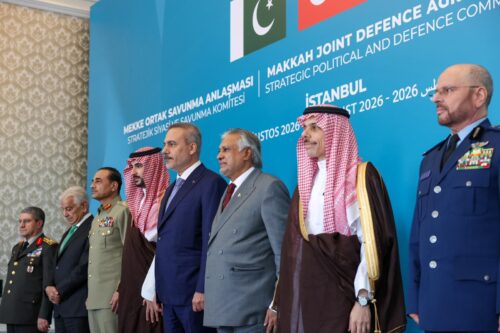
The August Mecca Joint Defense Agreement among Pakistan, Saudi Arabia, and Turkey underscores this diversification, orienting Saudi Arabia further from a normalization-with-Israel orbit for now. Israel and Turkey maintain formal diplomatic ties, but the relationship is marked by hostility over the Palestinian question and Ankara’s continued support for Hamas. In the pact’s wake, Pakistan’s defense minister called Israel an “illegitimate” state and “a threat to the entire Muslim world.” In the near term, this realignment could weaken US influence: the less Riyadh relies on Washington for security, the less leverage the United States has to secure concessions on normalization. Yet the same architecture, forming without Israel and accompanied by rhetoric casting it as a regional threat, could also create constructive pressure on Israel that would allow the US to reinforce the message that Israel cannot sidestep the Palestinian issue.
Europe, meanwhile, has retreated to arm’s length: unwilling to attempt Israeli-Palestinian diplomacy without American leadership, but no longer expecting this administration to deliver it. When Trump appeared to be pursuing a genuine grand bargain, France and key partners backed the Franco-Saudi initiative that produced the New York Declaration: endorsed 142-10 by the General Assembly in September 2025, and notable as the first collective Arab demand that Hamas disarm and cede governance to the PA. That momentum has since dissipated, though it has not entirely vanished. The regional buy-in and roadmap remain, awaiting American leadership willing to use them. Such a US approach to the Israeli-Palestinian file requires centering the conflict’s core dynamics, leaning into partners, and leveraging the trend toward regional realignment.
Charting a Path Forward
An Opening
The rocky rollout of the US-Saudi nuclear agreement and the regional realignments that hedge against a perceived lack of US reliability may yet be turned to mutual benefit. Israel has not given up on the goal of Saudi normalization. The price on which the Saudis will insist — meaningful and irreversible progress toward Palestinian self-determination — will be a bridge too far for Netanyahu and, initially, any likely successor. But the Mecca pact should signal that while Israel has spent the better part of two decades treating Gulf normalization as a hedge against Iran and its proxy-driven threat, a consolidating Pakistan-Saudi-Turkey axis presents a potential threat of a different kind.
Revived Houthi belligerency against Saudi Arabia may yet shift the kingdom’s calculus, though it is worth noting that Riyadh spent the war’s early months pursuing accommodation, not isolation, of Iran. Gulf divides remain, but there is growing regional sentiment, voiced at official levels and reflected in public opinion, that Israel is a significant destabilizing actor.
To the extent the Abraham Accords suggested Israel could bypass the Palestinian question en route to regional integration, these trends signal otherwise. Since the Saudi-sponsored Arab Peace Initiative (API) of 2002, the Arab and broader Muslim world’s consistent position has been normalization in exchange for Palestinian self-determination. Abraham Accords signatories rejected that order of operations, but none rejected the underlying two-state paradigm, the absence of progress toward which has remained a thorn in the side of those relationships.
The US can use this, making clear to Israel that the longer it treats Palestinian statehood as optional, the more it courts an alternative regional architecture that at best excludes it, and at worst makes it a common target. Whether the Mecca pact amounts to more than a symbolic move remains to be seen. Its signatories describe it as defensive and not directed at any state, but Israel would be justified in weighing the risk of a consolidated bloc turning hostile. At the same time, as Gulf actors seek stability, their new impulse to accommodate rather than isolate Iran could be mirrored toward Israel. That road to accommodation and integration necessarily passes through the original API Palestinian statehood paradigm and will only be paved by determined US leadership helping drive Israeli and Palestinian course correction.
A Three-Pronged Approach
In the immediate term, Trump would need to lean into the penultimate point of his 20-point plan and dispense with the hedging. Point 19 recognizes Palestinian self-determination and statehood as the Palestinian people’s “aspiration,” rather than Washington’s objective. The furthest it goes is stating that, contingent on a reformed PA, conditions “may finally be in place for a credible pathway” toward that aim. Washington adopting that aspiration as its own definitive north star could spur reengagement from the New York Declaration coalition and the states that endorsed the plan via UN Security Council Resolution 2803.
Israel would be expected to enforce the rule of law against Israeli perpetrators of terror in the West Bank; to halt ongoing expansionism via its pursuit of annexation, de facto or de jure; and to lift the restrictions that are suffocating the Palestinian economy. Failure to do so would carry consequences from a Washington committed to ensuring Israel’s legitimate security needs are met, while willing to use its multifaceted leverage to push back on Israeli actions that undermine security for Palestinians and on Israeli efforts to undermine explicitly articulated US interests.
The Palestinians will need to produce leadership with popular legitimacy, capable of meeting their people’s basic needs while leading them in pursuit of statehood and beyond. An empowered Palestinian partner, accountable to its people, is necessary for any US-driven, internationally backed diplomatic process to succeed, and for denying Iran the vacuum it has exploited for two decades. The US and Israeli actions prescribed above will contribute to that goal, allowing the PA space to more effectively govern. But legitimacy will only fully emerge from Palestinians exercising political agency and leadership producing reform in their own interest rather than in response to international demands. President Mahmoud Abbas has scheduled legislative elections for November 2026 and presidential elections for early 2027. These would be the first elections in two decades, if held, but they would need to be more than a “check the box” exercise to be credible to Palestinians. This is already complicated by Abbas’ new election law. It requires every candidate to endorse the Palestine Liberation Organization’s political program: recognition of Israel, renunciation of violence, and acceptance of a negotiated two-state outcome, a threshold Hamas and several smaller factions reject and one widely read as designed to exclude them. The logic is clear and answers an important international demand that Hamas be removed from Palestinian governance. But it carries a risk of delegitimizing the process when engineered by existing Palestinian leadership.
This is a needle that must be threaded carefully. The US should publicly welcome the prospect of meaningful Palestinian elections as a necessary step toward renewed legitimacy, pledging to respect the outcome of a credible, comprehensive, and independently observed process that produces a body with real authority. At the same time, unlike in the run-up to the 2006 elections that Hamas ultimately won, Washington should be explicit about what it expects of any incoming government if that government is to be treated as a partner, and what the policy consequences would be if those expectations are not met. This should apply to Israelis and Palestinians alike. Both should enter their elections with genuine agency to choose their own leadership, alongside full awareness of the specific international implications of their choice.
Conclusion
The more stable region Trump pledged to produce has to date eluded him, and the limits of American force to achieve it are increasingly clear. The debilitating blows dealt to Iran and its proxies through early 2026, paired with a Gaza cease-fire that held initial promise, represented tentative progress on the Israeli-Palestinian file. The February 2026 Iran war has undone much of it. That ground is recoverable through diplomacy that reckons honestly with the immediate human costs and the longer-term strategic costs of inaction for all parties, and that leverages the openings that regional and international partners now present. The US administration has proven capable of producing diplomatic breakthroughs on the Israeli-Palestinian file with the Gaza cease-fire agreement, 20-point plan, and the reinforcing Hamas disarmament roadmap. These have not proved and will not prove implementable or sustainable without presidential focus and follow-through; a willingness to hold the parties accountable for their (in)actions; and a genuine commitment to empowered, representative Palestinian leadership that can be an equal partner in the pursuit of peace rather than a subject of Israeli decisions and international demands. What the Iran war broke, disciplined American diplomacy can still help salvage. The human and strategic costs of inaction will only compound over time.
Lucy Kurtzer-Ellenbogen and Jaser AbuMousa are Senior Fellows at the Middle East Institute.
Top image: Tents set up by displaced Palestinians in a schoolyard in Gaza City, on September 12, 2026. Photo by Faiz Qreqa / Middle East Images / AFP via Getty Images.
The Middle East Institute (MEI) is an independent, non-partisan, not-for-profit, educational organization. It does not engage in advocacy and its scholars’ opinions are their own. MEI welcomes financial donations, but retains sole editorial control over its work and its publications reflect only the authors’ views. For a listing of MEI donors, please click here.