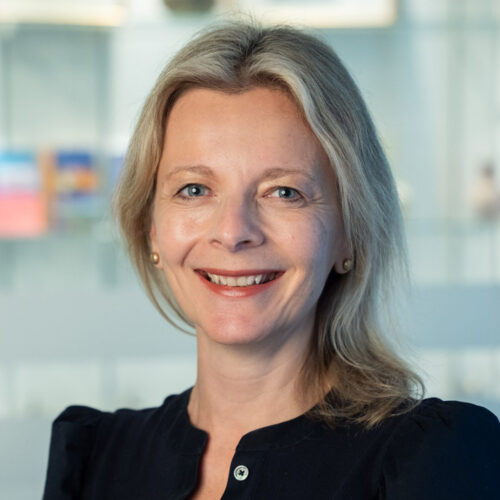
This individual is a guest contributor. MEI is not able to assist with contact requests.
Jean-Pierre Cassarino holds a professorship at the Robert Schuman Center for Advanced Studies (RSCAS/European University Institute, Florence) where he directs the Return migration and Development Platform (http://rsc.eui.eu/RDP/). He is also research associate at the Tunis-based Institut de Recherche sur le Maghreb Contemporain (IRMC). Since the mid-1990s, he has published extensively on international migration, particularly on return migration and has carried out numerous field surveys investigating returnees’ manifold patterns of reintegration. Selected publications include: (ed.) Unbalanced Reciprocities: Cooperation on Readmission in the Euro-Mediterranean Area, The Middle East Institute Press, Washington, 2010; (ed.) “Conditions of Modern Return Migrants”, International Journal on Multicultural Societies, Vol. 10, Issue 2, UNESCO, Paris, 2008; (ed.) Return Migrants to the Maghreb Countries: Reintegration and development challenges, RSCAS, European University Institute, Florence, 2008; Tunisian New Entrepreneurs and their Past Experiences of Migration in Europe: Networks, Resource Mobilisation, and Hidden Disaffection. Ashgate Publishers, Aldershot, 2000. Email: [email protected]
Rebuilding Afghanistan: Practical Measures for Improving the Economy
Originally posted December 2009
It is a difficult task to suggest a specific recipe for the improvement of the economy of any failed state. The case of Afghanistan presents even more challenges.
Orientalism's Persistence in Mass Culture and Foreign Policy
Originally posted September 2009
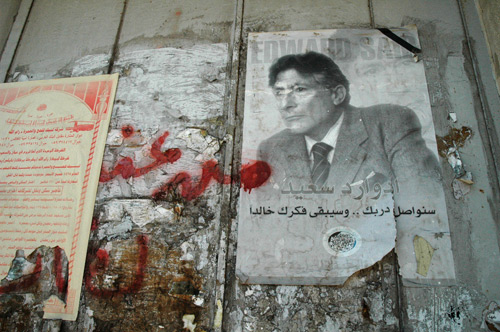
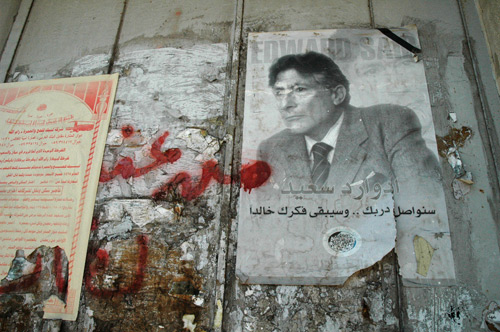
Edward W. Said’s widow, Mariam, tells me that his books are still selling well. The academic community has been transformed, and the field of literary criticism has been revolutionized as a result of his legacy. The Middle East Studies Association (MESA) has in recent years elected a series of presidents reflecting non-orientalist approaches. At the last MESA annual meeting in Washington, DC in November 2008 a plenary session was devoted to Said’s work. The large hall was packed.
Political Leadership in Post-Taliban Afghanistan: The Critical Factor
Originally posted December 2009
A hasty, fluid, and poorly conceived process of creating leadership in a post-war situation mainly provides the space for rich and powerful — mostly corrupt — individuals to prevail because their roles, styles, and abilities overshadow concerns about their background, characteristics, homogeneity, and behavioral patterns.[1] Regrettably, such is the case in post-Taliban Afghanistan.