
Skip to Content

Kyle Haddad-Fonda completed his DPhil in Oriental Studies from the University of Oxford, where he was a Rhodes Scholar.  His doctoral thesis analyzed relations between China and Egypt and between China and Algeria from 1955 to 1965.  In order to illustrate how domestic ideological concerns shaped the development of these international relationships, he focused especially on the roles of Chinese Muslims and Arab leftists in mediating the development of Sino-Arab ties.  Kyle has also served as a junior fellow at Al Akhawayn University in Ifrane, Morocco, and as a postdoctoral researcher at Shanghai Jiao Tong University’s Center for Middle East Peace Studies.


The Latest from Kyle Haddad-Fonda

Filter by
2 Results
The Rhetoric of “Civilization” in Chinese–Egyptian Relations
  • Analysis
  • The Rhetoric of “Civilization” in Chinese–Egyptian Relations

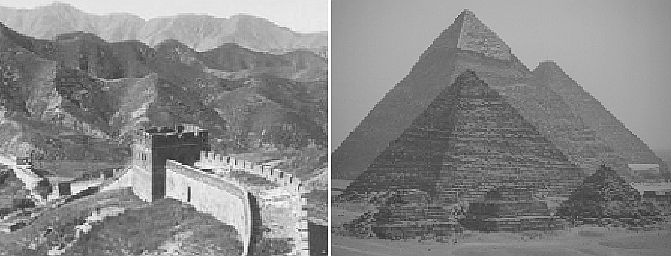
    Chinese authorities have a long history of trying to highlight their historical heritage in their interactions with other countries. Nowhere is this phenomenon more evident than in China’s relations with Egypt, another country that can claim descent from ancient heritage. Chinese and Egyptian leaders speak to each other not merely on behalf of their own governments, but also as the representatives of grand civilizations stretching millennia into the past. By tracing how Chinese and Egyptian thinkers and policymakers have discussed one another’s claims about their connections to ancient civilizations since the early twentieth century, it is possible to understand in greater detail the evolution of the rhetoric that facilitates Sino–Egyptian relations.


    August 1, 2017

    Searching for Continuity in Sino-Arab Relations
    Middle East Institute
  • Analysis
  • Searching for Continuity in Sino-Arab Relations

    Too often, historians of Sino-Arab relations do not engage in a meaningful dialogue with the political scientists, economists, and anthropologists who are the most vocal commentators on China’s increasing role in the region. Today’s China, with its growing wealth and unprecedented ability to project political and economic power abroad, may appear at first glance to bear little resemblance to the China of the 1950s, when the Communist government of Mao Zedong was reaching out for the first time to the other countries of the developing world. Nevertheless, one can identify several continuities that have long informed China’s interactions with the Arab world. First, Beijing insists that its foreign policy is based on the same ironclad commitment to nonintervention in the affairs of other sovereign countries that it articulated in the 1950s. Second, China has long held special meaning for Arab politicians and intellectuals who wish to use the example of China to promote authoritarian order in their own societies. Finally, the Chinese government has relied on Chinese Muslims to mediate its relations with other Islamic countries for nearly a century. It is only by recognizing these longstanding hallmarks of Sino-Arab relations that commentators can fully appreciate the complexities of China’s interactions with the Arab world in the twenty-first century.

    April 8, 2015

