This individual is a guest contributor. MEI is not able to assist with contact requests.
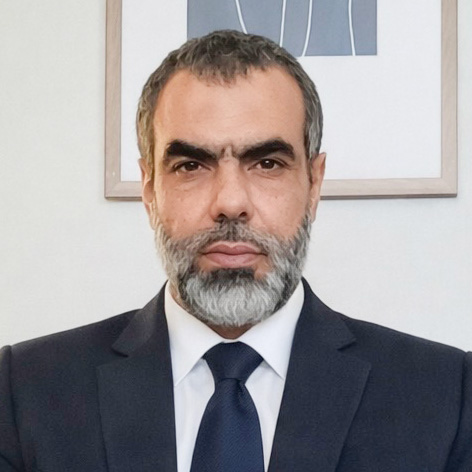
Nabil Mohsen is an Intern at the Middle East Institute’s Oman Library. He is a determined learner who enjoys his studies in politics and is interested in Islamic history, architecture, and ceramics.
Withdrawal from Afghanistan: Next Steps and Challenges
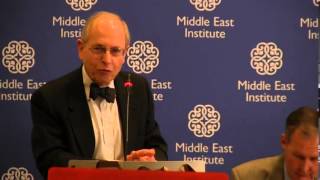
Wed, 3/20/2013 12:00 pm to 1:30 pmLocation: The SEIU Building1800 Massachusetts Avenue, NWWashingtonDistrict of Columbia20 036 The Middle East Institute is proud to host Lieutenant General (Ret.) David W. Barno and Dr. Michael E.
Withdrawal from Afghanistan: Next Steps and Challenges
Wed, 3/20/2013 12:00 pm to 1:30 pmLocation: The SEIU Building1800 Massachusetts Avenue, NWWashingtonDistrict of Columbia20 036 The Middle East Institute is proud to host Lieutenant General (Ret.) David W. Barno and Dr. Michael E.
Withdrawal from Afghanistan: Next Steps and Challenges
Wed, 3/20/2013 12:00 pm to 1:30 pmLocation: The SEIU Building1800 Massachusetts Avenue, NWWashingtonDistrict of Columbia20 036 The Middle East Institute is proud to host Lieutenant General (Ret.) David W. Barno and Dr. Michael E.
Withdrawal from Afghanistan: Next Steps and Challenges
Wed, 3/20/2013 12:00 pm to 1:30 pmLocation: The SEIU Building1800 Massachusetts Avenue, NWWashingtonDistrict of Columbia20 036 The Middle East Institute is proud to host Lieutenant General (Ret.) David W. Barno and Dr. Michael E.
Withdrawal from Afghanistan: Next Steps and Challenges
Wed, 3/20/2013 12:00 pm to 1:30 pmLocation: The SEIU Building1800 Massachusetts Avenue, NWWashingtonDistrict of Columbia20 036 The Middle East Institute is proud to host Lieutenant General (Ret.) David W. Barno and Dr. Michael E.
Gulf Arab Foreign Direct Investment (FDI): ASEAN Targets of Opportunity
Although China and India have been new favorable destinations for Arab investors, Southeast Asian countries offer distinctive and profitable investment markets, featuring high demand and relatively low labor costs. In recent years, investments from the Gulf Cooperation Council (GCC) to the Association of Southeast Asian Nations (ASEAN) have surged.
The Songkok and Raouf Rifai’s Darwiche: A Cultural Dialogue Between the Middle East and Southeast Asia
Raouf Rifai, a doyen of Lebanese and Arab painters, introduced the Darwiche as the point of departure for his art in 2008. Rifai’s Darwiche is a folk character created by the artist and representing the common man (“darwiche” in Arabic means a simple and simple-minded person). Rifai’s common man also encompasses ― through the name the artist chose ― the dervish, or Sufi mystic, thus imbuing a spiritual and physical duality to the character.
The US "Pivot" to the Asia-Pacific and US Middle East Policy: Towards an Integrated Approach
here is a need for the United States to adopt an integrated approach, that is, one that encompasses both the Asia-Pacific and Middle East. After all, Asia-Pacific economic growth is heavily dependent on the oil/gas resources of the Middle East and the security and safety of navigation in the maritime space between these regions. For this reason and because of the important bilateral relations the United States has with countries in both the Asia-Pacific and the Middle East, it is neither accurate nor prudent for Washington to treat the Asia-Pacific and the Middle East as separate regions, or to rebalance its weight without taking into full account cross-regional considerations.
Interview with Ambassador Dr. Mohamed Noman Galal: Reflections of a Scholar-Diplomat on Arab-Asia Relations
To be sure, Asia is the home of great civilizations. It is also the continent of rising powers, dynamic economies, and nearly half of the world’s population. For these reasons, it only makes sense that Egypt continues seeking ways to expand its ties with Asian countries. It will take imaginative Egyptian leadership to accomplish this objective and, more broadly, to capitalize on the country’s location and to help unleash its people’s creative energy.
Women in Turkey: New Opportunities, New Challenges
The Middle East Institute is proud to host three women changemakers in Turkey for a discussion about women in business and women’s rights. In recent years, women in Turkey have made inroads in fields where women have not traditionally been present. They are now successful business owners, managers, entrepreneurs, politicians, engineers, and academics. Their voices have become part of the public debate as they increasingly participate in all aspects of public life.
Women in Turkey: New Opportunities, New Challenges
The Middle East Institute is proud to host three women changemakers in Turkey for a discussion about women in business and women’s rights. In recent years, women in Turkey have made inroads in fields where women have not traditionally been present. They are now successful business owners, managers, entrepreneurs, politicians, engineers, and academics. Their voices have become part of the public debate as they increasingly participate in all aspects of public life.