Remarks by National Security Advisor Susan E. Rice
Prepared remarks by National Security Advisor Susan E. Rice at the 67th Annual Middle East Institute Awards Banquet in Washington, D.C. on Thursday, November 14, 2013. (Jump to podcast and photos)
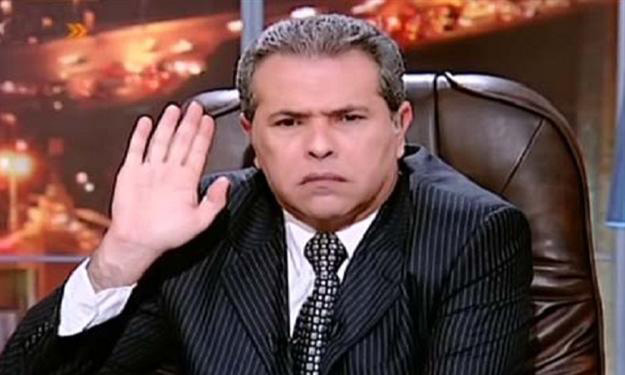
The Egyptian media landscape both before and after Hosni Mubarak’s ouster has been one in which the polemical television personality Tawfik Okasha has thrived. But Okasha, known for his conspiracy theories and strident rhetoric, particularly against the Muslim Brotherhood, has perhaps risen to greater fame and influence recently. With a convergence between anti-Brotherhood positions and Egyptian government policy and public opinion occurring since the mass protests that culminated in Mohamed Morsi’s removal by the military on July 3, Okasha’s views have become more mainstream.
Iran-India relations are far-reaching and multidimensional. However, a variety of issues, including the upheaval in the Middle East and North Africa, U.S and Israeli influence over the region, Iran-Israel belligerence, and terrorism all constrain bilateral diplomacy.
The Philippines and Turkey have not fully capitalized on their human resources and strategic assets in order to expand commercial ties and boost cultural exchanges. However, thanks largely to the efforts of a critical mass of Turkish nationals who have formed the backbone of a “constituency” for advancing Philippine-Turkey relations, the tide may be turning. Three recent developments indicate that the groundwork is being laid to pursue a more robust bilateral relationship: 1) the opening of Turkish-owned schools operating both in Manila and in Zamboanga City (southern Philippines); 2) the creation of the Pacific Dialogue Foundation in the Philippines; and 3) the establishment of the Turkish Chamber of Commerce in the Philippines.
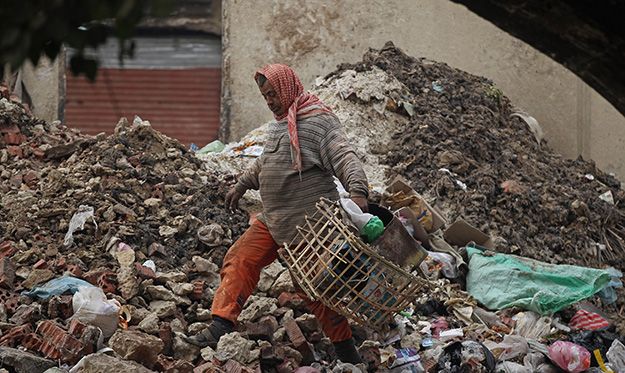
Reporting on Egypt since the July 3 ouster of former president Mohamed Morsi has focused on political dimensions and unrest. However, it is the new government’s success—or lack thereof—in meeting the country’s economic challenges that will largely determine whether Egypt returns to stability, just as surely as it was Egypt’s economic woes that underpinned the country’s repudiation of Morsi.
Senior diplomats from the United States, Russia, and the UN failed this week to agree on the details and date for a Geneva II meeting to help resolve the Syrian crisis. UN and Arab League Special Envoy Lakhdar Brahimi had hoped to hold the meeting in late November, but admitted that it might have to be put off until early 2014. Obstacles included disagreement over the participation of Iran and over the role of Syrian president Assad in the process, as well as disunity among the opposition.
Comparative Middle Power Diplomacies: Turkey and Japan
Middle power is an opaque term that involves multiple concepts. Through different conceptualizations of the term, Turkey and Japan are both middle powers. Indeed, widely read textbooks about Turkish foreign policy published around 2000 regard Turkey as a middle power. In the Japanese context, several scholars, including Yonosuke Nagai, Yoshikazu Sakamoto, Nobuya Banba, and Mitsuru Yamamoto, have evaluated the foreign policy of their own country as middle power diplomacy since the late 1970s. Recently, Yoshihide Soeya comprehensively summed up Japanese middle power diplomacy after the 1970s.
Turkey-Singapore Relations: A Manifestation of Turkey’s Growing Interest in SE Asia
The content and scope of Turkish foreign policy has dramatically altered since the Justice and Development Party (AKP) came to power in 2002. The Asia-Pacific region, which was previously a low priority in Turkey’s foreign policy calculations, is gaining increased space within Turkey’s general strategy and long-term planning, and is seen as vital to the growth of its small to medium sized firms, upon which the wealth of Turkey’s growing middle class is based.
Turkey and Indonesia: Historical Roots, Contemporary Business Links
Though sympathy between Turkey and Indonesia has a long tradition, in part based on their shared experience of being Muslim-majority countries that successfully executed anti-imperialist struggles, for years this sympathy has failed to translate into a closer relationship. This is now changing. New economic linkages and the relative absence of thorny political issues are bringing them closer together. As President Abdullah Gül stated during a meeting in Jakarta in 2011, “A new era is beginning with Indonesia.” Economic agents such as businessmen and entrepreneurs are the pioneers of this era.
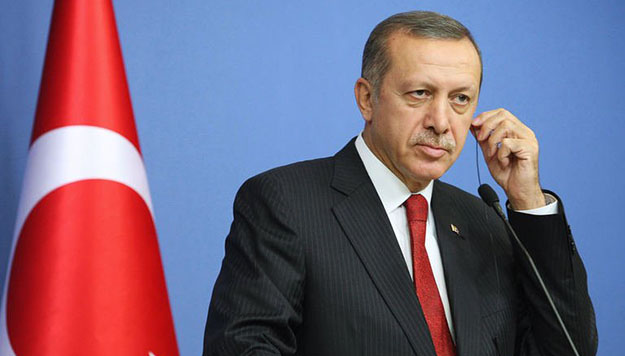
The latest round of peace talks with the Kurdistan Workers’ Party (PKK) remains the Turkish government’s best bet not just to solve the country’s 29-year old “Kurdish problem” but also to feed its energy-hungry population and wean it off costly and politically risky Russian and Iranian energy imports.
Maliki in Washington: Arms Deals, Politics, and Proxy Wars
Iraqi Prime Minister Nouri al-Maliki is in Washington this week for meetings with Vice President Joe Biden, Defense Secretary Chuck Hagel, and President Barack Obama. We sat down with MEI’s Vice President for Policy and Research, Paul Salem, to discuss the topics on the table, what each side hopes to accomplish, and how the United States should approach Iraq.