This individual is a guest contributor. MEI is not able to assist with contact requests.
Rebecca Anne Proctor is an independent journalist, editor, author, and broadcaster based in Dubai and Rome, from where she covers the Middle East and North Africa. She is the former editor-in-chief of Harper’s Bazaar Art and Harper’s Bazaar Interiors.
In the unending panorama of violence that is today’s Middle East, one hopeful note emerged earlier this month with a low-key announcement from Saudi Arabia that drew scant attention from the American news media.
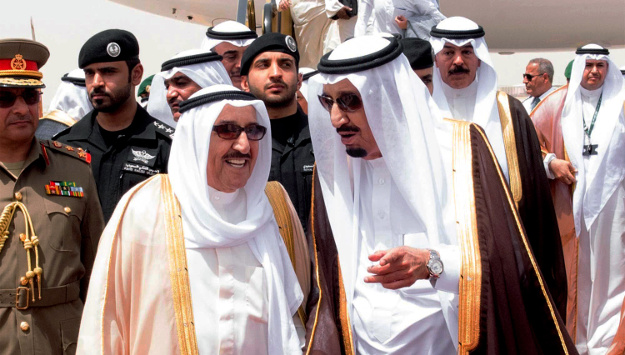
King Salman appointed a military officer, Gen. Thamer al-Sabhan, to be the kingdom’s first resident ambassador in Baghdad since Iraq invaded Kuwait in 1990.
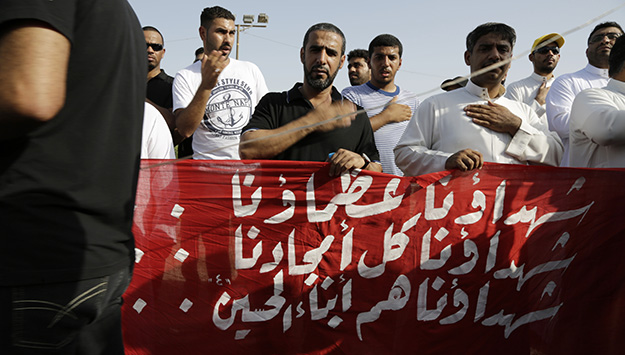
The terrorist group known as the Islamic State (ISIS) has its eyes set on Saudi Arabia. Months of threatening to conquer “The Land of the Two Holy Mosques” culminated in an audio message in mid-May delivered by the leader of the group, Abu Bakr al-Baghdadi, in which he referred to Saudi Arabia’s government as “apostate leaders.” Since then ISIS has begun carrying out terrorist attacks inside the Kingdom. Two weeks in a row, individuals affiliated with ISIS have conducted suicide attacks against mosques in the Eastern Province, where the majority of Saudi Shi’a live.
Addressing Worldwide Flood Concerns: Empowering Local Communities
This essay focuses on the role of local communities during the recovery stage from floods. By drawing on a case study of rural communities in Laos, the essay highlights the potential benefits of equipping local communities with long-term practices that will assist them in recovery efforts. The essay concludes with a discussion of the lessons and insights gained from this case and that they could be applied in other countries to improve flood resiliency.
Deradicalization Programs and Counterterrorism: A Perspective on the Challenges and Benefits
This paper is part of a series, titled “Understanding Deradicalization: Pathway to Enhance Transatlantic Common Perception and Practices.” Click here to view the full series, or navigate using the table of contents to the right.
Understanding Deradicalization: Pathways to Enhance Transatlantic Common Perceptions and Practices
The Middle East Institute and the Fondation pour la Recherche Stratégique (Paris, France), with support from the European Union, undertook the project entitled “Understanding Deradicalization: Pathways to Enhance Transatlantic Common Perceptions and Practices.” The goal of this project is to compare and analyze transatlantic practices in developing and implementing preventative interventions to minimize violence and the spread of radicalized and violent groups.
Deradicalization Programs in Saudi Arabia: A Case Study
This paper is part of a series, titled “Understanding Deradicalization: Pathway to Enhance Transatlantic Common Perception and Practices.” Click here to view the full series, or navigate using the table of contents to the right.
Negotiating Yemeni Peace: Deep Divisions and Hard Realities
After initially rejecting the UN call for talks, the Saudi-backed Abdu Rabbu Mansour Hadi faction reversed its position and agreed to meetings in Geneva on June 14.
June 8, 2015 – Gonul Tol, director of the Center for Turkish Studies at The Middle East Institute, discusses the reactions to Turkey’s June 7 elections, and what the setback for the ruling AK party and President Erdogan means for Turkey’s domestic policy agenda and its relations with the United States.
Iran offers a unique platform for China’s ambitions in the Middle East, and as such Beijing is willing to bet that the benefits of closer ties with Tehran will outnumber the costs. This analysis examines the calculations China is making regarding its relationship with Iran and argues that deepening bilateral ties reveal the centrality of Iran for China’s Middle East strategy.
Chinese Soft Power and Dubai’s Confucius Institute
The Confucius Institute of the University of Dubai is housed in a building named Masaood, a tall structure found off a dusty roundabout about two miles west of the airport. On the day I visit, the UAE is observing National Day, and near the building’s entrance Emirati flags wave in wind smelling of the grilled meat being served as part of a nearby celebration. Up on the fifth floor, where the Institute is housed, signage is in both Arabic and Chinese. Students learn various levels of Mandarin in pristine classrooms.
Be Careful What You Wish For: A Security Council Resolution on Palestine Might Come True
For the first time in decades absolutely nothing is happening on the Israeli-Palestinian diplomatic front. There is no agreed-upon structure for diplomatic engagement under U.S.—or anyone’s—guidance. Moreover, there is an international consensus that includes the United States that doubts, with good reason, Prime Minister Benjamin Netanyahu’s commitment to a two-state solution.
On June 7, Turks will choose a new parliament. This decision will be the most important one for Turkey in 70 years, since the advent of multi-party elections in 1945. The election at heart is about religion, as it brings Turkey to the brink of becoming a republic dominated by the religious convictions of its current leadership. If the ruling Justice and Development Party (AKP) wins a 60 percent majority of parliamentary seats, democratic choice will likely yield to the dogma of faith.