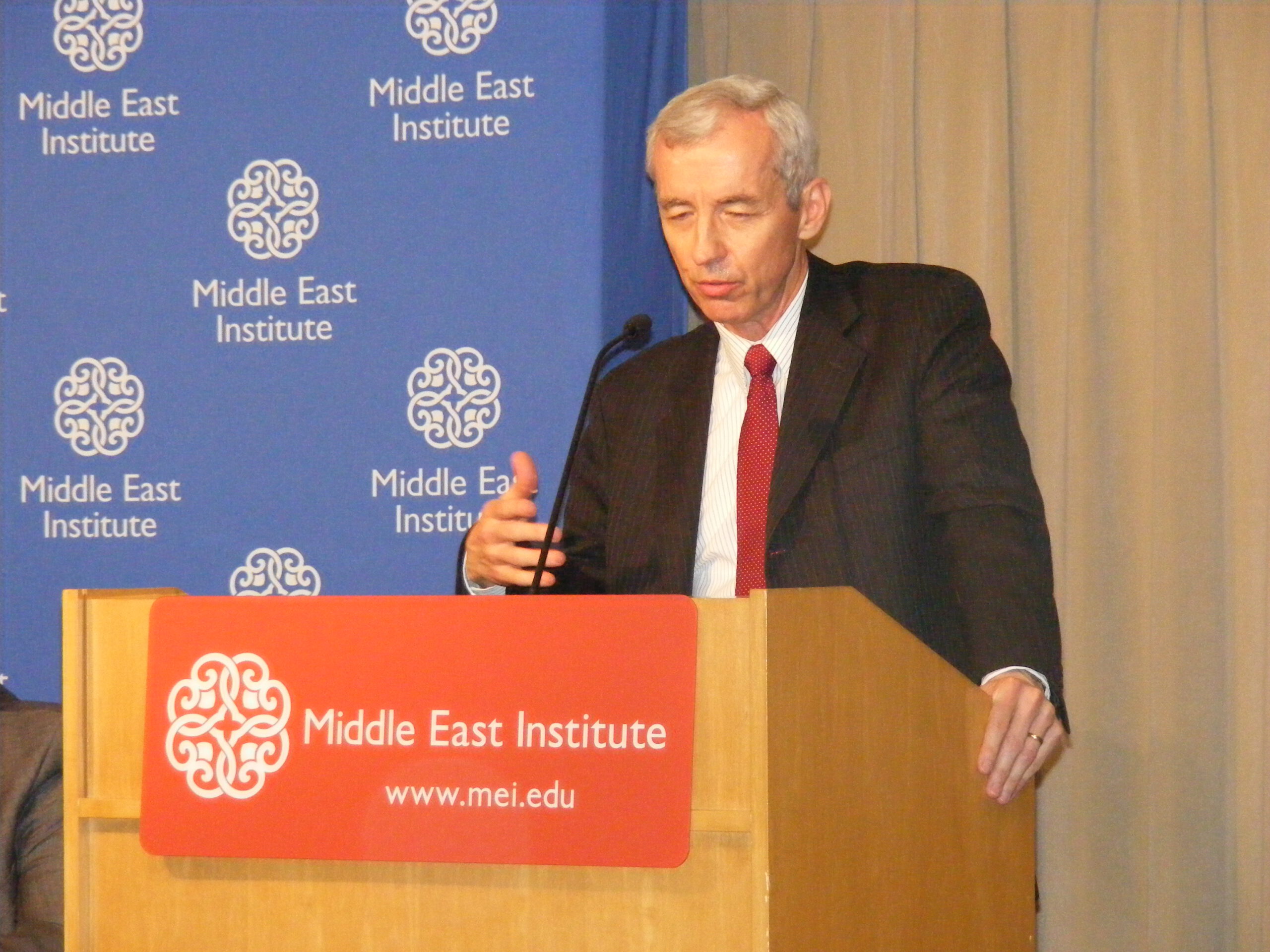
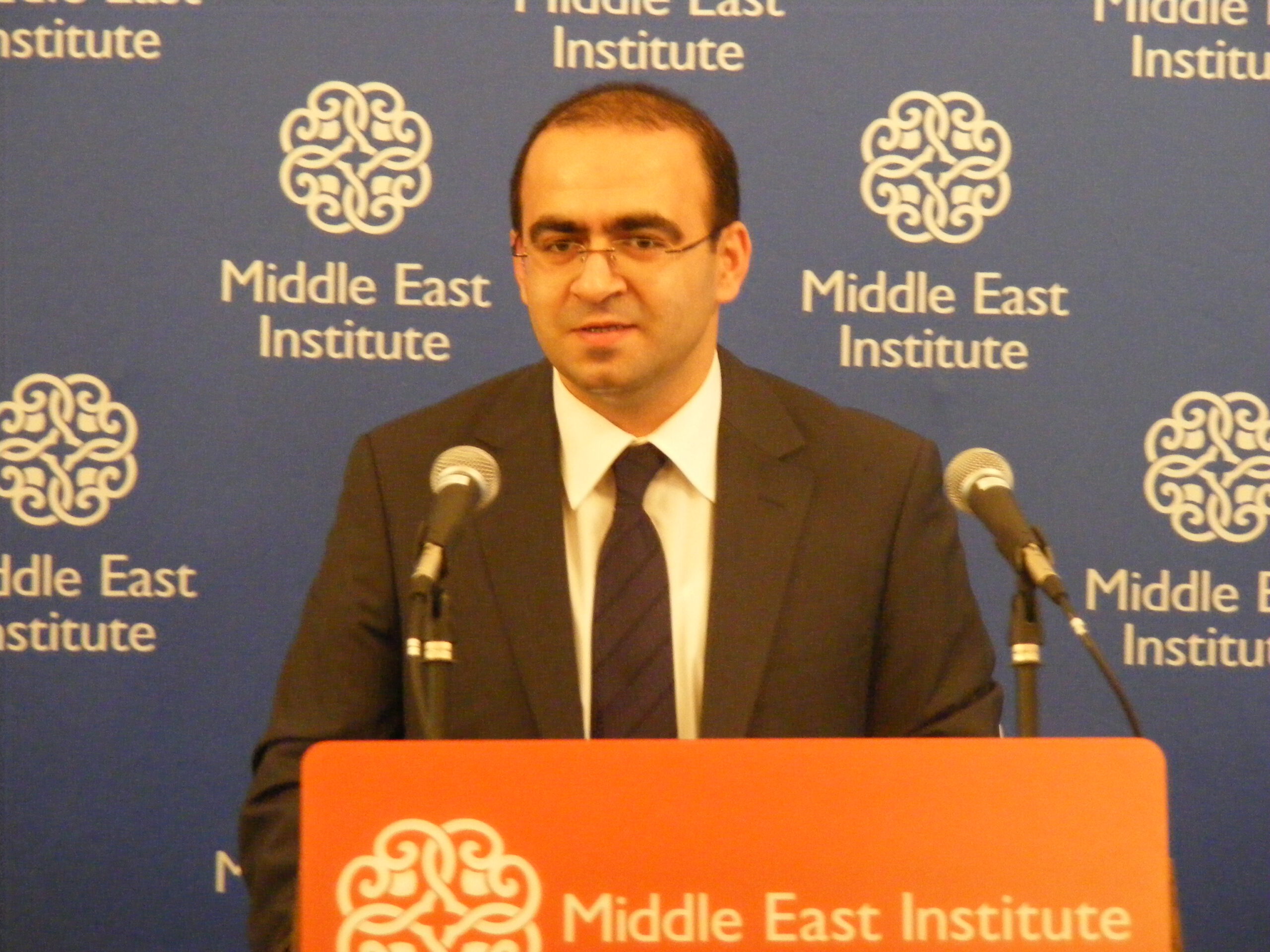
Uprising in Syria: Implications for US and Regional Policy
The Middle East Institute is proud to host Syria experts Ammar Abdulhamid, Helena Cobban, and Steven Heydemann for a discussion about the ongoing protests in Syria and the international and regional reactions to the shifting Syrian landscape. As the uprising continues into its third month, how sustainable is the protest movement? Are the Syrian government's tactics in crushing dissent succeeding? What impact has the violence had on the Assad regime's relationship with its neighbors like Turkey and close allies like Iran, Hezbollah and Hamas?
The Middle East Institute is proud to host Ambassador Ali Suleiman Aujali, Paul Pillar, and Jeffrey White for a discussion about the current situation in Libya and ways to address the stalemate between Libya's rebels and the forces of Colonel Qaddhafi. As the conflict drags into its third month, Aujali, Pillar and White will examine the humanitarian situation on the ground, NATO's recent operational innovations, and the role of the US and Europe in aiding Libya's rebels.
Speakers: Amb. Ali Suleiman Aujali, Paul Pillar, Jeffrey White
The Middle East Institute is proud to host Ambassador Ali Suleiman, Paul Pillar, and Jeffrey White for a discussion about the current situation in Libya and ways to address the stalemate between Libya's rebels and the forces of Colonel Qaddhafi. As the conflict drags into its third month, Aujali, Pillar and White will examine the humanitarian situation on the ground, NATO's recent operational innovations, and the role of the US and Europe in aiding Libya's rebels.
This Opinion first appeared in the Huffington Post on May 17, 2001
As the Arab world is getting ready to listen once again to a major speech by the U.S. President Barack Obama, many Egyptians wonder about how the outcomes of the political change will be received outside of the country, and especially from the U.S.
The Upcoming Turkish Elections: Implications for Domestic and Foreign Policy
The Middle East Institute's Center for Turkish Studies is proud to host Mr. Taha Özhan, Director General of the Foundation for Political, Economic and Social Research (SETA Ankara), for a discussion on Turkey's upcoming elections on June 12.
The Upcoming Turkish Elections: Implications for Domestic and Foreign Policy
The Middle East Institute's Center for Turkish Studies is proud to host Mr.Taha Ozhan, Director General of the Foundation for Political, Economic and Social Research (SETA Ankara), for a discussion on Turkey's upcoming elections on June 12.
This Opinion first appeared in the Huffington Post on May 6, 2011
As the shadow of the Egyptian revolution that succeeded in the overthrow of Hosni Mubarak's 30 years reign has generated an explosion of new political parties and activists movements representing all colors of the political spectrum, debates within Egyptian political landscape are not anything but chaotic and inflammatory.
Palestinian Peace Strategy in a Changing Middle East
The Middle East Institute and The Foundation for Middle East Peace are proud to host Ziad Abu Zayyad a veteran journalist and the co-founder and editor of the Palestine/Israel Journal. In his talk, Mr. Abu Zayyad will address whether a rapprochement between Fatah and Hamas is possible, and will also discuss the main challenges facing the US-Palestinian bilateral relationship.
Palestinian Peace Strategy in a Changing Middle East: Prospects for Fatah-Hamas Reconciliation, and US-Palestinian Relations
The Middle East Institute and the Foundation for Middle East Peace are proud to host Ziad Abu Zayyad a veteran journalist and the co-founder and editor of the Palestine/Israel Journal. In his talk, Mr.Abu Zayyad will address whether a rapprochement between Fatah and Hamas is possible, and will also discuss the main challenges facing the US-Palestinian bilateral relationship.
The Middle East Institute is proud to host Amb. Edmund J. Hull (retired) for for a discussion about his recent book “High-Value Target: Countering Al Qaeda in Yemen”. Hull's book tells the inside story of how al Qaeda's Yemeni safe haven was disrupted during Hull's tenure. A top counter terrorism official in both the Clinton and Bush administrations, Hull provides a detailed account of a team effort to build a strategic basis for US-Yemeni counter terrorism and to execute a broad strategy aimed at improving not only the security of Yemen but also its economic development.
The Middle East Insitute is proud to host Amb. Edmund J. Hull (retired) for for a discussion about his recent book High-Value Target: Countering Al Qaeda in Yemen. Hull's book tells the inside story of how al Qaeda's Yemeni safe haven was disrupted during Hull's tenure.