This individual is a guest contributor. MEI is not able to assist with contact requests.
Sara Sadek is an affiliated researcher and coordinator at the Center for Migration and Refugee Studies (CMRS) at the American University in Cairo. She obtained an MA in Refugee Studies from the University of East London. Since 2005, she has worked on various research projects on Iraqi and Sudanese communities in Egypt, contributing to a report on Iraqis in Egypt and recently producing a paper on challenges of integration for Iraqis in Arab states for the Henry L. Stimson Center’s forthcoming volume Transnational Challenges.
Peace with Taliban Could Stem ISIS Growth in Afghanistan
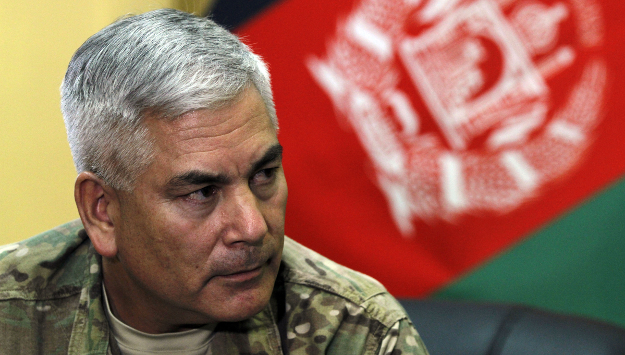
U.S. Army General John Campbell, the outgoing commander of coalition forces in Afghanistan, estimates the number of ISIS militants in Afghanistan to range from 1,000 to 3,000 and warns that “they have the ability to recruit quite well, not only around the world, but inside Afghanistan.”
Emir Sheikh Tamim bin Hamad Al Thani warned Qataris in November that due to tumbling oil prices, the government could no longer “provide for everything.” The following month he addressed “wasteful spending, overstaffing and a lack of accountability,” sending a clear message that austerity measures were on the way.
South Korea’s Diversifying Economic Cooperation in the Gulf
Traditionally, South Korea’s economic relations with the Gulf states have been primarily based on energy trade and construction. The Park Geun-hye administration is keen to expand the scope and boost the value of South Korea’s economic relations with the GCC countries and with Iran.
Monday Briefing: Syria Ceasefire, Iran's Elections, and ISIS in Libya
In this week’s Monday Briefing, MEI experts Robert S. Ford, Paul Salem, Alex Vatanka, and David Mack provide analysis on recent events including the ceasefire agreement in Syria, Iran’s elections, and how the United States should respond to the growing threat of ISIS in Libya.
For any major film festival, politics is an imperative ingredient, inseparable from the glamor and publicity organizers always strive to attract. Of all the big film fairs, the Berlin International Film Festival (aka the Berlinale) has forever been known to be the most political, either in its eye-raising selection or in its granted awards.
Turkey is confronting a nightmare as its two archenemies, President Bashar al-Assad’s regime and the Kurdish Democratic Union Party (PYD), gain ground in Syria with the help of U.S. and Russian air cover. Turkey has long called for a no-fly zone in northern Syria to protect areas held by the opposition and a halt to the PYD advances west of the Euphrates. Frustrated with U.S. cooperation with the PYD, Ankara has insisted that the PYD is a terrorist organization and poses a grave danger to Turkey’s national security.
As objectionable as it may seem to many, it’s becoming increasingly likely that Donald Trump will be the Republican Party’s presidential nominee. It is also no longer a remote possibility for Trump to become the 45th president of the United States come next January. What would a Trump presidency mean for the oil-rich Gulf Arab states?
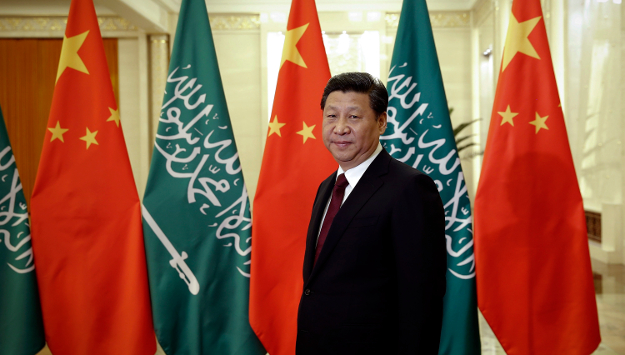
Chinese President Xi Jinping’s visit last month to Saudi Arabia, Egypt, and Iran represented the first, full frontal launch of China’s One Belt, One Road (OBOR) strategy in the Middle East. The visit has wide implications for Gulf Cooperation Council (GCC)-China relations as the geopolitical chessboard undergoes a major realignment.
Explaining the Military's Ruling Ambition in Egypt and Thailand
The military took advantage of political crisis to remove civilian governments in Egypt in 2013 and Thailand in 2014. This essay discusses three important features of the Egyptian and Thai political systems that have fostered the military’s ruling ambition in both cases.
Weekly Briefing: Syria Ceasefire, Iran Elections, and Saudi Arabia's Suspension of Aid to Lebanon
In the first installment of a new series of weekly briefings on the most important regional issues, MEI experts Randa Slim, Alex Vatanka, and Paul Salem analyze recent events including the ceasefire agreement in Syria, upcoming elections in Iran, and Saudi Arabia’s suspension of military aid to Lebanon.
Will New Cease-fire Deal in Syria Succeed?
Randa Slim Director, Initiative for Track II Dialogues