This individual is a guest contributor. MEI is not able to assist with contact requests.
Sara Sadek is an affiliated researcher and coordinator at the Center for Migration and Refugee Studies (CMRS) at the American University in Cairo. She obtained an MA in Refugee Studies from the University of East London. Since 2005, she has worked on various research projects on Iraqi and Sudanese communities in Egypt, contributing to a report on Iraqis in Egypt and recently producing a paper on challenges of integration for Iraqis in Arab states for the Henry L. Stimson Center’s forthcoming volume Transnational Challenges.
When Islam Was an Ally: China’s Changing Concepts of Islamic State and Islamic World
For many at present, the phrase “China and Islam” connotes conflict and oppression. This is due to a preponderant focus on the security situation in the Muslim-majority northwestern province of Xinjiang. Chinese policies in Xinjiang—particularly restrictions placed on Xinjiang’s Turkic Uighurs regarding beards, veils, and fasting during Ramadan—have been perceived as targeting Muslims as Muslims, exacerbating the security concerns they were meant to address. Moreover, the pursuit of stability in Xinjiang has led the Chinese government to adopt an anti-terrorism rhetoric reminiscent of its American counterpart.
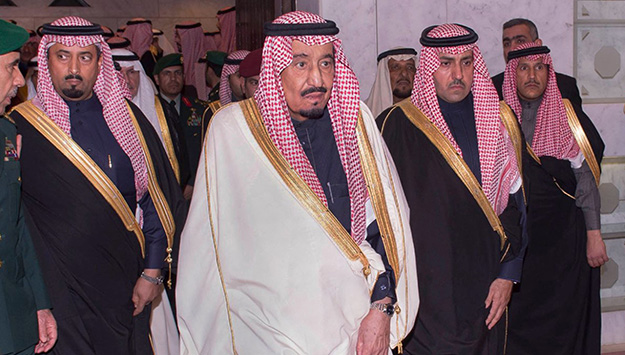
The death of King Abdullah in late January 2015 brought a seamless transition of power in Saudi Arabia. Crown Prince Salman acceded to the throne and Prince Muqrin became crown prince, while Prince Muhammad bin Nayef, minister of the interior, became second deputy prime minister and the first grandson of Ibn Saud in line for the throne. Despite speculation to contrary, the smooth transition was strong evidence of a preexisting agreement that included the late king, Salman, and other senior princes.
The Egypt Economic Conference: Q&A with Hoda Selim
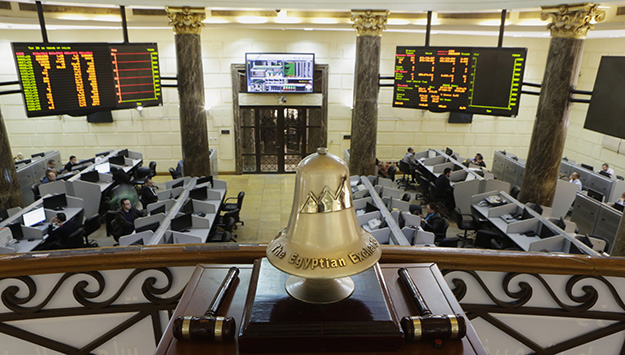
Egypt’s Economic Development Conference will be held in Sharm el-Sheikh March 13-15, 2015. The conference aims to lay out the Egyptian government’s economic vision and plans for reform and position Egypt as a desirable destination for international investment. We spoke with Hoda Selim, an economist at Egypt’s Economic Research Forum, about the country’s current economic position and how the conference could help.
As a result of the growth of its comprehensive power, China today has two frontiers. One is the natural frontier of its sovereign territory; the other is an artificial frontier created by its overseas interests. By deploying a “soft” military presence overseas, specifically in the Middle East, China can protect its commercial interests while also providing public goods for the international community and minimizing the risk of damage to multilateral relations.
On March 13, Egyptian President Abdel Fattah el-Sisi will inaugurate the Egypt Economic Development Conference in the resort city of Sharm el-Sheikh. The main objective of the conference is to put Egypt back on the world investment map. Sisi’s government is aiming to achieve a target of $60 billion of foreign investment in the coming five years. This ambitious amount would close Egypt’s resource gap and would generate sufficient growth to absorb growing unemployment.
When the Houthis, a Shia rebel group in Yemen, forced the country’s pro-Western president, Abed Rabbo Mansour Hadi, to flee the capital this past January, many in the region concluded that another Arab state had fallen into Tehran’s lap—a result, as one prominent commentator put it, of Iran’s “offensive state, the likes of which we have not seen in modern history.”
Could Kurds Be the Liberal Alternative Turks Have Been Looking For?
Turkey’s first tangible democratic push came from the Islamist camp in 2002 when the Islamist-rooted Justice and Development Party (AKP) came to power. The second could come from an unlikely source: the Kurds.