Sara Sadek is an affiliated researcher and coordinator at the Center for Migration and Refugee Studies (CMRS) at the American University in Cairo. She obtained an MA in Refugee Studies from the University of East London. Since 2005, she has worked on various research projects on Iraqi and Sudanese communities in Egypt, contributing to a report on Iraqis in Egypt and recently producing a paper on challenges of integration for Iraqis in Arab states for the Henry L. Stimson Center’s forthcoming volume Transnational Challenges.
The Latest from Sara Sadek

Turkey and Indonesia: Historical Roots, Contemporary Business Links
Though sympathy between Turkey and Indonesia has a long tradition, in part based on their shared experience of being Muslim-majority countries that successfully executed anti-imperialist struggles, for years this sympathy has failed to translate into a closer relationship. This is now changing. New economic linkages and the relative absence of thorny political issues are bringing them closer together. As President Abdullah Gül stated during a meeting in Jakarta in 2011, “A new era is beginning with Indonesia.” Economic agents such as businessmen and entrepreneurs are the pioneers of this era.
Resolving Turkey's "Kurdish Problem"
This article originally appeared on CNN.com.
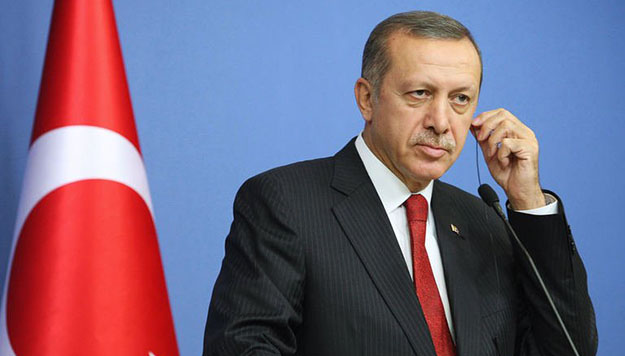
The latest round of peace talks with the Kurdistan Workers’ Party (PKK) remains the Turkish government’s best bet not just to solve the country’s 29-year old “Kurdish problem” but also to feed its energy-hungry population and wean it off costly and politically risky Russian and Iranian energy imports.
Maliki in Washington: Arms Deals, Politics, and Proxy Wars
Iraqi Prime Minister Nouri al-Maliki is in Washington this week for meetings with Vice President Joe Biden, Defense Secretary Chuck Hagel, and President Barack Obama. We sat down with MEI’s Vice President for Policy and Research, Paul Salem, to discuss the topics on the table, what each side hopes to accomplish, and how the United States should approach Iraq.
What is Maliki looking to accomplish?
Ecomuseum of the Khettara in the Tifalalet, Morocco
Ecomuseum of the Khettara in the Tifalalet, Morocco Translated from the French by Dorothée Vandamme
Saudi Arabia & the Arab Gulf’s Disappointment with U.S. Policy
Whether Saudi Arabia takes a seat on the United Nations Security Council or not, the initial snub is aimed primarily at the United States. In particular, U.S.-Saudi relations are in for an exceptionally difficult period—perhaps a return to the policies of King Faisal bin Abdulaziz. It appears that Saudi Arabia and the Arab Gulf now share the view of Sir Charles Johnston, a British diplomat in the 1960s, who offered the following assessment of U.S.
An Alternative Partner to the West? Turkey’s Growing Relations with China
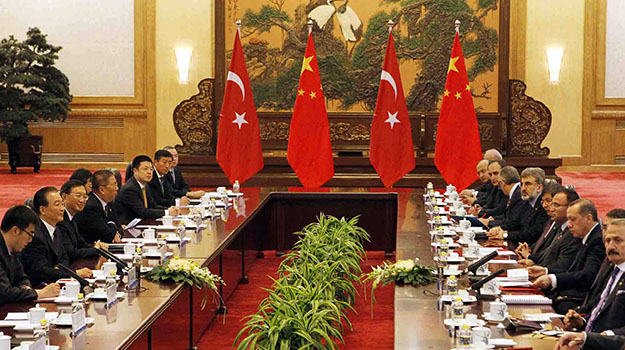
The relationship between Turkey and China has rarely been a point of focus for international observers in the early twenty-first century. However, the landscape has recently undergone a dramatic change, with increasing numbers of symposiums, forums, panels, articles, columns, think tanks, and researchers focusing on Sino-Turkish relations in China or in Turkey. The change is mostly due to the impressive rise of both Turkey and China as powers on the regional and global level, respectively. Today, Turkey is the sixteenth largest economy and China the second largest. At the same time, they are more ardently looking at and listening to each other.
Women & the Fight for Bodily Integrity in Egypt
The struggle for bodily integrity—a right broadly defined as the inviolability of the human body and the self-determination of humans over their bodies—has been at the center of revolutionary aspirations in Egypt. Sexual assaults, arbitrary arrests, and torture by security forces; corrupt and defunct state healthcare systems; the abuse of agricultural subsidies resulting in innutritious food products—all of these are realities that took a painful physical toll on Egyptians and helped drive them to demand an end to Mubarak’s regime.
Syria's Rebels: Radicalization and Division
Last month, when Secretary of State John Kerry sought to dispel the mounting skepticism of lawmakers over the advisability of launching punitive air strikes against the regime of President Bashar al-Assad, he portrayed the rebel fighters in the Western and Gulf-backed Free Syrian Army (FSA) as pluralistic and democratic, distinguishing them from jihadi groups and hard-line Islamists.[1]
Collection Spotlight: An Iraq of Its Regions

An Iraq of Its Regions, edited by Reidar Vissar and Gareth Stansfield, 2008
The Shanghai Cooperation Organization: A New Alternative for Turkish Foreign Policy?
In June 2012, Turkey was accepted as a “dialogue partner” at the Beijing Summit of the Shanghai Cooperation Organization (SCO). Although this decision did not completely satisfy the Turkish government, which apparently preferred the status of an observer, it still had a profound meaning, as Turkey is the first NATO member state to enjoy such a privileged institutional relationship with the SCO. This new relationship has become even more significant in light of Turkish Prime Minister Recep Tayyip Erdoğan’s declaration in a televised interview in January 2013 that membership in the SCO could become an alternative to Turkey’s stalled EU accession process. More recently, the brutal suppression of the Taksim Gezi Park demonstrations by Turkish security forces heightened concerns about the future of democracy in Turkey, giving rise to more frequent comparisons between the Turkish regime and the authoritarian political systems of the SCO member states.
A Conversation with Egypt's Aboul Fotouh
Dr. Abdel Moneim Aboul Fotouh, once a prominent member of the Muslim Brotherhood, former presidential candidate, and head of the Strong Egypt Party, spoke with Cornelis Hulsman, editor of Arab-West Report, in an interview for MEI regarding his break from the Brotherhood, Morsi’s ouster, and what he sees as necessary for Egypt’s future.
You were once a member of the Muslim Brotherhood. Why did you leave the organization?
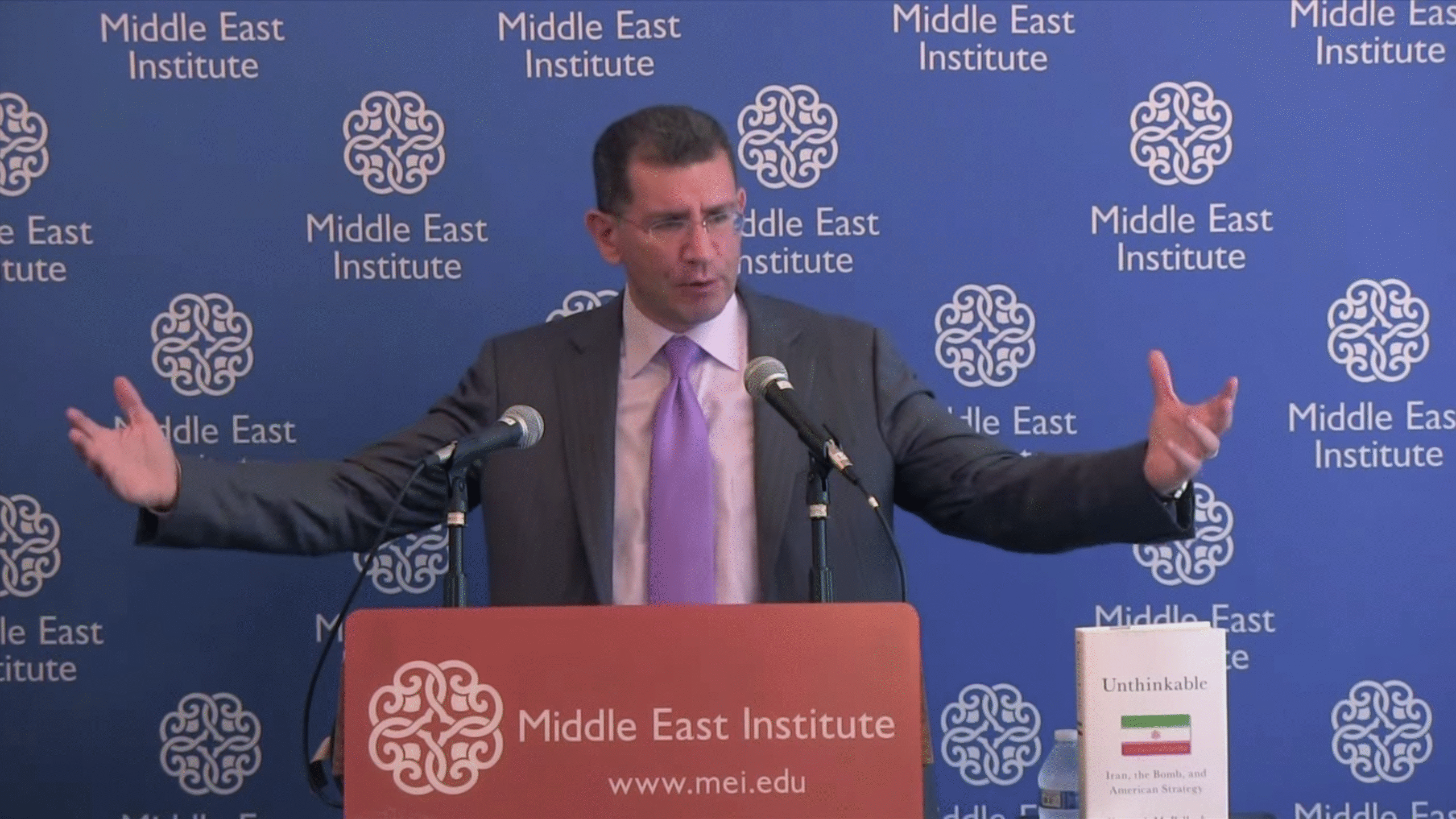
A Discussion with Ken Pollack, Author of Unthinkable
On Wednesday, October 16, 2013, the Middle East Institute hosted author and Brookings senior fellow Ken Pollack for a discussion of his book, Unthinkable: Iran, the Bomb, and American Strategy(Simon & Schuster, 2013). In his latest work, Pollack explores the protracted tensions underlying the U.S.-Iranian relationship, how it evolved to its current status, and how the U.S. should best address Iran’s nuclear ambitions.



