This individual is a guest contributor. MEI is not able to assist with contact requests.
With a background in government consulting, Sarkis Karabashian brings four years of experience from his time at Deloitte, where he worked closely with clients in the defense sector. Additionally, Sarkis serves as a member of the Disaster Assistance Response Team (DART) for Samaritan’s Purse, providing vital humanitarian aid in crisis situations around the world. His professional journey and humanitarian experiences have fueled his passion for American-Armenian issues, leading him to dedicate his time and efforts to strengthening ties between the two nations. Sarkis has actively volunteered with humanitarian organizations and think tanks in Armenia, where he has contributed to various initiatives aimed at promoting dialogue and cooperation. Through his academic pursuits, advocacy work, and humanitarian efforts, Sarkis is committed to advancing understanding and collaboration between the United States and Armenia. He holds a Master of Arts degree from Georgetown University’s Security Studies Program.
De-Russification: Understanding the trajectory and reversibility of Armenia’s Western pivot
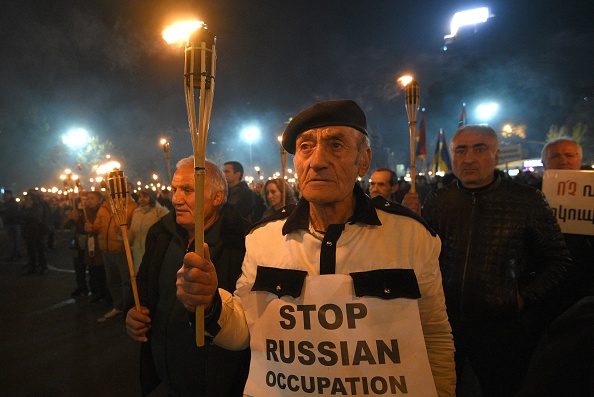
The question of whether Armenia’s recent shift away from reliance on Russia is reversible is central to understanding its democratization trajectory. In recent years, Armenia’s dependency on Russia for security and economic stability has been severely tested, particularly during the 2020 Second Karabakh War and subsequent Azerbaijani incursions on sovereign Armenian territory, where Russia’s lack of support led to widespread disillusionment. This discontent has spurred Armenia to diversify its security, economic, and diplomatic ties, with a notable strengthening of relations with the United States. However, the sustainability of this shift remains uncertain, as it hinges on various societal factors and internal dynamics.