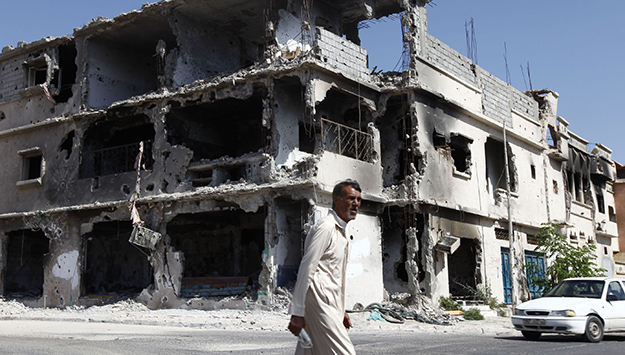
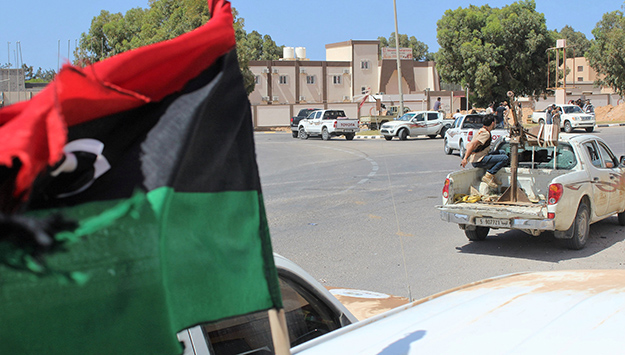
After the liberation of Sirte from ISIS, now the really hard work begins. The nine-member Presidential Council (P.C.) and the Government of National Accord (G.N.A.) that it named under Prime Minister Fayez Serraj have yet to receive an affirmative vote from the House of Representatives (H.O.R.) in Tobruk. Although a majority of H.O.R. members were prepared many weeks ago to confirm Serraj and his cabinet, speaker Aquila Saleh declined to bring the matter to a vote.
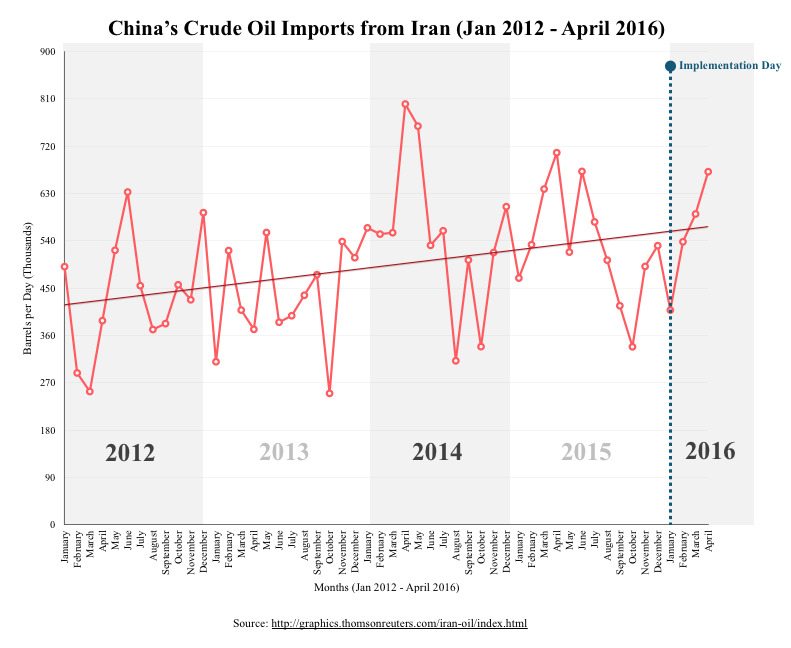
In 2011, China purchased 550,000 b/d, or 11% of its total crude oil imports, from Iran. However, the next year, China’s crude oil imports from Iran plummeted by 20% due to the imposition of nuclear-related sanctions on Iran by the U.S. and European countries. In 2012 and 2013 China’s purchases from Iran fell to just 8% of its total crude oil imports. Progress in the negotiations between Iran and the P-5+1 countries at the end of 2013 permitted China to restore crude imports from Iran to pre-sanction levels.
Ensuring More Effective Responses to Natural Disasters: Pakistan in Perspective
This essay draws on recent examples of efforts to respond to natural disasters in order to shed light on some of the main reasons such efforts often fall short of their desired outcome. To address these shortcomings, the author advocates, above all, the adoption of a long-term, holistic approach to disasters that could mitigate the risks associated with “slow burn” crises.
Governance Framework for Humanitarian Assistance and Disaster Response in ASEAN
This essay discusses the steps taken and progress made by the Association of Southeast Asian Nations (ASEAN) to address issues of humanitarian action and disaster response (HA/DR) in the region. The essay outlines ASEAN’s evolving governance framework for humanitarian and disaster relief (HA/DR), focusing on 1) the regulatory foundation, 2) key sectors and actors, 3) instruments to mobilize resources, and 4) coordination mechanisms. The essay also offers some thoughts about which principles and actions adopted by ASEAN member states aimed at strengthening their collective preparedness to respond to large-scale disasters might be applicable to the Middle East.
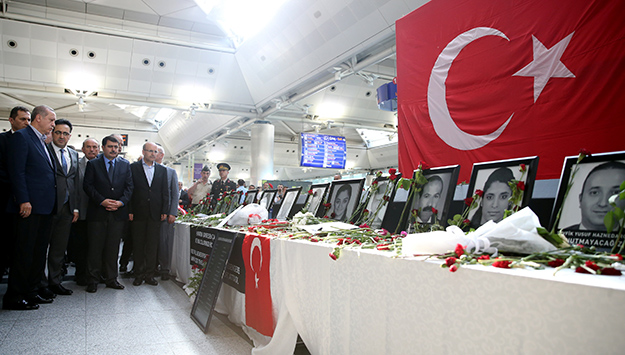
The gut-wrenching tragedy at Istanbul’s Ataturk Airport offers a chance now to strike more damaging blows against ISIS. The cold-blooded massacre of June 28 reveals key facts that call for a rapid and comprehensive response. Recognizing the truth of this massacre opens the door to a new start in Turkey’s own war policy to complement its recent diplomatic efforts to improve its international ties.
Private Sector Engagement in Disaster Response: Opportunity and Lessons
Public officials and other stakeholders in the Asia Pacific and MENA regions face the challenge of finding ways to strengthen their capacity to respond to natural disasters, and thereby reduce the loss of life and economic damage caused by them. This essay examines the opportunities for private sector engagement in disaster response and humanitarian assistance and the potential contribution of such engagement to mitigating disaster impacts in the MENA region.
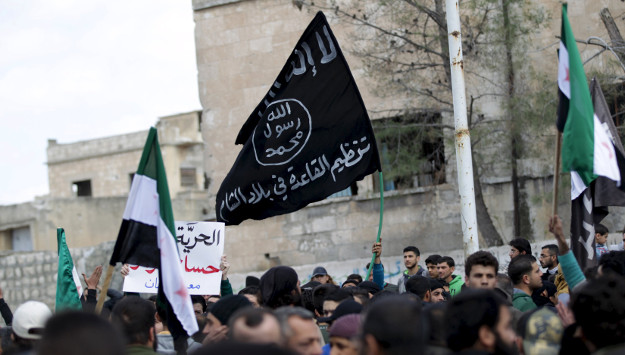
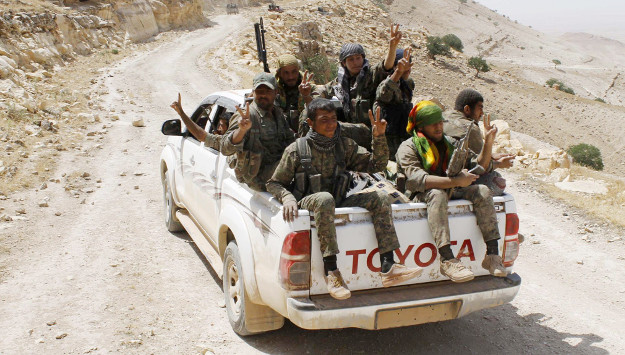
Having begun to turn the corner in the fight against ISIS earlier this year, it’s safe to say that we have now secured significant momentum in dissolving the terrorist group’s “state” project.
Although more victories have been won in Iraq, Syria too has witnessed ISIS lose a great deal more territory than it has won since mid-2014. It would seem therefore, that we have much to celebrate.
An “All-Hazards” Approach to Resilience: Benefits and Building Blocks
What could be done to guard against the possibility of a multi-disaster incident? Drawing upon the experience of the Great East Japan Earthquake of 2011, this essay discusses the need for, value of, and prerequisites for instituting an “All-Hazards” emergency management strategy.
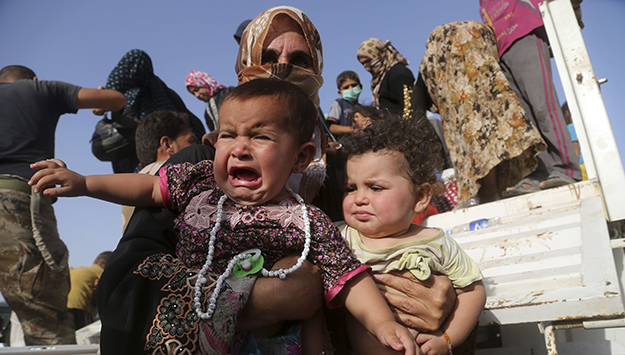
The Next Challenge: Governing Liberated Cities after ISIS
Lieutenant General Abdulwahab al-Saadi, the Iraqi commander of the Iraqi forces fighting to retake Fallujah, said June 23 that his units held 80 percent of the city. This contrasts with the estimate from the U.S. military spokesman in Iraq on June 22, who said that Iraqi forces held only a third of the city. Whatever the exact figure, after heavy fighting, often street-by-street, the Islamic State will lose the city.
The Libyan Presidential Council (P.C.), representing a rough consensus of Libyan political forces, is making slow but promising gains in several key areas. There will probably be setbacks on the road to the kind of progress that will generate wider support from both key Libyan factions and the general populace. Signs are encouraging, however, in areas such as security and legitimacy. It is too early to say that the Government of National Accord (G.N.A.) appointed by the P.C. is truly governing, but it is taking steps that provide more confidence to the international community.
Monday Briefing: Brexit’s Impact on the Middle East; Syria File Changes Hands in Iran
In this week’s Monday Briefing, MEI experts Daniel Serwer, Paul Scham, and Alex Vatanka provide analysis on recent and upcoming events including Brexit’s impact on the Middle East, how Brexit is distracting the E.U. from Israel-Palestine issues, and Iran’s more moderate reshuffling of officials focusing on Syria.