In the summer of 2003, King Abdullah II told Bloomberg Jordan sits “between Iraq and a hard place,” a play on words designed to describe the kingdom’s challenging environment to an American audience amid the US-led Iraq war to the east and the lingering Palestinian-Israeli conflict to the west.
Jordan is grappling with a much “harder place” today, particularly since Hamas’ October 7, 2023, attacks on Israel, Israel’s brutal war in Gaza that has rendered vast swathes of the enclave “uninhabitable,” and the surging settler violence against Palestinians in the West Bank. Adding to Jordan’s pressures is the mounting threat arising from the Islamic Republic of Iran’s support for militias in Iraq and drug smuggling from southern Syria. The Iran war has left the region in a perpetual state of uncertainty over the past seven months. The Iranian regime has launched more than 250 missiles and drones against Jordan — primarily targeting the US military presence as well as the port city of Aqaba, the country’s dominant trade “gateway.” Thanks to Jordan’s strategic security partnership with the US and robust response by its armed forces, most of these projectiles were intercepted and the damage so far has been minimal. There have been no reported Jordanian casualties, but three American service members were killed. Though the physical scars of war have so far been relatively limited, the economic blows are accumulating.
War Adds Pressure on Jordan’s Economy
It is notable that in the aforementioned 2003 Bloomberg interview, King Abdullah contended, “We have to solve the Israeli-Palestinian issue if we really want the economies of this region to flourish and move forward.” Economic progress grounded in stability was a key priority for the Hashemite monarch then, and it is an urgent one now, as Jordan navigates the repercussions of the Iran war.
The current conflict’s ripple effects across global energy and trade flows have had a significant impact on Jordan’s key sectors and increased the strain on a resource-scarce country that imports 96% of its energy needs.
The surge in oil prices and suspension of natural gas imports from Israel at the outset of the war added financial pressure on the government’s energy bill. According to Jordanian officials, higher global energy prices have increased the cost of power generation by approximately $140 million a month — a significant rise for a governmental budget of approximately $18.5 billion. The situation compelled the National Electric Power Company to activate its emergency plans in March and switch to backup fuels for power generation, a tactic that cannot be sustained indefinitely. To manage gas disruptions, the government also tapped into diesel and heavy fuel reserves and, in April 2026, increased fuel prices by 11%. Like Americans, Jordanians are already feeling the pinch at the gas station and beyond as the energy import bill and higher fuel costs bleed into other sectors of the economy.
The sector that was hit the hardest is tourism, which comprises 14-16% of Jordan’s gross domestic product (GDP) annually. Given the kingdom’s diverse historic, archeological, and religious sites — including the renowned ancient city of Petra — tourism employs around 60,000 people directly and an additional 300,000 indirectly. In 2025, more than 7 million tourists traveled to Jordan, generating around $7.8 billion in revenues. The number of visitors in 2026 fell to 3.1 million in the first half of the year, with tour operators and hotels noting that bookings for the high season in spring and early summer were almost entirely canceled. “Jordan’s tourism sector is usually used to shocks, but this latest one came without any recovery time. There was COVID-19, Gaza, and now the Iran war back-to-back with no chance to replenish reserves” in between, noted Muna Haddad during an interview with the author. Founder and CEO of Baraka, a community-driven tourism company, she added, “the destination’s reputation took a hit too,” especially as news broadcasts showed missiles flying over Jordan’s airspace.
The government responded by launching a domestic tourism campaign named “Urdun Jannah” (Jordan is Paradise), which included subsidized prices for Jordanians visiting tourist sites and assistance to keep employees at key attractions afloat. However, as Haddad explained, “Jordan’s domestic market is too small to absorb the losses.”
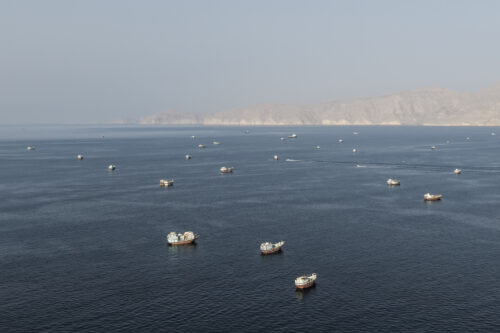
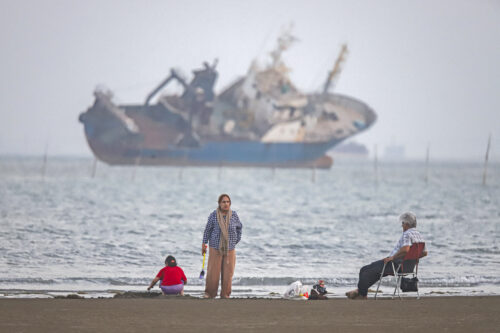
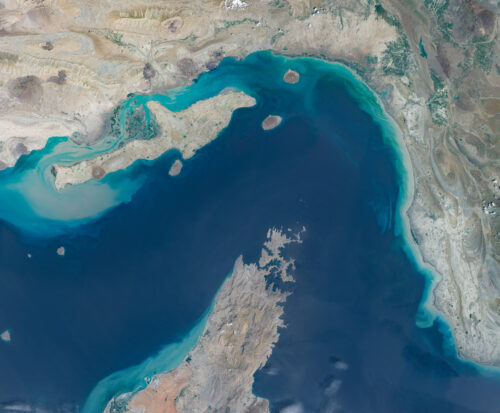
Compounding the decrease in revenue, the disruption to shipping in the Strait of Hormuz has translated into higher import costs, more expensive insurance, and more uncertain supply chains, especially for goods moving between Jordan, Iraq, and the Gulf. This is affecting Jordanian businesses, most of which are small- and medium-sized enterprises that depend on imported inputs across all sectors. In a phone interview with the author, Rami Saheb, an industrialist based in Amman, noted that prices of imported raw materials needed for his food packing business have risen, adding that his colleagues have similar complaints.
Rising prices of goods and energy are salt in an open wound as the country is already grappling with high levels of unemployment, especially among youth, whose unemployment rate was estimated at 39% in 2025. Moreover, high public debt stands at roughly 114% of GDP, and growth remains anemic, particularly for a developing country, measured at around 2.8% last year. This puts pressure on Jordanians who, according to a recent IPSOS survey, named unemployment and the high cost of living as their “top concerns.”
A Few Bright Spots
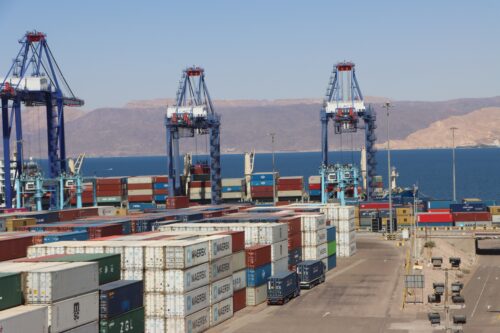
Paradoxically, the Iran war, while increasing the cost of doing business, also boosted Jordan’s strategic value by turning the seaport of Aqaba into a critical gateway for regional trade. The port saw a 155% “surge in transit cargo” in the first half of 2026 as shipping slowed down through the Strait of Hormuz. Saudi Arabia and other Arab Gulf countries rerouted cargo overland and through the Red Sea, making Aqaba a transit hub for the region. Aqaba was also targeted during the conflict, as it sits just across from the Israeli port of Eilat, so its economic position is threatened by Iran and its proxies. However, Jordanian officials seem intent to capitalize on gains experienced since the start of the war. Mashhoor al-Jazy of Jordan’s Shipping Association noted Aqaba could “become a permanent route,” adding, “this is what we want to see, how we can prove to the world that Aqaba’s location should strategically remain on this route … after the crisis ends.” The United Arab Emirates and Jordan signed a series of agreements in April worth $2.3 billion to implement the Aqaba port railway project, which includes a “massive infrastructure package featuring railway tracks, tunnels, and bridges.”
Industrialist Rami Saheb shared an experience that captures another unintended consequence of the war. His food packaging business, among others, is booming due to demand from the Arab Gulf states. Shipping costs and delays for goods they would normally import from China have nudged these countries to turn to Jordan for alternatives. Saheb is optimistic, noting, “Jordanians have been tested before, and our businesses have become agile and adaptive and that is Jordan’s competitive edge.”
Another unexpected bright spot is the increase in remittances from Jordanians working and living primarily in the Gulf and the US, up by 14.3% in the first half of 2026. This is also somewhat paradoxical because the Arab states of the Gulf, namely the UAE, where many Jordanians work, were prime targets of Iranian missiles. The Jordanian diaspora provided a much-needed buffer as remittances reached around $2.5 billion. Figures from the Central Bank of Jordan show inflows from the US contributed 19.6%, second only to remittances from Jordanians in the UAE. This increase was not caused by the war; rather, it suggests that remittances were not impacted by it.
Meanwhile, Jordan’s monetary and fiscal policies during this period have enabled it to maintain macroeconomic stability. A June 2026 review by the International Monetary Fund (IMF) commended Amman on its “continued reform implementation” to “support resilience, economic growth, and fiscal sustainability.” The review also projected growth in 2027 to increase despite uncertain regional developments, primarily due to the government’s focus on the investment megaprojects outlined in its economic modernization vision. In 2026, Jordan signed multiple framework agreements for major infrastructure development plans, including the National Water Carrier project, valued at around $5 billion; the Aqaba port railway project, valued at $2.3 billion; and the green ammonia project, valued at more than $1 billion. Completing these megaprojects will be critical to realizing the kingdom’s strategy to build economic resilience, bolster water and energy security, and spur job creation.
Prioritizing Economic Diplomacy
Even as Jordan was being targeted by Iranian missiles, diplomatic efforts to enhance trade relations were underway by government officials and private-sector leaders, frequently led by King Abdullah himself. From the US to the United Kingdom, the European Union, and China, business forums and trips were organized to “pitch” Jordan as a “stable industrial launchpad into the broader Middle East” for investment and trade. According to Adey Salamin, a member of Jordan’s National Council for Future Technology, there is plenty of evidence to back up this pitch. “What is changing quickly is the ease of doing business. Government services are increasingly moving online with Sanad Business. That guarantees faster interaction with the government and a more predictable environment for investors,” Salamin noted in an interview with the author, referring to the country’s e-government services platform.
In addition to the Aqaba port project, the UAE’s Abu Dhabi Fund for Development signed a $300 million financing agreement to directly support Jordan’s budget. This is critical as geopolitical uncertainty becomes the norm in the region. This year, Jordan also signed agreements for water, education, and digital infrastructure with the European Bank for Reconstruction and Development, Germany, and the European Union worth $245 million. The EU support in 2026 builds on the EU-Jordan Strategic and Comprehensive Partnership, under which Brussels committed $3.4 billion for 2025-27 to elevate relations between the EU and Jordan focusing on stability, modernization, and sustainable development.
Most importantly, the US and Jordan signed a new reciprocal trade agreement in July aimed at expanding ties. A Jordanian official told the author that with this agreement the kingdom is guaranteed the lowest tariff tier available (a 10% cap) at a time when the Trump administration has been explicit that “10 is the new zero,” adding that this “offers our [Jordanian] exporters much-needed clarity and certainty amidst a trade landscape that has been full of surprises.” Even more beneficially for Jordan, the deal includes zero tariffs on the country’s largest export sector: apparel and textiles. In the first quarter of 2026, Jordanian exports to the US totaled more than $800 million and were led by this sector, so the preferential treatment gives Jordan’s industry a competitive advantage.
The gains are not all one-sided. Under the agreement, Jordan will preserve duty-free access for US goods under the existing US-Jordan Free Trade Agreement and will eliminate non-tariff barriers that hinder market access for American exporters. Additionally, Amman made commitments to multi-billion-dollar purchases and leases from Boeing, and its leading pharmaceutical company, Hikma, promised to invest $1 billion in the US. Hikma has already started posting notices for more than 30 vacancies at its US operations.
The American Connection
Beyond the economic value of the bilateral trade relationship, Jordan has proven to be a reliable strategic partner for the US in the region. From choosing the path of peace to being at the forefront of both military and political counterterrorism efforts and enhancing intelligence and security cooperation, Amman has repeatedly demonstrated it is a resilient and critical partner that helps advance Washington’s national security interests in the region as it advances its own.
Both political parties in the United States have recognized the value of this relationship as reflected in the fact that military and economic assistance packages to the kingdom continue to make up significant line items in the federal budget. Between the fiscal years of 1951 and 2025, the US provided around “$33.8 billion to Jordan, making it one of the top recipients of US aid globally,” according to a recent Congressional Research Service report.
Part of this economic assistance comes in the form of direct cash transfers that have been a key factor in stabilizing Amman’s budget, especially in times of crisis like the current Iran war. In the past two years, Jordan has seen a drop in funding resulting from the Trump administration’s closure of the US Agency for International Development (USAID), which led to around 61% of $430 million in annual assistance being cut off and a decrease in GDP of 1.5% from a loss of approximately 35,000 USAID-funded jobs. However, the US replaced part of that support in August 2026 with a four-year bilateral “strategic objective agreement” for $354 million to back Jordan’s economic modernization vision. This support is critical as Jordan navigates strong headwinds from the US-Israeli war with Iran, particularly on the economic front.
Jordan’s ability to weather this latest regional shock underscores its value to US strategy in the Middle East. Amman’s intensive diplomatic activity, delicate regional balancing act, moderate foreign policy, and laser focus on megaprojects for long-term development and job creation have enabled it to chart a path forward that will better shield the kingdom from future crises.
Merissa Khurma is an Associate Fellow with the Middle East Institute and a Nonresident Fellow at the Baker Institute at Rice University.
Photo of Aqaba Port by He Yiping/Xinhua via Getty Images.
The Middle East Institute (MEI) is an independent, non-partisan, not-for-profit, educational organization. It does not engage in advocacy and its scholars’ opinions are their own. MEI welcomes financial donations, but retains sole editorial control over its work and its publications reflect only the authors’ views. For a listing of MEI donors, please click here.