On October 31, the United Nations Security Council (UNSC) will vote on whether to renew the UN monitoring mission in Western Sahara, officially known as the UN Mission for the Referendum in Western Sahara (MINURSO). For the past year, the United States has pressed the Security Council to reconsider the mission, raising the possibility of shrinking it, transforming it, or ending it altogether. Yet, despite the growing international support for Morocco’s autonomy plan — under which Western Sahara would gain self-rule but remain under Moroccan sovereignty, rather than become independent — changing MINURSO’s mandate has proven difficult.
The debate over MINURSO’s future raises a larger question about the relationship between the UN mission and the US-led political process. Even as Washington pushes negotiations toward an autonomy-based settlement, the Security Council may still have reasons to preserve MINURSO, the institution originally created to organize a referendum on the territory’s future. Three alternatives have been under consideration: ending the mission, scaling it back to monitoring, or transforming it to implement autonomy. Each faces obstacles, raising the possibility that after a year of pressure, MINURSO may survive unchanged.
MINURSO and Self-Determination
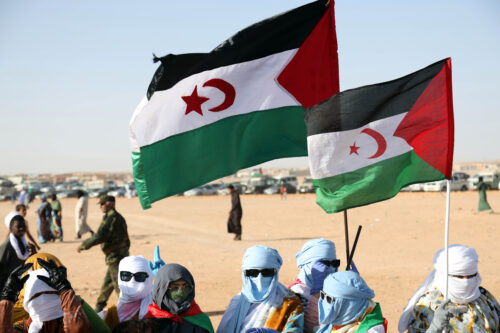
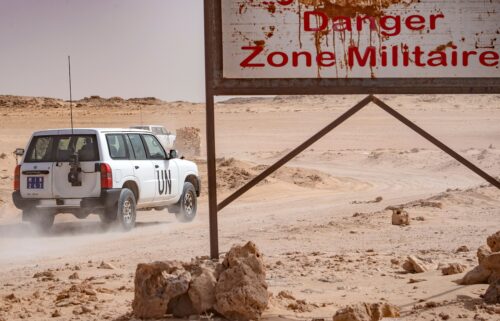
The Western Sahara is a former Spanish colony claimed by both Morocco and the Polisario Front, an Algeria-backed Sahrawi political movement that seeks independence. Efforts to resolve the decades-long conflict between the two sides, which dates back to 1975, have centered on the principle of self-determination, initially tied to a referendum under the UN 1991 Settlement Plan. MINURSO was established that year to prepare for the referendum and monitor the cease-fire as an impartial UN presence on both sides of the berm, a fortified barrier built by Morocco to contain insurgent incursions.
The referendum stalled early over who should be allowed to vote. The MINURSO-led identification of voters was suspended in 1996, resumed in 1997, and ran into issues again in the early 2000s over disputes about which Sahrawis had the right to be registered to vote. To overcome the deadlock, in 2003 the secretary-general’s personal envoy, former US Secretary of State James Baker, proposed a few years of autonomy followed by a referendum that would include independence. Morocco rejected this plan in 2004. In 2007, it presented its own autonomy proposal: the whole territory would be governed through local legal, executive, and judicial bodies, while Rabat would retain control of defense, foreign affairs, and religious matters. A referendum that would include independence was off the table.
Three factors have sustained Morocco’s shift from accepting the referendum to championing its own autonomy plan. The first is the cumbersome and politically contested voter-registration process. The second is the extensive investment Morocco has poured into developing the Western Sahara territories it de facto controls; according to government-based estimates, Morocco invested nearly $12 billion in infrastructure between 1975 and 2013. And third is decades of Moroccan diplomacy, helped by the United States’ recognition of Moroccan sovereignty over Western Sahara in 2020 and followed by endorsements of the autonomy proposal from Spain, France, and the United Kingdom, as well as support from other countries whose positions range from endorsing autonomy to recognizing Moroccan sovereignty.
The UN process seems to be moving toward autonomy while still formally committed to self-determination. MINURSO faces a similar divergence: its formal mandate still includes preparation for a referendum but in practice its focus has been on monitoring the cease-fire, and since its collapse in November 2020, military activity on both sides of the berm.
A Year of Pressure
Ahead of last year’s vote on MINURSO’s renewal, the question was whether the mission would keep the support of a new US administration with very different foreign policy priorities. Leaked versions of the initial draft show Washington proposing a three-month renewal and raising the possibility of transforming or ending the mission. After rounds of negotiations, the final UNSC Resolution 2797 of October 31, 2025, extended the mission for a full year and called for a strategic review. The resolution notably gave greater weight to Morocco’s autonomy plan, saying autonomy could represent “a most feasible” outcome, and called for negotiations based on Morocco’s proposal, while still requiring a final, mutually acceptable solution consistent with self-determination.
No completed strategic review of MINURSO has been unveiled yet. The Security Council Report published on October 1 states that “it remains unclear whether the strategic review will be finalized ahead of the mandate renewal and how it will be taken forward.” Washington is reportedly still pondering the future of the mission, but in the meantime, three rounds of US-facilitated talks had taken place with the participation of Morocco, Algeria, the Polisario Front, and the UN secretary-general’s envoy, Staffan de Mistura, by the end of February 2026. The talks were conducted amid considerable secrecy, leaving little official information about their substance or progress. Moroccan reporting suggests that discussions had moved into concrete elements of a possible transition along the broader outlines of Morocco’s autonomy proposal. But there is little public evidence that the talks have resolved the more fundamental disagreement over sovereignty and how self-determination would be exercised. If the reports are accurate, the talks appear to be working out how autonomy would function faster than they are settling whether the Polisario and Algeria would accept it. In the absence of that agreement, the negotiations Washington is leading will continue to operate between a political track increasingly centered on autonomy and a UN-based commitment to a mutually acceptable solution providing for self-determination.
Three Options Before the Security Council
Option 1: End the Mission
The UNSC could vote to end the mission outright. For now, this appears the least likely of the three scenarios detailed here. Ending MINURSO would remove the UN institution established to organize the referendum that Morocco rejects. Unless the next resolution says otherwise, MINURSO’s termination would not by itself change the UN’s commitment to self-determination, but it would leave no UN mission mandated to organize a referendum on the matter. Nor would it amount to UN recognition of Moroccan sovereignty, though it would remove one of the main institutional remnants of the political framework Rabat has spent decades trying to surmount.
Yet, even Morocco has not publicly called for termination. Media outlets sympathetic to Rabat have, but the government has held back for good reason. MINURSO did not prevent the cease-fire’s collapse and cannot stop the current fighting, but it is the only impartial international observer in the area. It reports on the incidents and maintains a channel of communication to both sides. Morocco holds a clear military advantage, but escalation, including the risk of Algeria entering the conflict directly, would undercut Rabat’s case that the territory is secure and open for investment. So MINURSO’s backchannel role in the conflict has real value to Rabat.
For Algeria and the Polisario Front, termination would cut the main institutional link to the referendum they still invoke, weakening both the Polisario’s and Algeria’s political leverage. Weaker leverage could produce more resistance rather than compromise if they conclude that every international process is ratifying Morocco’s gains. With China and Russia likely opposed, termination would face a veto. That does not make the end of MINURSO impossible; the mission could end if its mandate is not renewed, and renewal requires US consent, so Washington could end MINURSO on its own by vetoing the resolution. Doing so would mean overriding its European allies and going further than Morocco itself has publicly asked. This would be a high cost, but one the administration could choose to pay.
Option 2: Monitoring Only
A smaller mission could keep monitoring military activity, investigating incidents, staying in contact with the parties, and supporting mine clearance, while dropping the task of organizing a referendum. This would bring the mandate in line with what MINURSO actually does. Budget cuts already point toward a somewhat smaller operation: the proposed budget for 2026-27 was $62.7 million, 11.3% less than the previous year. The cuts, however, reflect UN-wide financial pressure and less so a political judgement about the mission’s purpose.
For Morocco and its supporters, this option keeps the useful parts of MINURSO without a dormant referendum mechanism. For Algeria and the Polisario, it means losing the mechanism they associate with Sahrawi self-determination. This is also an increasingly unlikely option because it is harder than it appears: removing the referendum from the mandate is precisely the change that members concerned with self-determination are least willing to accept. It would also leave the conflict unresolved, possibly locking in a stalemate that favors Morocco on the ground without producing a final settlement.
Option 3: A Mission to Implement Autonomy
The most consequential option would be to turn MINURSO, or a successor, into a mission that helps implement an autonomy agreement. This requires an agreement to implement, and there is none. Press accounts of the secretary-general’s latest report suggest the talks now cover transitional arrangements, security, elections, and disarmament; there is no public evidence that the Polisario or Algeria has accepted autonomy. Resolution 2797 leaves open how self-determination would be exercised under autonomy. Morocco may argue that negotiated autonomy itself fulfills that principle, while the Polisario insists on a genuine act of Sahrawi choice. Until the parties agree on how Sahrawi consent would be established, designing a mission to implement autonomy would be premature.
Why the Status Quo is Likely to Hold
The Security Council’s composition explains why growing support for autonomy does not translate into agreement over MINURSO’s future. France and the UK back autonomy but also back a continued UN role, and they have given little sign they want the mission ended or pared down. Two of the UNSC’s other veto-holders, Russia and China, abstained on Resolution 2797 rather than blocking it, accepting stronger autonomy language. Pakistan, which abstained with them, has stressed that any new resolution must preserve Western Sahara’s right to self-determination. Morocco, for its part, has US recognition of its sovereignty and substantial support among rotating members Bahrain, the Democratic Republic of the Congo, Liberia, and Colombia. But endorsing autonomy is not the same as voting to end or hollow out MINURSO.
What Was the Pressure For?
If MINURSO survives largely unchanged, it is fair to ask what the past year of pressure was for. Washington has not explained its thinking, and the public record does not reveal its intentions. But the sequence of events support several readings. The threat to MINURSO could have been mainly leverage. By putting the mission’s future in doubt, Washington could make stronger autonomy language look like a viable compromise. Members uneasy about changing the mandate might accept firmer wording on autonomy as the price of keeping the mission. Similar pressure ahead of Resolution 2797 may have given Morocco’s plan its strongest UNSC backing yet. But leverage does not explain why Washington accepted softer language in 2025. This year, the pressure could potentially provide stronger endorsement of the autonomy proposal.
Alternatively, the administration might have truly sought to transform or end the mission and found it could not. Support for autonomy from France and the UK as much as from elected members turns out not to extend to dismantling the referendum framework. This interpretation suggests Washington was able to shift the council’s language more readily than its institutional arrangement. But the limit has never been tested by a US veto.
Finally, Washington may have wanted reform but in a particular sequence: political agreement first, institutional change second. The strategic review, which ties MINURSO’s future to the outcome of the talks, fits this reading: it would keep MINURSO in a holding pattern rather than a retreat, with the pressure serving to keep the question open until the talks produce something to implement. The difficulty is that this depends on the talks advancing, and there is little evidence that they have moved the core dispute forward.
These readings are not mutually exclusive, and the outcome will not settle the question on its own. But what they do share is that the pressure was not wasted, even if the mission survives. It moved the UNSC’s language closer to Morocco’s position, produced a review that ties the mission’s future to the political talks, and made ending MINURSO a question that can be raised openly. What it has not done is persuade the council that backing autonomy requires dismantling the institution built for a referendum. At least, it has not yet.
What Preservation Means
A straightforward renewal would be a decision to keep the UN’s referendum-era structure in place while diplomacy moves toward autonomy. If Morocco does secure more decisive autonomy language in exchange, the gap between what the UNSC says about a political solution and what its mission is mandated to do will widen further. If the outcome is different, whether a narrower mandate or an end to the mission, it will most likely be because a veto-holder accepted some compromise, the talks produced visible movement from the Polisario, or Washington decided to end the mission on its own. Any of these would mark a real break from the past year. The last would also show that the US is prepared to act without the council consensus it has so far sought.
In the longer term, the most plausible route toward an eventual resolution runs through some form of autonomy: Morocco controls much of the territory and its plan anchors both the UNSC’s language and the US-led talks. The question is whether that advantage produces a negotiated settlement, a fait accompli, or a continued stalemate.
For the United States, which has strongly backed Morocco’s autonomy proposal and is driving much of the diplomacy, this is an important consideration. Morocco is a close and reliable ally, and an autonomy-based settlement would reflect its preferred outcome. But US interests extend beyond simply maximizing Morocco’s gains. Algeria’s decision to join the US-facilitated process is significant; the challenge is keeping it engaged as the talks move from discussion of an autonomy framework toward the more difficult questions of consent. There is also a significant risk in abandoning the principle of self-determination, not only because it is central to the international framework for resolving the conflict, but also because denying it can become a source of enduring instability. Preserving that principle does not necessarily require accepting the Polisario’s preferred solution, but it does require a credible means of establishing Sahrawi consent to any final settlement. If the conflict is “settled” without a way out for the Polisario Front and a face-saving measure for Algeria, it risks becoming one more grievance in the Morocco-Algeria rivalry and making that rivalry dangerous.
Washington has helped shift the diplomatic parameters of the Western Sahara conflict, creating an opportunity to move negotiations forward on the basis of Morocco’s autonomy proposal. The challenge now is to translate that progress into a settlement that can accommodate the needs of the parties involved by providing a credible means of establishing Sahrawi consent. That is the key issue. This would require sustained engagement with Algeria, as well as the Polisario, alongside efforts to reduce tensions between Morocco and Algeria, even if broader reconciliation remains out of reach. The MINURSO renewal and the US-facilitated negotiations offer Washington an opportunity to preserve a UN role in managing the conflict while pressing the parties to address the conditions under which an autonomy agreement could secure Sahrawi consent and provide credible guarantees for its implementation. Progress on these questions could, in turn, lay the groundwork for a reconfigured UN presence capable of supporting security arrangements, refugee returns, and development of autonomous local institutions. That would give the diplomatic process achieved so far a better chance of producing a durable resolution to the conflict.
Intissar Fakir is a Senior Fellow at the Middle East Institute.
Photo by Fadel Senna/AFP via Getty Images.
The Middle East Institute (MEI) is an independent, non-partisan, not-for-profit, educational organization. It does not engage in advocacy and its scholars’ opinions are their own. MEI welcomes financial donations, but retains sole editorial control over its work and its publications reflect only the authors’ views. For a listing of MEI donors, please click here.