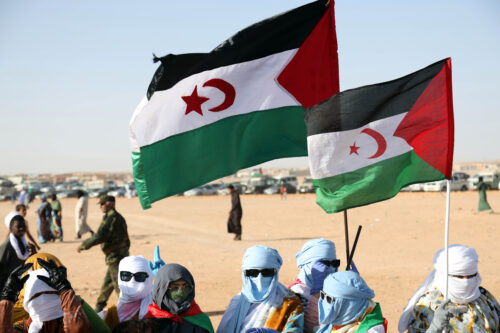
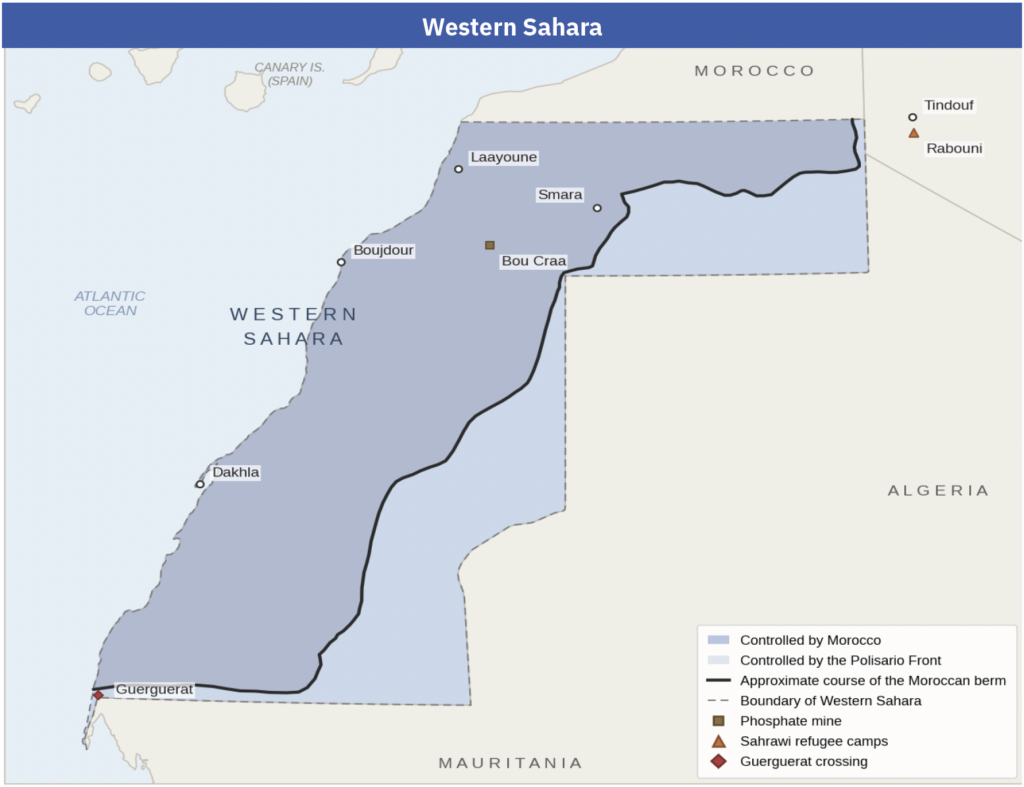
Western Sahara, a sparsely populated territory on the Atlantic coast of northwest Africa, is the site of one of the continent’s longest-running territorial disputes. The conflict dates to Spain’s withdrawal from the territory in 1975, after which Morocco and Mauritania asserted control over different parts of the former colony. They were opposed by the Polisario Front, a Sahrawi nationalist movement founded in 1973 that seeks self-determination and later established the Sahrawi Arab Democratic Republic (SADR). Mauritania withdrew from the conflict in 1979, while Morocco ultimately consolidated control over roughly 80% of Western Sahara. The Polisario, backed principally by neighboring Algeria, administers territory east of Morocco’s fortified barrier wall and refugee camps around Tindouf in southwestern Algeria.
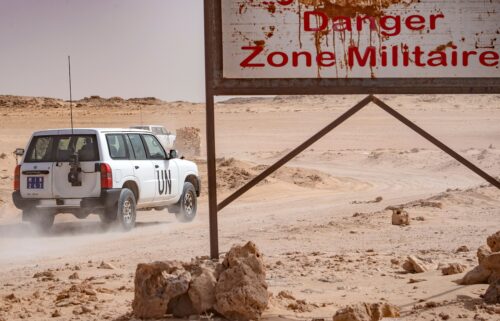
A United Nations-brokered cease-fire in 1991 established the UN Mission for the Referendum in Western Sahara (MINURSO) and envisioned a referendum on the territory’s future, but disagreements over the terms of the vote prevented it from taking place. After nearly three decades, the cease-fire broke down in 2020, although subsequent fighting has remained contained. The UN has described ongoing low-intensity hostilities, including firing incidents that create security concerns for MINURSO personnel. Diplomatically, momentum has increasingly shifted toward Morocco. The United States recognized Morocco’s sovereignty over Western Sahara in 2020 and several European countries subsequently announced support for Morocco’s autonomy plan. In October 2025, the UN Security Council went further by making Morocco’s autonomy proposal a basis for renewed negotiations, which resumed in early 2026. The territory’s final status nevertheless remains unresolved, with Morocco asserting sovereignty and the Polisario continuing to demand Sahrawi self-determination.
1960-75: Decolonization
A Spanish colonial possession for over half a century, Western Sahara underwent a period of decolonization from 1960 until Spain relinquished control in 1975. In the wake of World War II, the international community intensified efforts to end colonialism worldwide. Under Chapter XI of the UN Charter, colonial powers were obliged to report on “non-self-governing territories,” and Spain did so for what was then called Spanish Sahara, formally recognizing it as such in UN records. From the 1960s, the UN put increasing pressure on Spain to decolonize Western Sahara. At the time, both Morocco and Mauritania asserted territorial claims and called for integration with their respective countries during meetings of the UN Special Committee on Decolonization.
Under mounting UN pressure, in 1974 Spain announced plans to hold a referendum in the first half of 1975 on the status of Spanish Sahara, as it was then known. Though the UN supported a process of self-determination, the General Assembly urged Spain to postpone the referendum pending an advisory opinion from the International Court of Justice (ICJ), following the competing territorial claims raised by Morocco and Mauritania. From the late 1960s, Spain had favored a more gradual approach, creating the Djemaa in 1967 as a consultative body representing Sahrawi tribal groupings to postpone a self-determination vote. Morocco’s position evolved toward pressing territorial claims and preconditions (e.g., limiting referendum options), a trajectory reflected in the legal framing later aired before the ICJ. The referendum ultimately never took place.
The ICJ concluded that, while there were legal ties of allegiance between the Sultan of Morocco and some tribes in Western Sahara, neither Morocco’s nor Mauritania’s claims were sufficient to support sovereignty over the territory. As Spain was preparing to withdraw in 1975, King Hassan II of Morocco organized a mass demonstration, known as the Green March, during which around 350,000 unarmed Moroccan civilians crossed into Western Sahara in an attempt to force Spain to hand it over to them. The Green March sought to exert pressure on Madrid at a time when it was experiencing political instability at home while also undermining the Polisario Front’s calls for Sahrawi independence. Domestically, the monarchy has tied national legitimacy to its claim over Western Sahara. Regionally, Algeria provided sanctuary, arms, training, and logistical support to the Polisario Front, while Libya furnished weapons and financial assistance. These domestic and regional dynamics help explain Morocco’s move toward asserting territorial integration, described at the time as an “irredentist policy” toward the Spanish Sahara.
Following the Green March, Spain signed the November 1975 Madrid Accords, which transferred temporary administrative control of Western Sahara to Morocco and Mauritania instead of holding the agreed upon referendum on Sahrawi independence. The agreement stipulated that the northern two-thirds of the territory would be administered by Morocco and the southern third by Mauritania, without transferring sovereignty or conferring international recognition of that status on the administering states. As Morocco and Mauritania began to implement the accords, some Sahrawis, led by the Polisario Front, resisted the partition, triggering the Western Sahara War, which lasted from 1975 until 1991.
The dividing line is Natural Earth’s generalized limit of administration. Boundaries shown do not imply endorsement by MEI. Source: Natural Earth 1:10m (public domain).
1976-91: Active Warfare
Approximately 50,000 Sahrawis fled to neighboring Algeria in 1976 after the Moroccan Royal Armed Forces (known by their French acronym FAR) and the Mauritanian army established a permanent presence in the territory. While Morocco and Mauritania were ostensibly allies, they were suspicious of one another, with Morocco annexing Tiris al-Gharbiyya, the part of Western Sahara that Mauritania claimed, just days after Mauritania’s peace treaty with the Polisario Front on August 5, 1979.
The SADR was established on February 27, 1976, and the Polisario Front, which had experience fighting the Spanish, launched a guerrilla campaign from its bases in Algeria. Morocco, on the defensive due to the Polisario’s motivation and initial tactical superiority, responded by tripling the size of its armed forces to around 150,000, with more than half of them stationed in Western Sahara.
The Polisario was able to deny Morocco air superiority with Soviet anti-aircraft weapons and briefly engaged in conventional warfare with the help of Algerian forces by launching cross-border attacks, which pushed Morocco to seek additional foreign arms as a counter. While the US had been supplying Morocco with weapons since the 1960s, the administrations of presidents Jimmy Carter and especially Ronald Reagan expanded both the volume and sophistication of these transfers, including Carter-era approvals and deliveries of OV-10 aircraft and a Reagan-era shift to a more supportive arms posture.
Sustained Polisario attacks placed enormous pressure on Mauritania’s already vulnerable economy and military, contributing to a political crisis that culminated in a coup in July 1978. The resulting military and economic exhaustion prompted Mauritania to negotiate a withdrawal, sign a peace agreement with the Polisario Front, and ultimately renounce its claim over Western Sahara. By 1982, Polisario Front victories significantly reduced Morocco’s control over the territory.
The Polisario’s appeal drew on the broader legitimacy of anti-colonial and self-determination movements across Africa and the wider Global South. Conversely, Morocco’s campaign was framed domestically as a continuation of its struggle to restore national territorial integrity and reclaim lands viewed as historically Moroccan. At the same time, international observers and human rights organizations have documented both Moroccan and Polisario human rights abuses in the conflict.
By the mid-1980s, the conflict dynamics had begun to change markedly. While the Polisario Front continued to enjoy support from Algeria and Libya, and Morocco received increased material backing from France, the US, and Saudi Arabia, Morocco adopted a new counter-insurgency approach anchored in the construction of a massive system of fortified barrier lines known as the berm, which measured 1,700 miles by the time of its completion. Through the barrier system, Morocco created a static defense network that constrained Polisario incursions, denied the insurgents free access to Moroccan-held territory, and prevented them from carrying out raids to seize Moroccan arms and vehicles. By concentrating Moroccan forces and resources behind the berm, Rabat was able to move from a reactive approach of trying to counter Polisario guerrilla attacks as they occurred to a more traditionally effective counter-insurgency strategy centered on population security. At the same time, the Polisario’s foreign benefactors were reducing support, limiting the group’s ability to effectively deal with Morocco’s new counter-insurgency tactics.
The Polisario insurgents were outgunned, unable to access the portion of Western Saharan territory that was not under their control, and suffering attrition as many of their fighters emigrated to Mauritania or Morocco. Despite the military setbacks, the organization made some notable advances on the diplomatic front. The SADR gained full membership in the Organization of African Unity (OAU) in 1982, and as of 2024, 84 nations had recognized it at some point, though the current number is considerably lower, as many states have withdrawn, suspended, or frozen recognition as a result of Moroccan lobbying. Morocco left the OAU in 1984 in response to the seating of the SADR at the organization’s summit that year, but would rejoin its successor, the African Union (AU), in 2017.
Several senior Polisario figures eventually defected to Morocco, often citing disillusionment with the Front’s leadership and Algeria’s heavy influence. Omar Hadrami (Mohamed Ali El Admi), a founding member and former security chief, defected in 1989 and later became Morocco’s wali (governor) of Guelmim-Es Semara. Ahmed Ould Souilem, a former Polisario diplomat, returned in 2009 after three decades in exile, calling autonomy under Moroccan sovereignty the most realistic solution. He would later be appointed Morocco’s ambassador to Spain.
1991-2020: UN Engagement
By the late 1980s, the Western Sahara conflict had reached a stalemate. Morocco’s defensive barriers had given it the upper hand on the ground, while the Polisario’s diplomatic gains denied Morocco international recognition of its claim. In August 1988, both parties accepted in principle a joint UN-OAU settlement plan, leading to the creation of MINURSO in April 1991 and a cease-fire that September. MINURSO was tasked with monitoring the cease-fire and organizing a referendum on self-determination. However, the political process stagnated amid disputes over voter eligibility and sovereignty claims. A series of UN envoys, most notably James Baker, who proposed comprehensive peace plans in 2001 and 2003, failed to break the deadlock. Baker’s 2001 proposal envisioned autonomy under Moroccan sovereignty and was accepted by Morocco but rejected by the Polisario. His 2003 plan instead proposed a period of autonomy followed by a referendum offering independence, autonomy, or integration. The Polisario and Algeria accepted it, while Morocco rejected it. Baker resigned in 2004.
After the Baker period, several inflection points defined the UN track: Morocco tabled its autonomy initiative on April 11, 2007, triggering the Manhasset rounds (which took place in June and August 2007), where the parties remained far apart on the meaning of self-determination. Personal Envoy Peter van Walsum (2005-08) controversially argued that a referendum including independence was unrealistic, a stance not taken up by the Security Council. Under his successor, Christopher Ross (2009-17), the UN shifted to support for informal/preparatory talks and shuttle diplomacy but made no breakthrough. The next envoy, Horst Köhler (2017-19), revived momentum with Geneva roundtables, but his resignation halted that push; the envoy post then sat vacant until Staffan de Mistura’s appointment in October 2021. The UN Security Council has continued to renew MINURSO’s mandate annually, but the mission has been widely criticized for lacking a human rights monitoring component and for being unable to move the parties toward a political solution. In November 2020, the fragile cease-fire collapsed when Moroccan forces entered the Guerguerat buffer zone, prompting the Polisario to declare a resumption of hostilities.
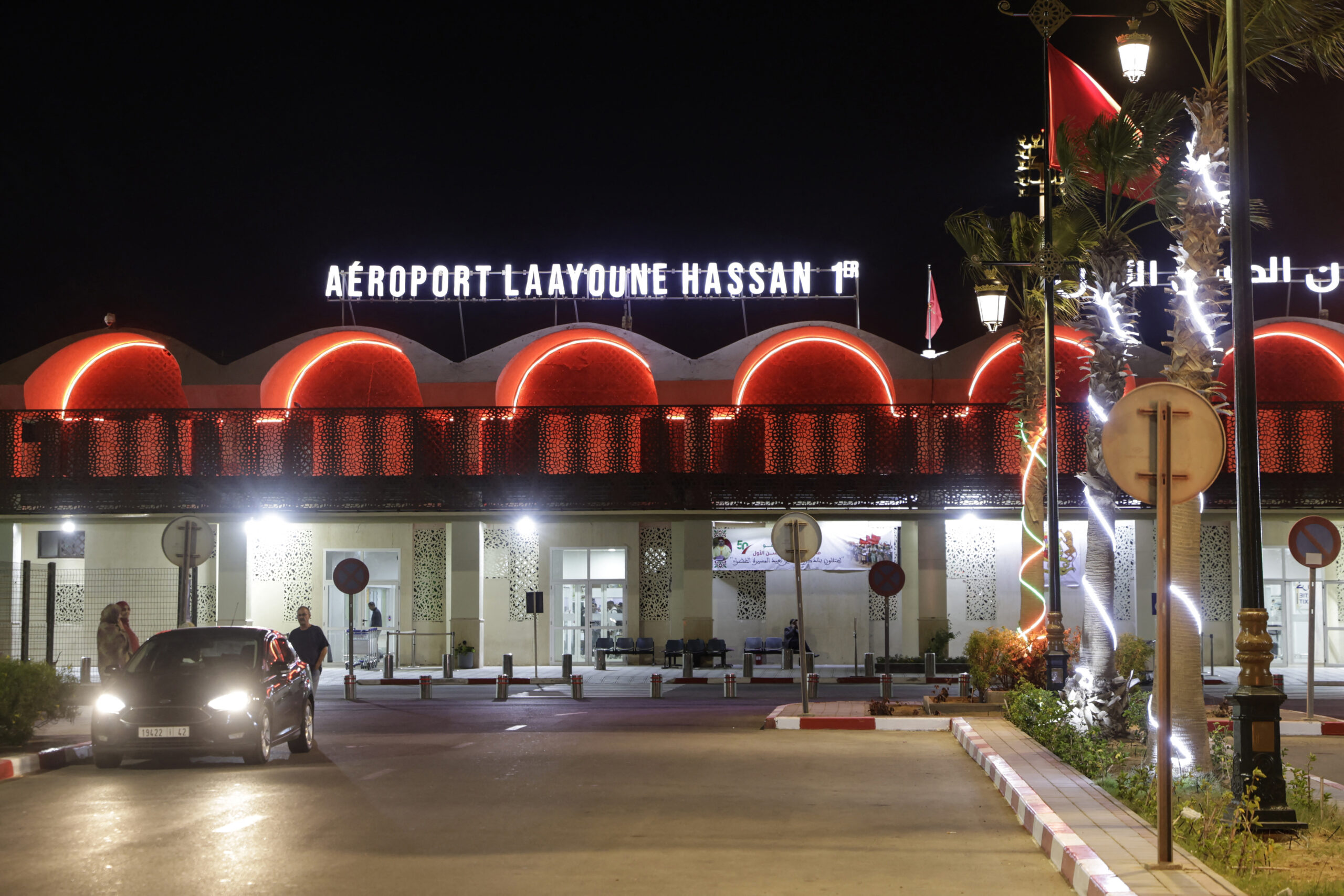
Hassan I Airport in Laayoune, the main city of Morocco-controlled Western Sahara, on November 7, 2025. Photo by Abdel Majid Bziouat/AFP via Getty Images.
2020-Present: Shifting Positions
Following intense efforts by Morocco to gather support for its plan for limited autonomy under Moroccan sovereignty, several countries adopted new policies on Western Sahara. In December 2020, the US recognized Moroccan sovereignty over the territory in a deal linked to the Abraham Accords, in which Morocco agreed to begin normalizing relations with Israel. The US also announced intentions to open a consulate in Dakhla, although as of the end of 2025, consular services to the territory were being provided virtually.
In 2022, Spain announced it would back Morocco’s autonomy plan, describing it “as the most serious, realistic, and credible basis for resolving the dispute.” This shift came within the context of tense relations between Morocco and Spain regarding immigration from Morocco and sovereignty over the Spanish exclaves of Ceuta and Melilla on the Moroccan coast. In September 2026, a proposed bill to grant citizenship to Sahrawis born in the territory before September 29, 1977, was moving through Spain’s legislature. The measure does not recognize an independent Sahrawi state.
In July 2024, France reversed its neutral position on the subject and announced it would support Morocco’s autonomy plan, following several years of tense relations with Rabat over a variety of issues but originating in France’s stance on Western Sahara. In a letter to the Moroccan king, the French president stated that the “present and future of Western Sahara fall within the framework of Moroccan sovereignty.” Algeria responded to the move by recalling its ambassador to Paris.
In June 2025, the United Kingdom also backed Morocco’s autonomy plan in a switch from its long-held position of neutrality on the issue. The announcement coincided with an agreement between Morocco and the UK on infrastructure projects related to the 2030 World Cup, part of which will be hosted by Morocco.
The UN Security Council passed Resolution 2797 on October 31, 2025, which extended MINURSO’s mandate for another year and requested a strategic review of the mission’s future mandate. The resolution established Morocco’s autonomy proposal as a basis for negotiations while preserving the stated objectives of a mutually acceptable political solution and self-determination but did not resolve the final status of the territory. It also expressed support for the secretary-general and de Mistura in advancing negotiations between the relevant parties. Spain publicly endorsed the resolution during a December 2025 meeting with Morocco, re-emphasizing its 2022 decision to support Morocco’s autonomy plan.
As of the end of 2025, 29 countries had established diplomatic missions in Moroccan-controlled Laayoune and Dakhla and others had announced intentions to do so, which Rabat characterizes as recognition of its claims to the territory.
In February 2026, the US facilitated diplomatic discussions, held in Madrid and Washington and co-hosted by the UN, between Morocco, the Polisario Front, Algeria, and Mauritania, with the latter two included as full participants rather than with the observer status they held in previous formats. Morocco presented a detailed autonomy plan which Moroccan officials claimed was accepted unanimously, although Algeria and the Polisario disputed that assertion.
Moroccan National Project in Western Sahara
Following the 1991 cease-fire, building on a process of consolidation that began in the 1980s, Morocco continued to formalize its authority over the part of Western Sahara it controls. Moroccan law is applied in the areas it administers. Routine state functions, including security forces and courts, operate. Two of Morocco’s 12 regions, Laayoune-Sakia El Hamra and Dakhla-Oued Ed-Dahab, consist almost entirely of Western Saharan territory (the exception being Tarfaya province, which lies north of the territory’s internationally recognized boundary). The European Commission has also noted that a small part of Morocco’s Guelmim-Oued Noun region lies within Western Sahara.
Over time, Morocco continued to intensify the development of infrastructure, renewable energy projects, and commercial activities west of the berm. Where relocation has been encouraged, Rabat has used economic incentives and other subsidies, including higher wages and tax exemptions for workers. These measures, together with state-facilitated in-migration, have altered urban demographics in major cities such as Laayoune and Dakhla. As of June 2026, the UN estimated there were approximately 612,000 residents in Western Sahara. According to Minority Rights Group, Moroccan settlers are believed to make up a majority of the population, although the exact demographics are unknown.
Elections are conducted in Western Sahara as part of Morocco’s national system, with inhabitants having participated in Moroccan national and regional elections since 1977 and in communal elections such as those held in June 2009. At the same time, political space remains constrained for pro-independence actors and public advocacy faces tight policing, as reflected in reporting on arrests, prosecutions, and restrictions.
Life in the Tindouf Camps
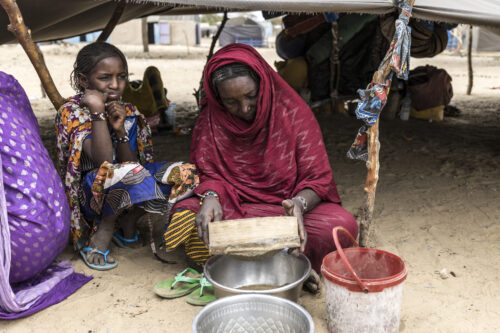
Sahrawi refugees who fled the Moroccan and Mauritanian advance in 1975 continue to live in camps in Algeria’s Tindouf province, including Laayoune, Smara, Awserd, Boujdour, and Dakhla, with Rabouni serving as the administrative center. Over several decades these camps have developed structured internal administrations led by the Polisario Front. Each of the five camps is called a wilaya (province) and is named after a town in Western Sahara, with each wilaya being subdivided into daira (districts). Every daira has its own primary school, health clinic, and local administration. Algeria has “largely ceded stewardship” of the camps to the Polisario. This governance is supported by social and administrative structures that, besides wilayas, include internal committees and camp-level administration. The Polisario manages the camps as the “social, political, and administrative center” of its authority and of the government-in-exile.
The Economic Value of Western Sahara
The most economically significant asset in the territory is the Bou Craa phosphate mine, located in northern Western Sahara and operated by Phosboucraa, a subsidiary of Morocco’s state-owned phosphate monopoly, the Office Chérifien des Phosphates (OCP). Phosphate extracted at Bou Craa is transported to coastal processing and loading facilities at Laayoune, reflecting an export-oriented production model that links the mine directly to international markets rather than to local consumption. According to a US Geological Survey published in June 2025, Morocco controlled approximately 70% of global phosphate rock reserves in 2020, a figure that explicitly includes deposits located in Western Sahara.
In addition to mining, Morocco has derived economic value from agricultural and fisheries activities linked to Western Sahara, particularly through trade arrangements with external partners. These activities have been legally contested at the European level. In October 2024, the Court of Justice of the European Union ruled that the application of EU-Morocco trade agreements on agricultural products and fisheries to Western Sahara lacked the explicit consent of its people, although it outlined conditions under which consent could be presumed if “specific, tangible, substantial and verifiable benefit” from the exploitation of its natural resources accrued to the people of the territory without creating nonconsensual obligations.
These rulings reflect a broader international legal framework governing economic activity in Western Sahara. In a 2002 opinion, the UN Legal Counsel determined that resource exploitation in a non-self-governing territory is not per se illegal but would be unlawful if conducted “in disregard of the interests and wishes of the people.” The opinion emphasizes that economic activities must be directed toward benefiting the population of the territory and supporting their right to self-determination, rather than serving the exclusive interests of the administering power.
Human Rights
Human rights concerns affecting Sahrawis center on political expression, due process, and freedom of movement, with markedly different conditions in Morocco-controlled Western Sahara and the Polisario-administered refugee camps in Algeria. In Morocco-administered areas, Sahrawi activists advocating self-determination face persistent restrictions on freedom of assembly and expression, including surveillance, intimidation, and arrest, according to the US Department of State and Human Rights Watch. Moroccan law criminalizes speech challenging the state’s position on Western Sahara, contributing to self-censorship among Sahrawi journalists and activists. Amnesty International documents repeated incidents in Western Sahara itself, including the violent dispersal of peaceful Sahrawi demonstrations in Laayoune, the prevention of a press conference by the Sahrawi Human Rights Defenders Collective (CODESA), forced evictions near Smara, and arbitrary searches of Sahrawi activists at Laayoune and Dakhla airports. International monitoring remains limited, as MINURSO does not have a human rights mandate and Morocco has restricted access for independent observers.
In the Sahrawi refugee camps around Tindouf, the Polisario Front exercises exclusive administrative and security authority, operating courts, police forces, and detention facilities under its own legal framework, as described by ACAPS. A Human Rights Watch investigation conducted in 2013 found no evidence of widespread or systematic abuses in the camps but identified concerns related to the absence of judicial independence, restrictions on political pluralism, and the lack of independent oversight. Humanitarian assessments in 2022 and 2026 noted that camp residents remain heavily dependent on aid in deteriorating conditions. Residents are able to obtain passports from Algeria that enable them to travel abroad but do not confer Algerian nationality. They may obtain permission to study in Algeria, but not to work. According to reports by Human Rights Watch in 2014, ACAPS in 2021, and the Migration Policy Institute in 2024, travel outside the camps is largely permitted without obstruction through a process managed by the Polisario.
Conclusion
The Western Sahara conflict endures as one of the longest-running unresolved territorial disputes under UN supervision, shaped by decades of stalled diplomacy, shifting regional alignments, and divergent narratives of sovereignty and self-determination. Morocco has consolidated administrative control over most of the territory and embedded it within national political and economic structures, while the Polisario Front maintains its claim to represent the Sahrawi people from exile and continues to insist on a referendum whose contours remain contested. Conditions on the ground reflect this divide: a heavily securitized environment in Moroccan-administered areas and protracted refugee life in the Tindouf camps, each marked by distinct political and humanitarian constraints.
Despite repeated UN initiatives and intermittent diplomatic openings, the core issues, whether they be sovereignty, representation, or the terms of self-determination, remain unresolved. Recent developments, however, suggest growing diplomatic momentum in Morocco’s favor, particularly following the UN Security Council’s decision to make Morocco’s autonomy proposal a basis for negotiations and the resumption of talks in early 2026. Whether this shift can produce a mutually acceptable settlement remains uncertain, but it marks a departure from the prolonged diplomatic stalemate that characterized much of the conflict’s recent history.
This backgrounder was researched and written by MEI Senior Research Assistant Hamad Alshamlan, with input from Senior Fellow Intissar Fakir.
Photo by Billel Bensalem/APP/Nur Photo via Getty Images