Summary
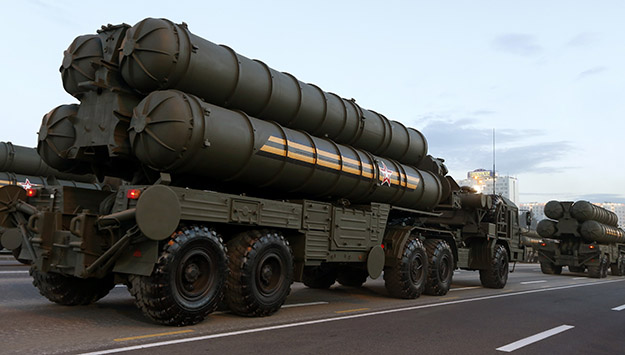
In an attempt to build up its air defense systems, Turkey is finalizing a deal to purchase the Russian S-400 weapons system. Ankara’s decision is in part a response to the threat posed by Russian involvement in Syria. Turkey is hoping that cultivating closer ties with Moscow might remove Russia as a threat. But, as this paper illustrates, the deal fails to address Turkey’s security concerns, further alienates its NATO allies, while providing Moscow more leverage over Ankara.
 View PDF
Key Points
- As Russia takes an aggressive stance in Syria, Turkey is frustrated with NATO for dragging its feet on security assistance and differences in threat perceptions.
- Turkey wants to become more independent in its defense technology, but remains reliant on other states for air and missile defense systems.
- The deal is hardly a sign of a strong Turkey-Russia strategic partnership. On the contrary, Turkey still views Russia as one of the biggest threats to its national security.
- Russia has used trade as a point of strategic leverage against Turkey in the past. This latest deal only deepens Turkey’s vulnerability to Russian policies.
- Turkey’s zigzagging on issues with Russia, such as Crimea’s annexation, demonstrates Ankara’s increasingly weak hand in relation to Moscow.
The Middle East Institute (MEI) is an independent, non-partisan, not-for-profit, educational organization. It does not engage in advocacy and its scholars’ opinions are their own. MEI welcomes financial donations, but retains sole editorial control over its work and its publications reflect only the authors’ views. For a listing of MEI donors, please click here.

The Mecca Joint Défense Agreement: A New Geometry of Middle Eastern Power?