Skip to Content

Afghanistan-Pakistan

Countries

The Mecca Joint Défense Agreement: A New Geometry of Middle Eastern Power?
  • Analysis
  • The Mecca Joint Défense Agreement: A New Geometry of Middle Eastern Power?

    On August 7, 2026, Saudi Arabia, Turkey, and Pakistan signed the Mecca Joint Défense Agreement, a collective-defense pact widely compared to NATO’s Article 5. This essay argues that the comparison is misleading. Mecca borrows NATO’s language of solidarity without yet possessing NATO’s institutional machinery, and the Houthi offensive against Saudi Arabia in September 2026 provided an early and revealing test of what the agreement actually means in practice. Neither Pakistan nor Turkey automatically entered the fight on Saudi Arabia’s behalf, and Washington, despite an initial reluctance to strike directly, remained indispensable through intelligence support and a major proposed F-35 sale. Drawing on realist alliance theory — Hans Morgenthau, Kenneth Waltz, Stephen Walt, Glenn Snyder, and Steven David — and on the precedent of the Central Treaty Organization (CENTO), the essay contends that the Middle East is not dividing into rival blocs but moving from hierarchy toward a looser, overlapping geometry of hedged partnerships, in which American exclusivity is eroding considerably faster than American primacy.

    The Mecca Alliance Meets the Red Sea – Saudi Arabia’s New Defense Pact Faces Its First Major Test
  • Commentary
  • The Mecca Alliance Meets the Red Sea – Saudi Arabia’s New Defense Pact Faces Its First Major Test

    When Saudi Arabia, Turkey and Pakistan agreed to a mutual defense pact in August, it was principally seen as a political commitment. The “Mecca alliance,” as it was dubbed, stipulated that an armed attack on one would be treated as an attack on all three, accompanied by deeper military cooperation.

    The Case for a Middle Course in Afghanistan
  • Commentary
  • The Case for a Middle Course in Afghanistan

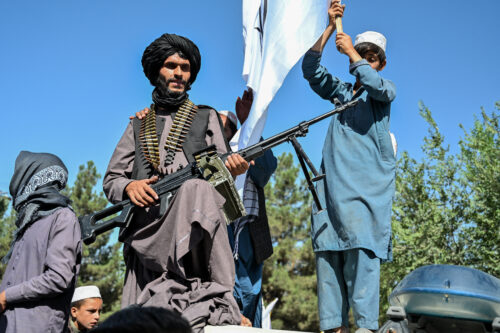
    I was a teenage Afghan refugee in Pakistan’s tribal areas when the Twin Towers fell. Almost nobody around us understood the politics of what had happened, but we knew that something had changed for good. Afghanistan, which until then had been our private tragedy and our first exile from Taliban rule, had suddenly become the world’s concern, with the United States leading the response.

    The Latest

    Filter by
    1194 Results
    Violence and Peace Spoilers in the Southern Philippines
    Middle East Institute
  • Analysis
  • Violence and Peace Spoilers in the Southern Philippines

    The 27 March 2014 signing of the Comprehensive Agreement on the Bangsamoro (CAB) by the Philippine Government (GPH) and the Moro Islamic Liberation Front was heralded as the start of enduring peace and development in Mindanao. Unfortunately, spoilers opposed to the CAB remain capable of derailing the process. Joseph Franco explains some of the nuances of spoiling efforts as well as the prevailing socioeconomic milieu in the Southern Philippines that sustains latent enablers for sectarian conflict.

    July 15, 2014

    Putting Out the Fire in Southern Thailand: An Appeal for Truce Seeking
    Middle East Institute
  • Analysis
  • Putting Out the Fire in Southern Thailand: An Appeal for Truce Seeking

    Observers have struggled to explain ongoing sectarian violence in southern Thailand given that both Thai Buddhists and Malay/Thai Muslims are victims of violence, have historically coexisted peacefully, and share local customs and spiritual traditions. Tim Rackett explores the role of majority and minority ethnic and religious identities in fueling sectarian violence and identifies a way out.

    July 14, 2014

    The Quest to Eradicate Polio in Pakistan
    Middle East Institute
  • Analysis
  • The Quest to Eradicate Polio in Pakistan

    Pakistan is only one of three countries—the others being Afghanistan and Nigeria—in which polio has never been eradicated. Polio in Pakistan has been a particular worry recently, with a disturbing spike in cases. According to the World Health Organization (WHO), 61 out of 77 cases of polio reported worldwide from January through mid-May 2014, or 79 percent, were in Pakistan.[1]

    May 29, 2014

    Evaluating Afghanistan's Presidential Elections

    Evaluating Afghanistan's Presidential Elections

    April 11 – January 1, 1970, April 11 - 12:00 PM – 12:00 AM
    January 1 - 12:00 PM – 12:00 AM

    The Carnegie Endowment, 1779 Massachusetts Avenue NW, Washington, District of Columbia 20036

    Ethnic Divisions and Alliances in the Afghan Elections
  • Analysis
  • Ethnic Divisions and Alliances in the Afghan Elections

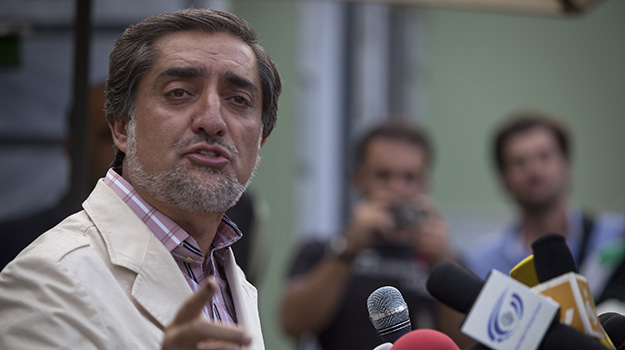
    As the April 5 Afghan presidential elections draw closer, there is a growing consensus among most analysts that there will be a runoff vote and that ethnic groups will firmly ally themselves with a particular candidate in this second round of voting.

    April 1, 2014

    Ukraine and the Middle East
    Middle East Institute
  • Analysis
  • Ukraine and the Middle East

    Introduction

    The political crisis in Ukraine and subsequent annexation of Crimea by Russia have sent reverberations throughout the Middle East, where Western and Russian influences continue to weave a complex geopolitical web. MEI interviewed four of its scholars to produce this detailed account of the challenges the conflict poses to the region’s political, security, and economic conditions.

    March 27, 2014

    U.S.-Pakistan Relations in 2014

    U.S.-Pakistan Relations in 2014

    February 27 – January 1, 1970, February 27 - 12:00 PM – 12:00 AM
    January 1 - 12:00 PM – 12:00 AM

    The Carnegie Endowment, 1779 Massachusetts Avenue NW, Washington, District of Columbia 20036

    The Afghan Bridge in U.S.-Iranian Ties
  • Analysis
  • The Afghan Bridge in U.S.-Iranian Ties

    Fatemeh Aman co-authored this article.

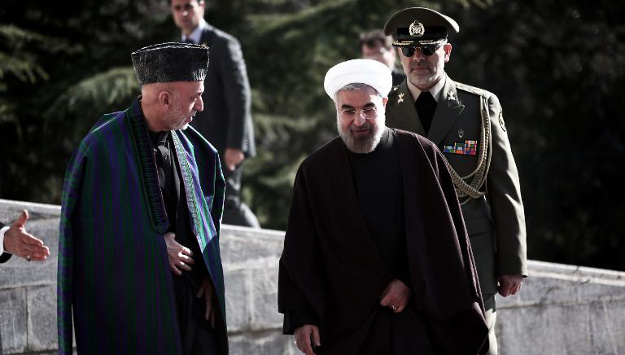
    As President Obama met his top Afghanistan commanders in the Oval Office on February 4 to discuss his decision to reduce the U.S. military presence in Afghanistan, he received a compliment from an unlikely source. Ali Akbar Velayati, the top foreign policy aid to Iran’s Supreme Leader, Ayatollah Khamenei, called Obama’s Afghan withdrawal policy “wise.”

    Will Punishing Musharraf Be Good for Democracy?
  • Analysis
  • Will Punishing Musharraf Be Good for Democracy?

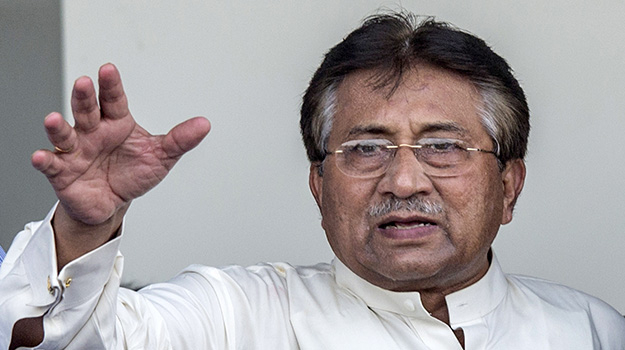
    After weeks of delay tactics by his lawyers, former military ruler Pervez Musharraf could be indicted in early February by a special court in Pakistan for high treason. If he is indicted, Musharraf will be the first serving or retired general in Pakistan’s history to face this particular ignominy.

    February 3, 2014

    Read the Middle East Journal

    The oldest peer-reviewed publication dedicated to the study of the modern Middle East, MEI’s flagship journal covers politics, society, and culture in the region.