Skip to Content

Afghanistan-Pakistan

Countries

The Mecca Joint Défense Agreement: A New Geometry of Middle Eastern Power?
  • Analysis
  • The Mecca Joint Défense Agreement: A New Geometry of Middle Eastern Power?

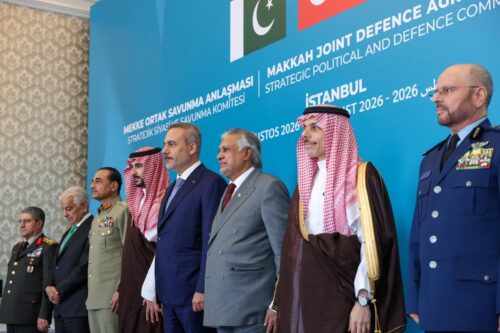
    On August 7, 2026, Saudi Arabia, Turkey, and Pakistan signed the Mecca Joint Défense Agreement, a collective-defense pact widely compared to NATO’s Article 5. This essay argues that the comparison is misleading. Mecca borrows NATO’s language of solidarity without yet possessing NATO’s institutional machinery, and the Houthi offensive against Saudi Arabia in September 2026 provided an early and revealing test of what the agreement actually means in practice. Neither Pakistan nor Turkey automatically entered the fight on Saudi Arabia’s behalf, and Washington, despite an initial reluctance to strike directly, remained indispensable through intelligence support and a major proposed F-35 sale. Drawing on realist alliance theory — Hans Morgenthau, Kenneth Waltz, Stephen Walt, Glenn Snyder, and Steven David — and on the precedent of the Central Treaty Organization (CENTO), the essay contends that the Middle East is not dividing into rival blocs but moving from hierarchy toward a looser, overlapping geometry of hedged partnerships, in which American exclusivity is eroding considerably faster than American primacy.
    The Mecca Alliance Meets the Red Sea – Saudi Arabia’s New Defense Pact Faces Its First Major Test
  • Commentary
  • The Mecca Alliance Meets the Red Sea – Saudi Arabia’s New Defense Pact Faces Its First Major Test

    When Saudi Arabia, Turkey and Pakistan agreed to a mutual defense pact in August, it was principally seen as a political commitment. The “Mecca alliance,” as it was dubbed, stipulated that an armed attack on one would be treated as an attack on all three, accompanied by deeper military cooperation.

    The Case for a Middle Course in Afghanistan
  • Commentary
  • The Case for a Middle Course in Afghanistan

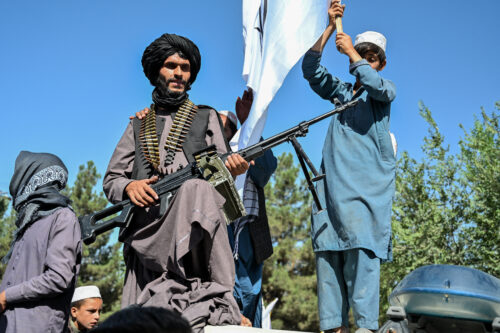
    I was a teenage Afghan refugee in Pakistan’s tribal areas when the Twin Towers fell. Almost nobody around us understood the politics of what had happened, but we knew that something had changed for good. Afghanistan, which until then had been our private tragedy and our first exile from Taliban rule, had suddenly become the world’s concern, with the United States leading the response.

    The Latest

    Filter by
    1194 Results
    U.S.-Iraq Relations After the Withdrawal
  • Video
  • U.S.-Iraq Relations After the Withdrawal

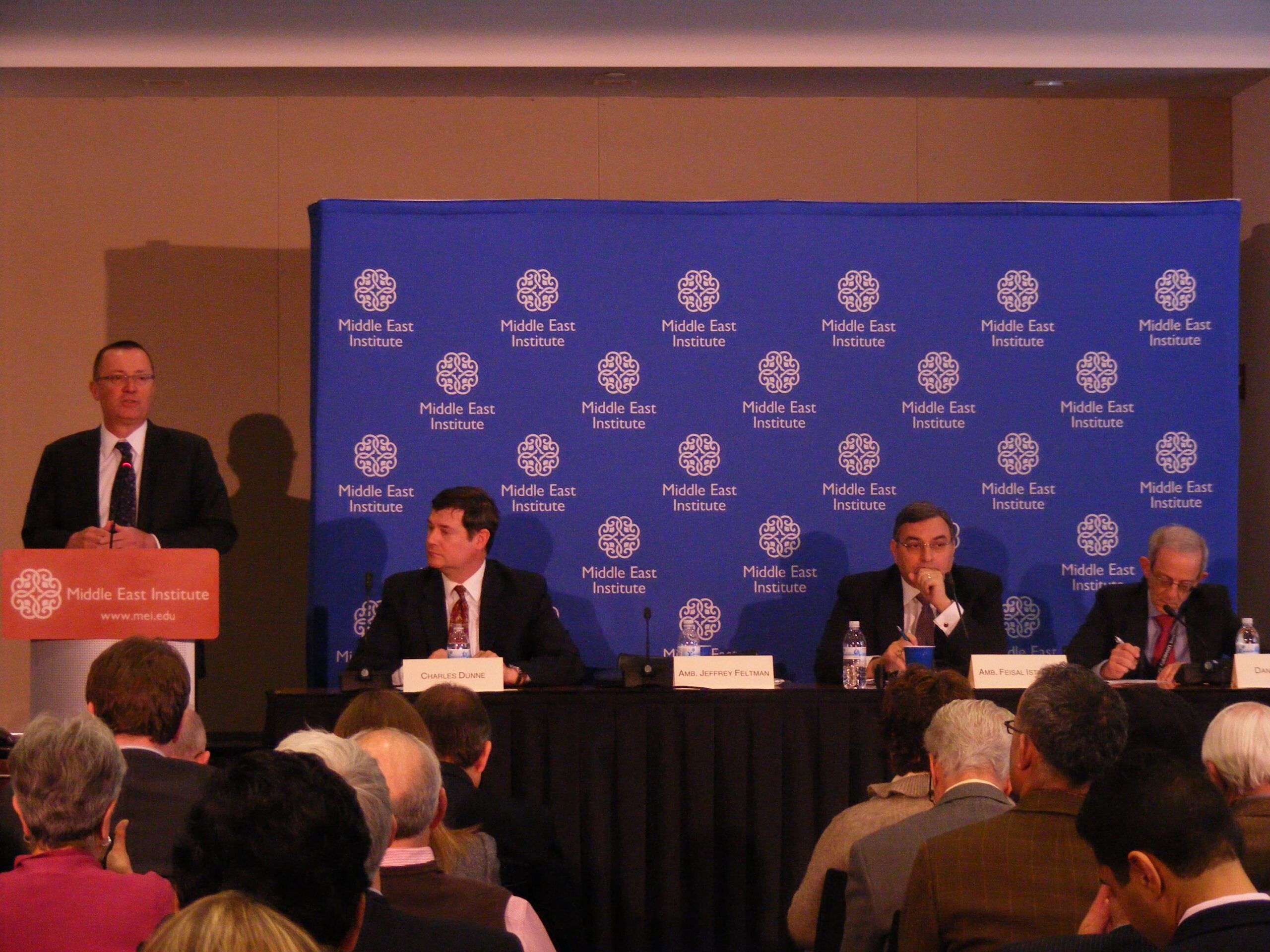
    Panelists will explore both the challenges and opportunities presented by the transition of the U.S.-Iraqi partnership from a mainly military to a diplomatic one. What sort of working relationship is emerging between the U.S. and Iraqi governments? What kind of cooperation is taking place in the areas of domestic and regional security, diplomacy, trade, energy, and reform? How has the troop drawdown affected U.S. influence in Iraq and the region in general? Feltman, Istrabadi and Serwer will explore strategies and policies resulting from the new bilateral dynamics.

    April 16, 2012

    U.S.-Iraq Relations after the Withdrawal
    Middle East Institute

    U.S.-Iraq Relations after the Withdrawal

    April 13 – January 1, 1970, April 13 - 12:00 PM – 12:00 AM
    January 1 - 12:00 PM – 12:00 AM

    SEIU Building, 1800 Massachusetts Ave., NW, Washington, District of Columbia 20036

    Women's Prospects in Afghanistan: Oppression or Opportunity?
  • Analysis
  • Women's Prospects in Afghanistan: Oppression or Opportunity?

    Recent media reports indicate that fewer Afghan women turned out to vote for a President on August 20, 2009 than went to the polls five years ago, when in some districts female turnout had been even higher than that of males. Apprehension, convention, ennui, and disorganization led to families keeping their women home on election day, even as men dared to vote. The reversal of women’s rights, which they had only recently begun to exercise, is an ominous sign.

    April 12, 2012

    Iran and the West at a Crossroad: Will Recent Elections Make or Break a Deal on Iran's Nuclear Program?
  • Video
  • Iran and the West at a Crossroad: Will Recent Elections Make or Break a Deal on Iran's Nuclear Program?

    U.S. Secretary of State Hillary Clinton has described upcoming talks with Iran over its nuclear program as "the last chance to resolve the crisis." Yet as the final hour approaches for an opportunity to avert a military attack, there are few apparent signs Iran will make compromises. Recent parliamentary elections have only strengthened the power of Supreme Leader Ali Khamenei and the hardliners in his inner circle who aspire to make the Islamic republic a regional superpower.

    March 23, 2012

    The Monotony of History
  • Analysis
  • The Monotony of History

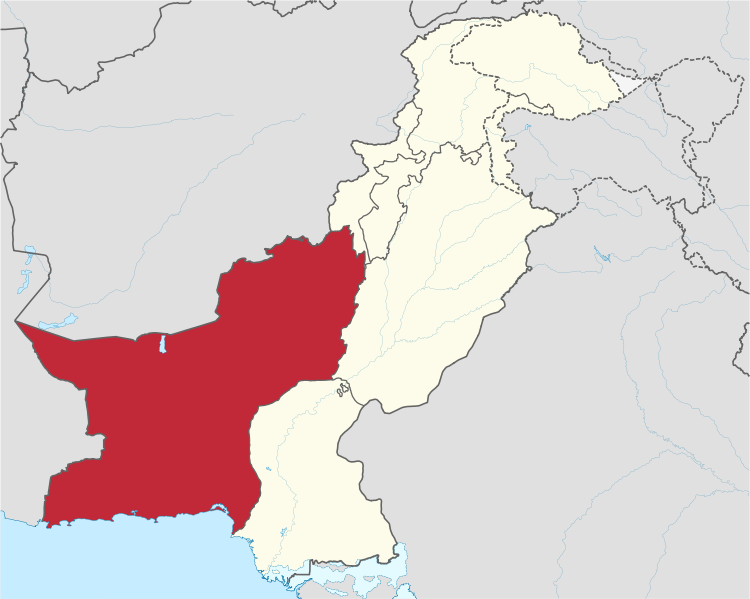
    The state of Pakistan seems incapable of learning from its experiences in former East Pakistan (now Bangladesh), and seems therefore doomed to repeat history when it comes to addressing the grievances of Balochistan. Home to nearly ten million of the 180 million-strong population of the country (an estimate at best, since the last census was in 1998), the province has the smallest population in the country but  the largest land area.

    March 12, 2012

    Reflections on the Role of American Universities in the Middle East
  • Video
  • Reflections on the Role of American Universities in the Middle East

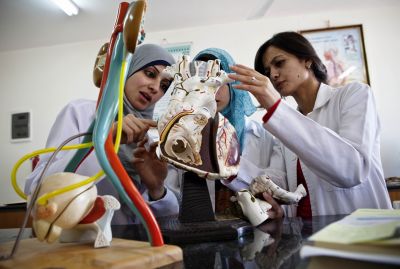
    American higher education has been present in the region since 1866, when the American University of Beirut set the precedent for successful localization by planting roots and adapting to local society. Today, Arab governments themselves often direct and fund the cross-cultural educational export process, with far-reaching economic and social goals. For example, Qatar's U.S. branch campuses are an integral part of its broad education reform strategy designed to transform the country into a knowledge producing society. The UAE, in contrast, has adopted a business-model view of U.S.

    March 7, 2012

    Read the Middle East Journal

    The oldest peer-reviewed publication dedicated to the study of the modern Middle East, MEI’s flagship journal covers politics, society, and culture in the region.