Skip to Content

Afghanistan-Pakistan

Countries

The Mecca Joint Défense Agreement: A New Geometry of Middle Eastern Power?
  • Analysis
  • The Mecca Joint Défense Agreement: A New Geometry of Middle Eastern Power?

    On August 7, 2026, Saudi Arabia, Turkey, and Pakistan signed the Mecca Joint Défense Agreement, a collective-defense pact widely compared to NATO’s Article 5. This essay argues that the comparison is misleading. Mecca borrows NATO’s language of solidarity without yet possessing NATO’s institutional machinery, and the Houthi offensive against Saudi Arabia in September 2026 provided an early and revealing test of what the agreement actually means in practice. Neither Pakistan nor Turkey automatically entered the fight on Saudi Arabia’s behalf, and Washington, despite an initial reluctance to strike directly, remained indispensable through intelligence support and a major proposed F-35 sale. Drawing on realist alliance theory — Hans Morgenthau, Kenneth Waltz, Stephen Walt, Glenn Snyder, and Steven David — and on the precedent of the Central Treaty Organization (CENTO), the essay contends that the Middle East is not dividing into rival blocs but moving from hierarchy toward a looser, overlapping geometry of hedged partnerships, in which American exclusivity is eroding considerably faster than American primacy.

    The Mecca Alliance Meets the Red Sea – Saudi Arabia’s New Defense Pact Faces Its First Major Test
  • Commentary
  • The Mecca Alliance Meets the Red Sea – Saudi Arabia’s New Defense Pact Faces Its First Major Test

    When Saudi Arabia, Turkey and Pakistan agreed to a mutual defense pact in August, it was principally seen as a political commitment. The “Mecca alliance,” as it was dubbed, stipulated that an armed attack on one would be treated as an attack on all three, accompanied by deeper military cooperation.

    The Case for a Middle Course in Afghanistan
  • Commentary
  • The Case for a Middle Course in Afghanistan

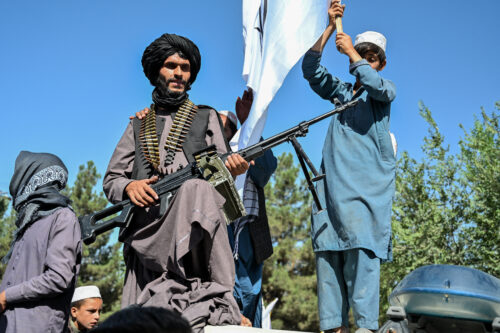
    I was a teenage Afghan refugee in Pakistan’s tribal areas when the Twin Towers fell. Almost nobody around us understood the politics of what had happened, but we knew that something had changed for good. Afghanistan, which until then had been our private tragedy and our first exile from Taliban rule, had suddenly become the world’s concern, with the United States leading the response.

    The Latest

    Filter by
    1194 Results
    The Islamization of Pakistan, 1979-2009
    Middle East Institute
  • Analysis
  • The Islamization of Pakistan, 1979-2009

    Since 2007, Pakistan, though not on the verge of becoming a failed state, nonetheless has been gripped by a series of interrelated crises. As the contributors to this volume demonstrate, Pakistan’s current travails have deep and tangled historical roots. They also demonstrate that Pakistan’s domestic situation historically has been influenced by, and has affected developments in neighboring countries as well as those farther afield.

    July 14, 2009

    Prospects for Iran's 2009 Presidential Elections
  • Analysis
  • Prospects for Iran's 2009 Presidential Elections

    Iran’s political system has not yet developed stable party structures. Most parties are still loose coalitions of individuals and interest groups that combine their own interpretation of Ayatollah Ruhollah Khomeini’s legacy with their personal interests. As party affiliation remains relatively weak, members of one party often have run as candidates for another party or are on several electoral lists. Similarly, unregistered parties or electoral platforms also field candidates for both presidential and parliamentary elections on an ad hoc basis.

    June 1, 2009

    2008 Annual Conference – Panel IV Summary
    Middle East Institute

    2008 Annual Conference – Panel IV Summary

    November 20 – January 1, 1970, November 20 - 9:00 AM – 12:00 AM
    January 1 - 9:00 AM – 12:00 AM

    1761 N Street NW, Washington, 20036

    Annual Conference 2008 – Panel I Summary
    Middle East Institute

    Annual Conference 2008 – Panel I Summary

    November 20 – January 1, 1970, November 20 - 9:00 AM – 12:00 AM
    January 1 - 9:00 AM – 12:00 AM

    1761 N Street NW, Washington, 20036

    2008 Annual Conference – Keynote Address
    Middle East Institute

    2008 Annual Conference – Keynote Address

    November 20 – January 1, 1970, November 20 - 9:00 AM – 12:00 AM
    January 1 - 9:00 AM – 12:00 AM

    1761 N Street NW, Washington, 20036

    How the New Arab Media Challenges the Arab Militaries: The Case of the War between Israel and Hizbullah in 2006
    Middle East Institute
  • Analysis
  • How the New Arab Media Challenges the Arab Militaries: The Case of the War between Israel and Hizbullah in 2006

    One, Two / the Arab army where are you?/ The Arab army where are you?/The Egyptian Arab Army/ resides in an-Nasr [victory] compound/ Wakes up in the afternoon/ to drink its tea/ The Gulf Arab army/ can do absolutely nothing/ “Strategic silence” indeed/ “cut us some slack, man!”/ The Tunisian Arab army/ is green like parsley/ But ‘Aziza loves Yunis/ the wars can wait/ The Sudanese Arab army/ I can hear its clamor in my ears/ “Damn it!

    September 29, 2008

    Social Change Amidst Terror and Discrimination: Yezidis in the New Iraq
  • Analysis
  • Social Change Amidst Terror and Discrimination: Yezidis in the New Iraq

    Originally posted August 2008

    On August 14, 2007, in the largest single terror attack during the war in Iraq, over 350 Yezidis were killed and two entire villages completely destroyed, leaving over 1,000 families homeless. The two villages, Qahtaniya and Jazeera are located in the Sinjar Mountains, an area in northwestern Iraq that is hotly contested by Sunni Arab insurgents, Kurdish peshmergas, US-led coalition forces, and several minority groups.

    August 1, 2008

    US Relations with Pakistan: The Need for a Strategic Shift
    Middle East Institute
  • Analysis
  • US Relations with Pakistan: The Need for a Strategic Shift

    Originally posted May 2008

    Pakistan has come to reflect and affect many of the critical issues in South Asia that worry the US foreign policy establishment, the media, and the public. But US officials are crafting policy responses to deal with Pakistan that are focused excessively narrowly on a single issue — the war on terrorism. In addition to exacerbating Pakistan’s own problems, these efforts have undermined Pakistan’s capacity and political will to fight this war. As a consequence neither America’s nor Pakistan’s best interests are being served.

    May 1, 2008

    Read the Middle East Journal

    The oldest peer-reviewed publication dedicated to the study of the modern Middle East, MEI’s flagship journal covers politics, society, and culture in the region.