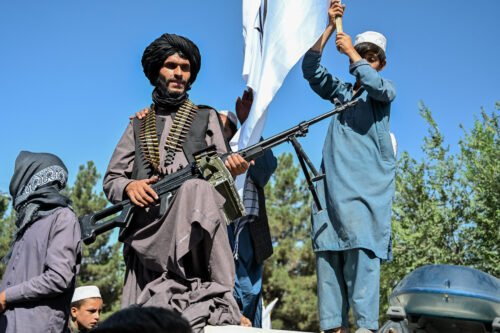
I was a teenage Afghan refugee in Pakistan’s tribal areas when the Twin Towers fell. Almost nobody around us understood the politics of what had happened, but we knew that something had changed for good. Afghanistan, which until then had been our private tragedy and our first exile from Taliban rule, had suddenly become the world’s concern, with the United States leading the response.
United States Central Command (CENTCOM), one of the US Department of Defense’s (DoD) six geographical combatant commands, is responsible for countering threats, responding to crises, and strengthening regional stability in the Middle East, Central Asia, and parts of South Asia.
A Strategic Conundrum: Pakistan’s Transit Corridor to Iran as Lifeline or Liability
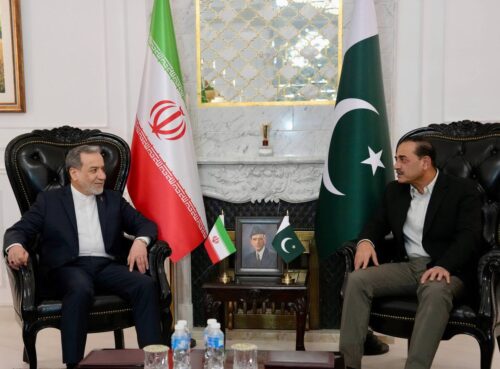
The US-Iran standoff over the Strait of Hormuz — disruptive to global trade and energy flows, and devastating for debt-burdened economies — has handed Pakistan an unexpected geoeconomic opportunity, one that may persist even if the framework agreement announced on June 14 results in a lasting peace and permanent reopening of the strait. But seizing it will have interlocking consequences for Islamabad’s ties with Tehran, Washington, and the Gulf states.
Charting a Course for a Better Future: Responding to the Crimes of the Past
Originally posted December 2009
Thirty years of war have taken an enormous toll on all aspects of Afghan society whose traditional social fabric has broken down, giving rise to a new generation of political and military elites. The cycles of violence over the past three decades have included massive human rights abuses by all parties, leaving a legacy of pent-up grievances and profound feelings of injustice.
Respect for Afghanistan’s sovereignty is a sine qua non condition to restoring the country to normalcy. The fact that a country expects and demands that its sovereignty be respected should not be misconstrued as a refusal to engage the outside world — as a sign that the country is drifting towards some type of chauvinistic nationalism.
The Middle East Institute is proud to host Georgetown University professor Paul Pillar for a discussion about Iran and how best to address its nuclear ambitions. Pillar argues that the acceptable range of opinion on Iran has narrowed around the idea that all options, including a military strike, must be pursued to prevent the country from acquiring nuclear weapons. And yet, Pillar argues, if the combination of nuclear talks and sanctions do not yield the outcome the West and Israel seek, containment is preferable to war.
The 2001 destruction of the two giant Buddhas in Bamiyan is, by far, the most spectacular attack against the historical and cultural heritage of Afghanistan committed during the country’s recent period of turmoil.
Post-Buffer Afghanistan: A Nation-State Here to Stay?
Originally posted December 2009
Nation-states, like their citizens, have life spans. Some are short. The bumptious Republic of Texas, for instance, lasted only nine years before being absorbed by a larger and even more energetic United States of America. Yugoslavia survived intact for two generations and then fragmented into six parts, seven including Kosovo.
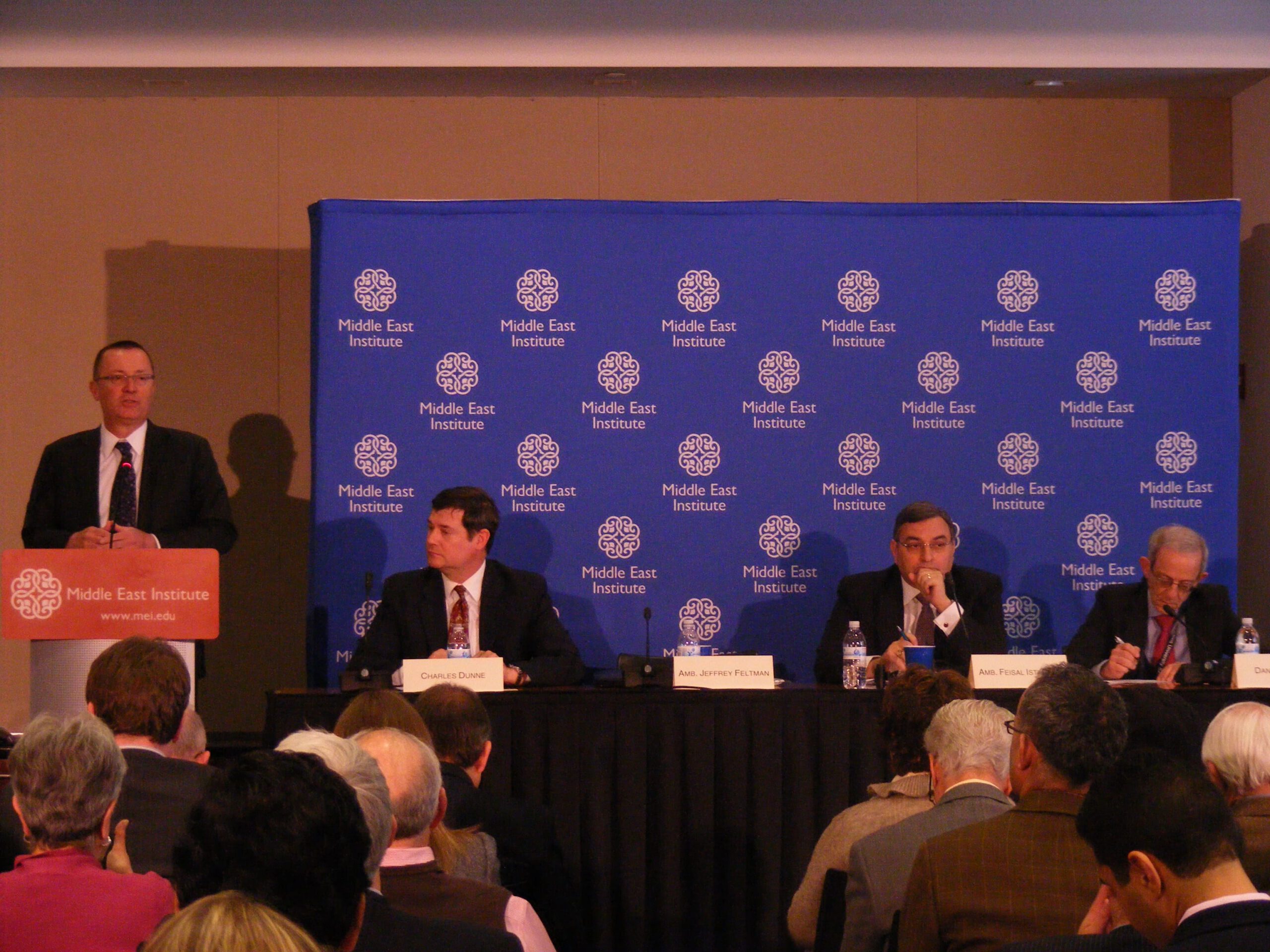
Panelists will explore both the challenges and opportunities presented by the transition of the U.S.-Iraqi partnership from a mainly military to a diplomatic one. What sort of working relationship is emerging between the U.S. and Iraqi governments? What kind of cooperation is taking place in the areas of domestic and regional security, diplomacy, trade, energy, and reform? How has the troop drawdown affected U.S. influence in Iraq and the region in general? Feltman, Istrabadi and Serwer will explore strategies and policies resulting from the new bilateral dynamics.
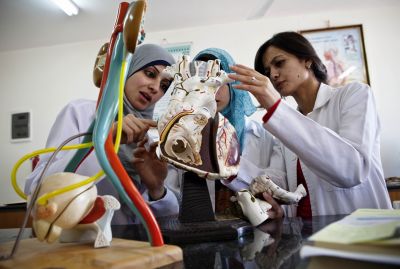
Women's Prospects in Afghanistan: Oppression or Opportunity?
Recent media reports indicate that fewer Afghan women turned out to vote for a President on August 20, 2009 than went to the polls five years ago, when in some districts female turnout had been even higher than that of males. Apprehension, convention, ennui, and disorganization led to families keeping their women home on election day, even as men dared to vote. The reversal of women’s rights, which they had only recently begun to exercise, is an ominous sign.
Iran and the West at a Crossroad: Will Recent Elections Make or Break a Deal on Iran's Nuclear Program?
U.S. Secretary of State Hillary Clinton has described upcoming talks with Iran over its nuclear program as "the last chance to resolve the crisis." Yet as the final hour approaches for an opportunity to avert a military attack, there are few apparent signs Iran will make compromises. Recent parliamentary elections have only strengthened the power of Supreme Leader Ali Khamenei and the hardliners in his inner circle who aspire to make the Islamic republic a regional superpower.
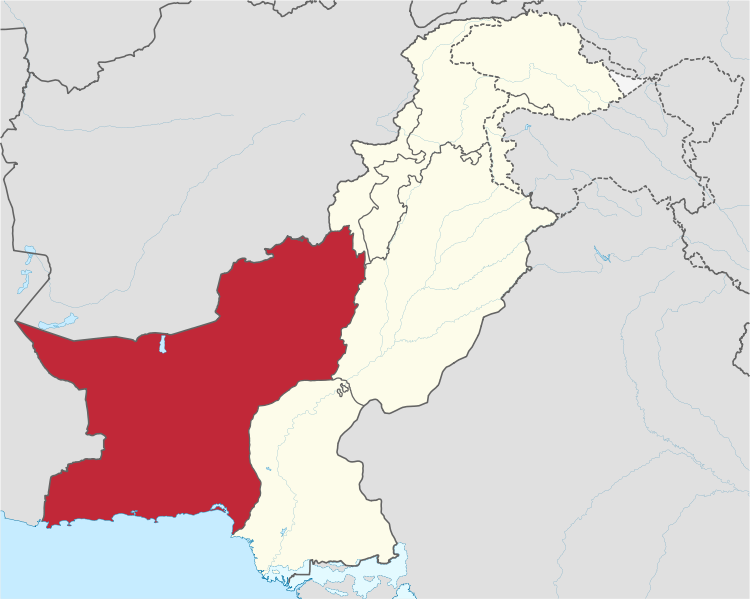
The state of Pakistan seems incapable of learning from its experiences in former East Pakistan (now Bangladesh), and seems therefore doomed to repeat history when it comes to addressing the grievances of Balochistan. Home to nearly ten million of the 180 million-strong population of the country (an estimate at best, since the last census was in 1998), the province has the smallest population in the country but the largest land area.
The oldest peer-reviewed publication dedicated to the study of the modern Middle East, MEI’s flagship journal covers politics, society, and culture in the region.