The Pakistani General Running Washington’s Backchannel to Tehran
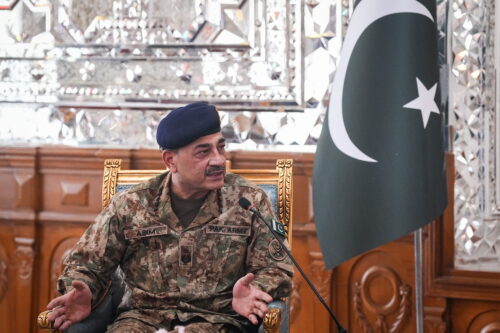
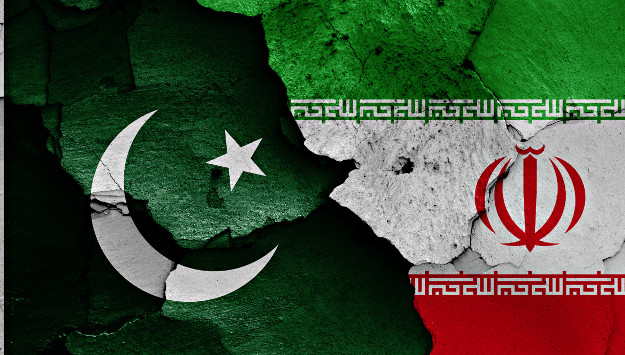
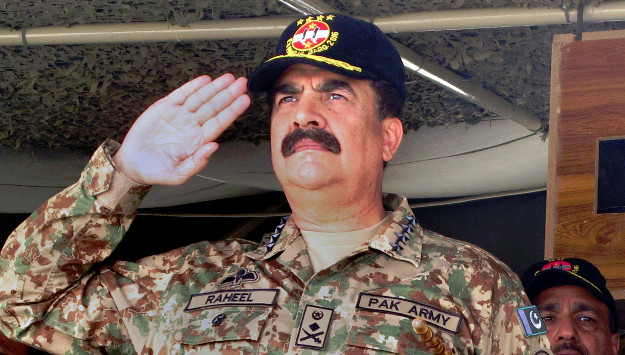
As Washington and Tehran edge closer to escalation, the most critical line of communication keeping the crisis from spiraling is being run not by polished diplomats, but by an unlikely figure: a Pakistani general. Field Marshal Asim Munir, Pakistan’s powerful army chief, has quietly become the key intermediary in the U.S.-Iran standoff, managing what may be the most important backchannel between the two sides. The mediation has thrust Pakistan to the center of the crisis while exposing it to enormous risk.
Bonus Episode: Stalled Talks and Next Steps for the US and Iran
This bonus episode of Middle East Focus features a recent MEI Virtual Briefing. Director of Communications Zeina Al-Shaib is joined by MEI Distinguished Diplomatic Fellows Alan Eyre and Daniel Benaim to discuss the historic talks held in Pakistan last weekend between the United States and Iran. Tehran insists the US failed to gain its trust, while the US made its red lines clear and declared it would blockade Iranian ports in the Persian Gulf. What happens next? Eyre and Benaim offer insights into what goes on behind the scenes at such negotiations; identify the core issues at play; explore potential incentives to end the war; analyze the weaponization of energy; as well as assess the role of other regional players in this conflict.
The Pakistan-Afghanistan conflict: A strategic concern for the US
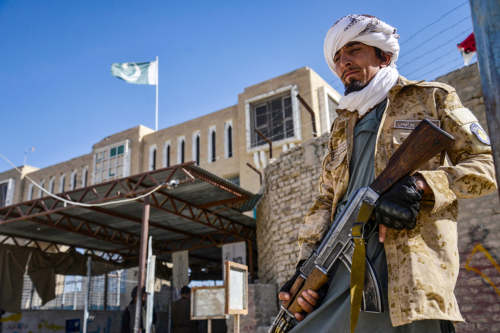
Pakistan’s relationship with the Afghan Taliban has shifted from open sponsorship in the 1990s to a silent partnership following 2001 to alienation and belligerence since 2021. Their current conflict, which comes at great cost to both countries and seems to have no easy military or political resolution, also poses a threat to the stability and prosperity of neighboring states. Although American strategic interests in the region greatly diminished following the United States’ military withdrawal from Afghanistan in August 2021, the region’s altered political dynamics have prompted a growing American engagement with Pakistan and tentatively with Afghanistan. At the same time, the US has become a factor in how both Islamabad and Kabul have come to form their national security strategies.
Pakistani Shiite Militias Fighting in Syria Say Quds Force Keep Their Passports
Iran’s Qom News reported on Friday that Sayed Abbas Mousavi, a commander of the Zainabyoun Brigade, was kidnapped in the Iranian holy city of Qom (the site has now deleted the report).
Senior Iranian Politician Glorifies Afghan Shiite Militiamen Fighting in Syria
Ezzatollah Zarghami, the former head of the Islamic Republic of Iran Broadcasting, has emphasized the significance of Afghan Shiite militias for the Iranian military intervention in Syria.
Monday Briefing: Al-Qaeda leader killed, U.S. & Russia at odds over Syria
Note: The latest issue of MEI’s Monday Briefing e-mail incorrectly linked to this page. If you’re looking for the Monday Briefing for March 6, click here.
Monday Briefing: Trump’s Executive Orders Don’t Reveal a Coherent Strategy
In this week’s Monday Briefing, MEI experts Paul Salem, Paul Scham, Randa Slim, W. Robert Pearson, and Marvin G. Weinbaum provide analysis on recent and upcoming events including the Trump administration’s apparent lack of a coherent strategy in the implementation of executive orders, the possibility of an improved relationship between Israel and the UK in the wake of Brexit, the Astana meeting to discuss the Syrian cease-fire deal, bilateral efforts to improve Turkish-Israel relations, and the uncertainty surrounding U.S.-Pakistani relations under the Trump administration.
Iran Recruits and Trains Large Numbers of Afghan and Pakistani Shiites
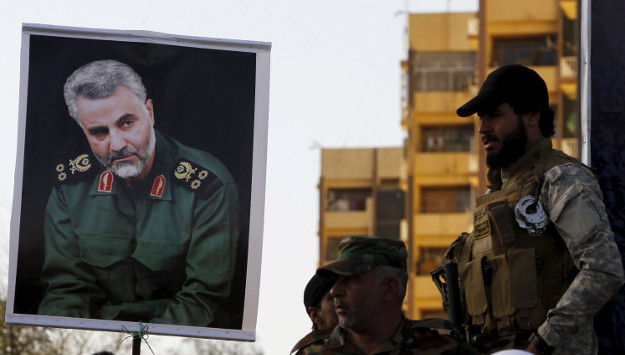
While much ink has been spilled about how Iran’s involvement in the Syrian civil war has fueled sectarianism and instability in the Arab world, the implications of Iran’s increasing recruitment of Afghan and Pakistani Shiites on security and stability in South Asia have largely been overlooked. Over the past five years, the Islamic Revolution Guards Corps (IRGC) has recruited, indoctrinated, trained and deployed thousands of Afghan and Pakistani Shiites to fight under its command against Sunni rebel groups across Syria.
The recent announcement by Saudi Arabia that the retired Pakistani General Raheel Sharif will head a 39-member anti-terrorism coalition made of Muslim states is a matter of much concern in Tehran. Iran, which was not invited to join the coalition, regards the Saudi initiative as a regional project aimed to contain its influence.
The China-Pakistan Economic Corridor (CPEC): Underway and Under Threat
China is already Pakistan’s largest trade and defense partner. But the coming into operation of the CPEC lends a new meaning to, and could transform the relationship between these two “all-weather allies,” including insofar as their ties to the Middle East are concerned — provided that the territorial and maritime security challenges associated with the completion and use of this corridor can be satisfactorily addressed.
A top Iranian religious figure has called on the Shiite minority in Pakistan to “stay united” and remain active and influential in society. Mohammad Hassan Akhtari, who is the head of the Iranian-controlled Ahl-ul Bayt – a Shiite-centric religious propaganda arm of the Iranian state – said that Iran “has no problems with majority of the Sunnis” but that its “fundamental conflict is with Wahhabis.”
Monday Briefing: Egypt Faces New Wave of Terrorist Attacks
In this week’s Monday Briefing, MEI experts Paul Salem, Randa Slim, Charles Lister, Jean-François Seznec, Eran Etzion, and Marvin G. Weinbaum provide analysis on recent and upcoming events including yesterday’s terrorist attack on the Coptic Christian Cathedral in Cairo, the Sryian regime’s progress in retaking Aleppo, the continued threat presented by ISIS, the potential selection of Rex Tillerson as the next Secretary of State, Ash Carter’s farewell trip to Israel, and new Congressional pressure for Pakistan to crack down on the Haqqani Network.
In this week’s Monday Briefing, MEI experts Herman Franssen, Charles Lister, W. Robert Pearson, and Marvin G. Weinbaum provide analysis on recent and upcoming events including OPEC’s agreement to reduce oil output, the continuing offensive in Aleppo, Erdogan’s increasing executive powers, and deteriorating relations between Pakistan and India.
Iran’s Recruitment of Afghan, Pakistani Shiites Fuels Sectarianism
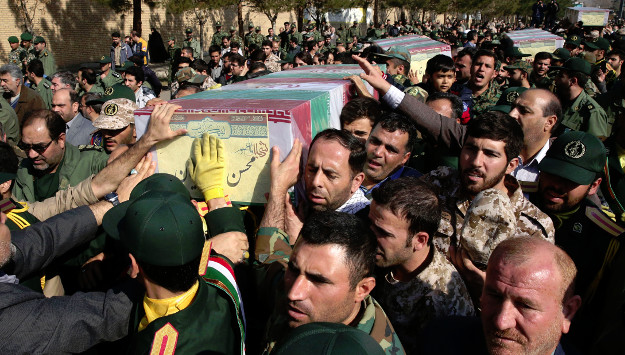
On November 30, hundreds of people gathered in the Iranian city of Qom to attend the funeral procession of several Afghan and Pakistani Shiites killed in Syria.
The oldest peer-reviewed publication dedicated to the study of the modern Middle East, MEI’s flagship journal covers politics, society, and culture in the region.