The Americans Are Gone. Will Iraq’s Militias Disarm?
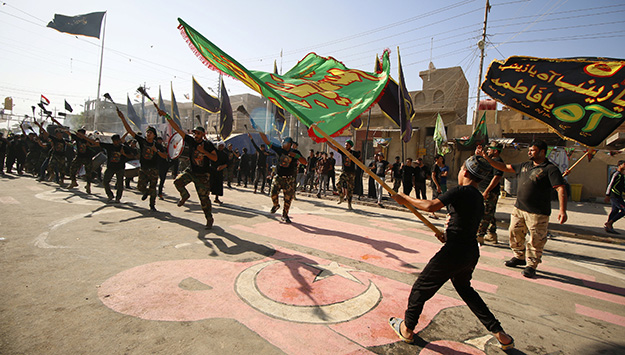
On September 30, the US completed its military withdrawal from Iraq, ending a 12-year-long mission to combat ISIS that began in 2014. The date was also meant to be the deadline for disarming the largely Iranian-backed militias known as the Popular Mobilization Forces (PMF), but Prime Minister Ali al-Zaidi has now pushed that cutoff back to June 30, 2027. MEI Distinguished Diplomatic Fellow Amb. (ret.) Robert S. Ford joins hosts Alistair Taylor and Matthew Czekaj to discuss what the US military withdrawal means for Iraqi security and the nature of the bilateral relationship going forward. They also speak about what it will take for Baghdad to bring the PMF militias to heel, and how Iraq may navigate the post-Iran war era.
Jordan’s Economy Weathers Iran War’s Shocks and Finds New Opportunities
In the summer of 2003, King Abdullah II told Bloomberg Jordan sits “between Iraq and a hard place,” a play on words designed to describe the kingdom’s challenging environment to an American audience amid the US-led Iraq war to the east and the lingering Palestinian-Israeli conflict to the west. Jordan is grappling with a much “harder place” today.
Proponents of the war with Iran have taken recent increases in crude-oil flows through the Strait of Hormuz as proof that the US strategy is finally working. President Trump is so confident in this that he recently rejected a seven-day plan, set forward by Iran’s foreign ministry, to end the war and open the strait. The United States is “winning tremendously,” Trump boasted.
New Report Details Iranian Human Rights Violations
Iran’s dismal human rights record is once again under international scrutiny. On the 7th anniversary of the regime crackdown on the opposition after 2009, the International Campaign for Human Rights in Iran ran an extensive overview of major human rights violations, including torture and executions, which the Iranian authorities are predictably refusing to acknowledge.
Amir-Abdollahian: The Soft Face of Iran’s Hard Power
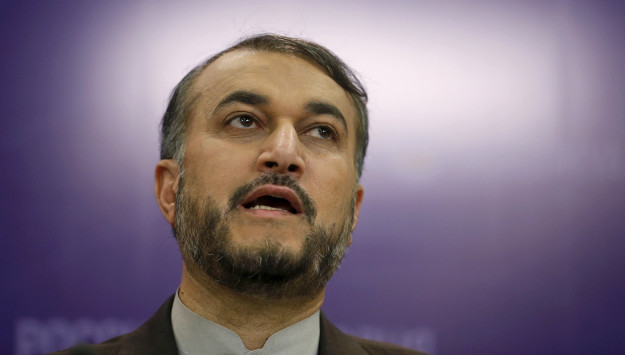
Hossein Amir-Abdollahian, a senior Iranian diplomat close to the Islamic Revolution Guards Corps (IRGC) came back into the Iranian headlines this week charging that the US and Israel were determined to change the borders of nations in the Middle East as part of an attempt to weaken the so-called “resistance,” the anti-US and Iran-led bloc of Lebanese Hezbollah, Hamas and Bashar al-Assad of Syria; and that Iran had a duty to block these nefarious attempts and redouble its support to its regional allies. While hardly a household name in the West, Amir-Abollahian has been the IRGC’s soft fac
Iraqi Prime Minister Haider al-Abadi has expressed outrage at the recent Turkish parliamentary extension of the mandate of Turkey’s military presence on Iraqi soil. For months, Turkish forces have maintained a contingent in northern Iraq, ostensibly at the invitation of local forces, with the announced mission of training them in preparation for the battle for Mosul. With multiple parties preparing for the offensive, Mosul, Iraq’s second largest city, is slated to be liberated from a 30-month-old Islamic State (ISIS) occupation.
Yemeni Factions, Saudi Arabia Escalate Aimless War
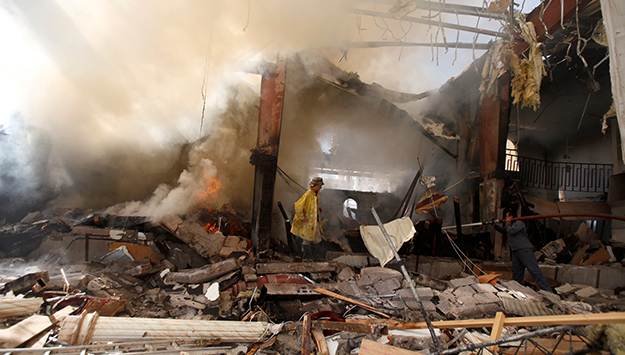
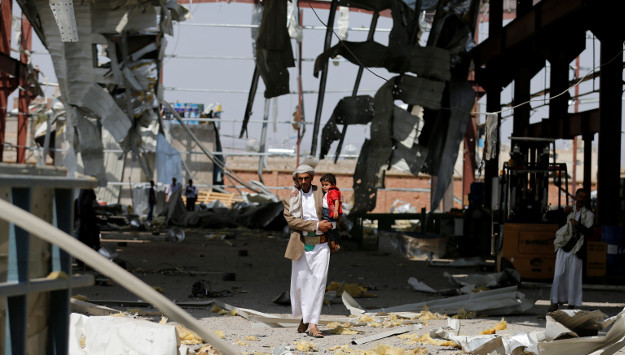
The parties to the intractable Yemen war appear further entrenched in their enmity than ever before, despite U.S. and British efforts to push Yemeni leaders toward new negotiations.
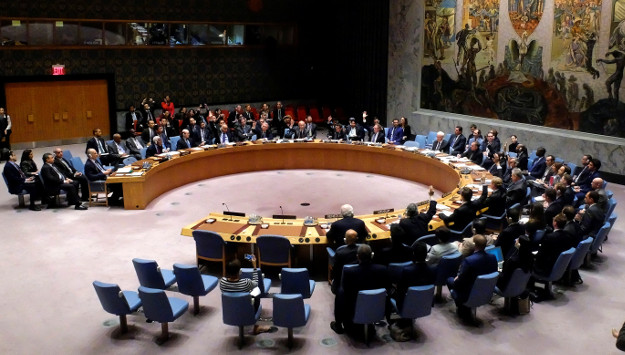
In this Weekly Briefing, MEI experts Robert S. Ford, Gonul Tol, and Ruba Husari provide analysis on issues including the UNSC’s inability to administer diplomatic solutions in Syria, the rebuilding of diplomatic ties between Russia and Turkey, and OPEC’s ongoing consideration of how to control member state oil production.
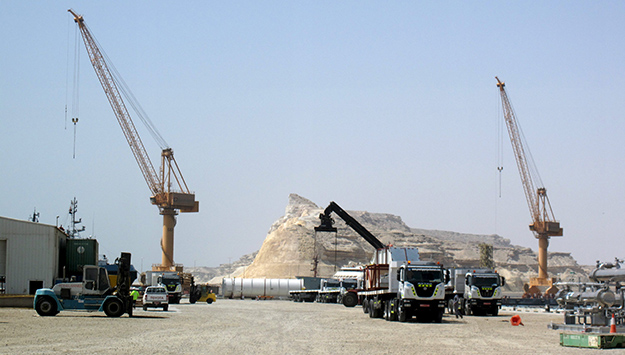
In the face of economic challenges and geopolitical shifts, Oman is investing in its strategic partnership with India to diversify Muscat’s web of international allies. This relationship—which dates back to the Indus Valley Civilization when the Arabian Sea’s monsoon winds began facilitating 5,000 years of maritime trade between the two countries—has matured substantially in recent years.[1]
In this week’s Monday Briefing, MEI experts Robert S. Ford, Paul Salem, and Marvin G. Weinbaum provide analysis on recent and upcoming events including Russia’s recent escalation of military force in Syria, deteriorating Saudi-Iranian relations, and an escalation in the Kashmir between India and Pakistan.
Monday Briefing: This Week's OPEC Meeting, and the Latest on Aleppo and Yemen
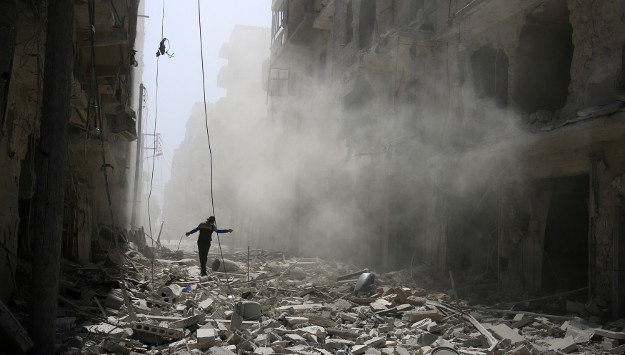
In this week’s Monday Briefing, MEI experts Ruba Husari, Charles Lister, and Charles Schmitz provide analysis on events including OPEC’s upcoming meeting to discuss production rates and a potentil freeze, Russia’s bombardment of Aleppo following the collapse of the latest cease-fire, and the worsening humanitarian disaster in Yemen.
Iraq’s Shrinking Revenues, the I.M.F. and the Oil Dilemma
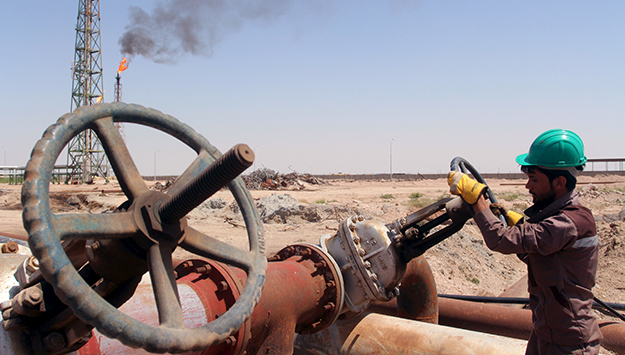
The International Monetary Fund announced in July that it has approved a three-year, $5.34 billion loan for Iraq under the Stand-By Arrangement facility, which it said was focused on “implementing economic and financial policies to help the country cope with lower oil prices and ensure debt sustainability.” The promised financial assistance was made conditional on—among other things—Baghdad settling all debts to international oil companies (IOCs) without adding new debts.
Monday Briefing: President Obama's Final UNGA Address
In this week’s Monday Briefing, MEI experts Paul Salem, Robert S. Ford, Charles Lister, Alex Vatanka, and David Mack provide analysis on recent and upcoming events including Obama’s upcoming final speech to the UN General Assembly, the Syrian collapsed ceasefire, the buildup to an eventual Mosul offensive, Rouhani’s trip to Latin America, and Libya’s oil exports.
The War in Yemen: Political Impasse and Humanitarian Crisis
September 14, 2016 – Charles Schmitz, MEI scholar and professor of geography at Towson University, sits with Paul Salem to discuss the state of play in Yemen, where more than a year of war has led to thousands of civilian casualties and compounded a long-standing humanitarian crisis.
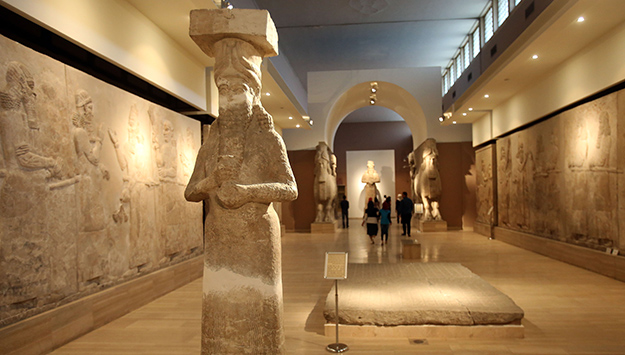
Ongoing conflict is robbing Iraq of both its future and its past by stripping the country of its tangible cultural heritage.[1] The Islamic State, as part of its strategy, is deliberately seeking to erase all aspects of Iraqi identity which compete with its own dogma. Iraq’s cultural heritage faces additional threats in the form of illicit looting, vandalism, government neglect, and political infighting.
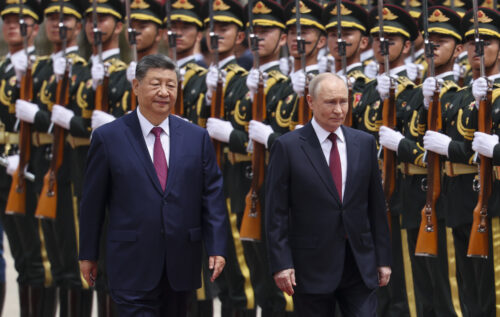
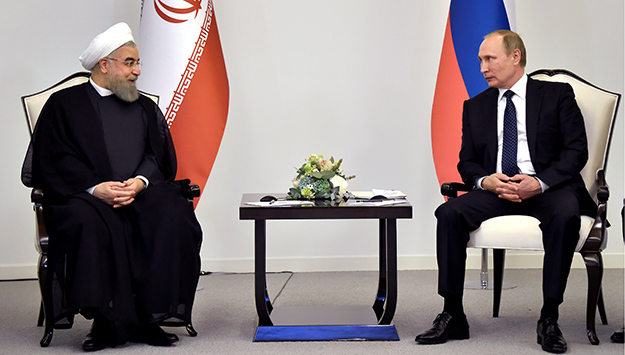
The relationship between Iran and Russia has been characterized more by competition than by cooperation in modern political history. Military incidents during the Soviet era created an atmosphere of distrust, but Russia has become an increasingly prominent economic and political partner of Iran as both countries have been targeted by Western sanctions regimes. More recently, upheaval in global energy markets and the deteriorating security situation in Syria have led to the forging of stronger commercial and political bonds between the two countries.
Informal Activism and New Subjectivity in Authoritarian Settings: Iran’s “New Activists”
In times of repression, informal networks are useful to keep activism alive as they offer a way to activists for organizing. This short piece examines the background of informal activism in Iran and its possible implications.
The oldest peer-reviewed publication dedicated to the study of the modern Middle East, MEI’s flagship journal covers politics, society, and culture in the region.