The Americans Are Gone. Will Iraq’s Militias Disarm?
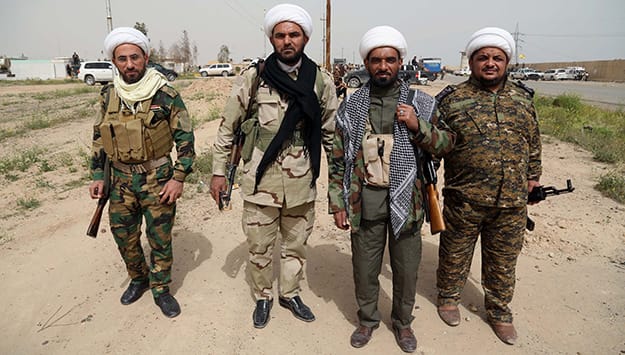
On September 30, the US completed its military withdrawal from Iraq, ending a 12-year-long mission to combat ISIS that began in 2014. The date was also meant to be the deadline for disarming the largely Iranian-backed militias known as the Popular Mobilization Forces (PMF), but Prime Minister Ali al-Zaidi has now pushed that cutoff back to June 30, 2027. MEI Distinguished Diplomatic Fellow Amb. (ret.) Robert S. Ford joins hosts Alistair Taylor and Matthew Czekaj to discuss what the US military withdrawal means for Iraqi security and the nature of the bilateral relationship going forward. They also speak about what it will take for Baghdad to bring the PMF militias to heel, and how Iraq may navigate the post-Iran war era.
Jordan’s Economy Weathers Iran War’s Shocks and Finds New Opportunities
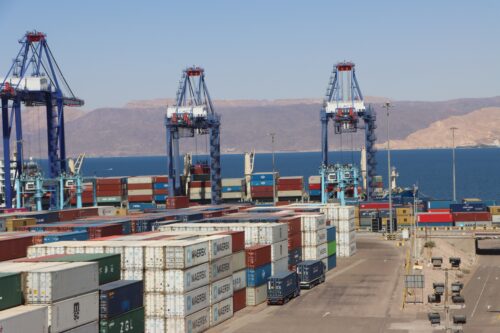
In the summer of 2003, King Abdullah II told Bloomberg Jordan sits “between Iraq and a hard place,” a play on words designed to describe the kingdom’s challenging environment to an American audience amid the US-led Iraq war to the east and the lingering Palestinian-Israeli conflict to the west. Jordan is grappling with a much “harder place” today.
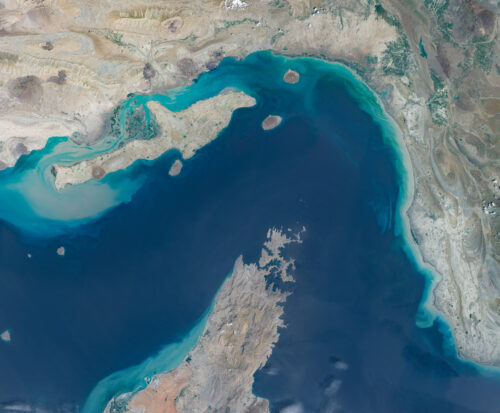
Proponents of the war with Iran have taken recent increases in crude-oil flows through the Strait of Hormuz as proof that the US strategy is finally working. President Trump is so confident in this that he recently rejected a seven-day plan, set forward by Iran’s foreign ministry, to end the war and open the strait. The United States is “winning tremendously,” Trump boasted.
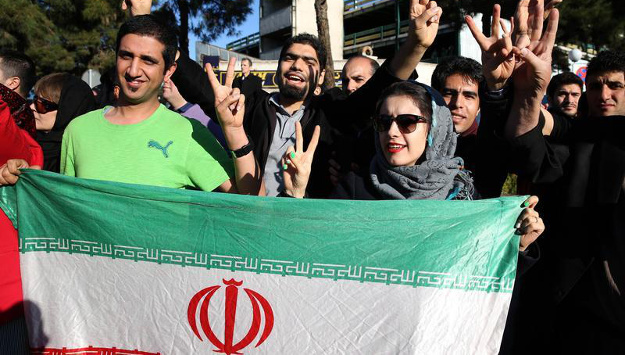
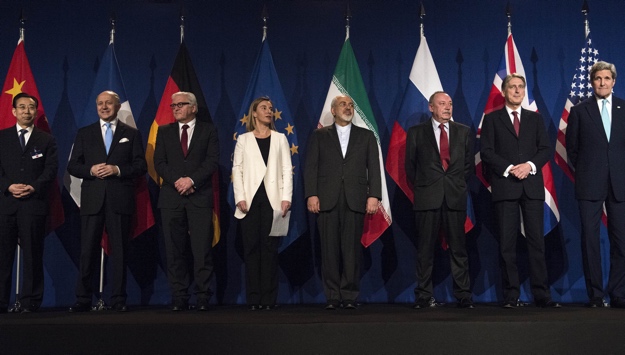
Iran’s foreign minister, Javad Zarif, was on his way back to Tehran from Lausanne as accolades began to pile up. At the airport, he received a rapturous reception, as if the Team Melli, Iran’s national soccer team, had beat Germany.
Will the Nuclear Deal Help or Harm Regional Stability?
As the United States and other world powers pursued nuclear negotiations with Iran over the past 18 months, the Middle East descended into one of the worst periods of chaos and proxy conflict in its modern history, with Iran engaged aggressively in many of the region’s hotspots. Most leaders in the region fear that a nuclear deal with Iran will abet its aggressive interventionism and lead to further geopolitical and sectarian confrontation. But could the agreement—if it is completed—also create conditions for rebuilding stability?
Misadventures in Violence in Yemen: Operation Resolute Storm
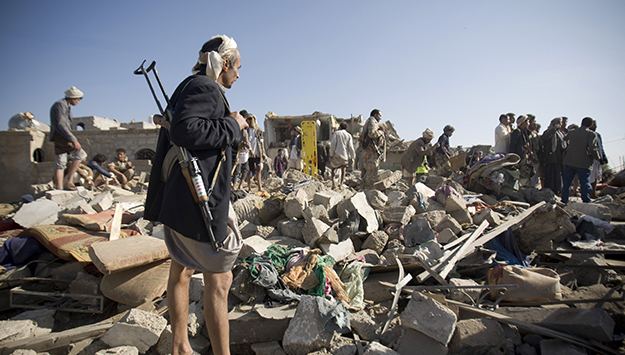
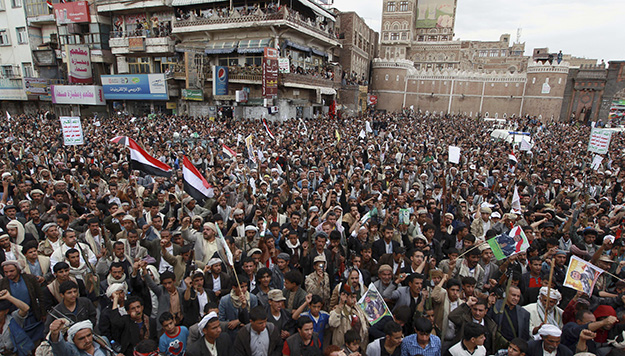
Saudi Arabia’s military intervention in Yemen is a risky move motivated by various Saudi objectives in Yemen and in the region. The immediate objective is to save President Abdu Rabbu Mansour Hadi from Ansar Allah’s advance on Aden and reinstall him as head of state by forcing Ansar Allah to make major political concessions. But the operation also marks the increasing willingness of the Saudis to use their own military rather than rely on the United States.
With its bold and public intervention in Yemen’s civil war, Saudi Arabia has cast off a half-century of caution and restraint in regional security affairs.
March 26, 2015 – Paul Salem discusses the new challenge the unfolding crisis in Yemen poses to the region, and how the Arab League and the United States are responding as the fight against ISIS continues.
March 24, 2015: Alex Vatanka, senior fellow at The Middle East Institute, discusses the mood in Tehran as the deadline for negotiations approaches, the state of U.S.-Iranian relations, and what reaching a deal could mean to that relationship and the Arab world, in a brief interview.
President Hassan Rouhani’s recent trip to Turkmenistan cannot be dismissed as a one-off. Since coming to office in August 2013, the Rouhani administration has prioritized relations with the Muslim states of the former Soviet Union. Given the potential for economic ties and trade, Tehran’s aspirations are fully understandable.
Collection Spotlight: In the Name of Oil: Anglo-American Relations in the Middle East, 1950-1958
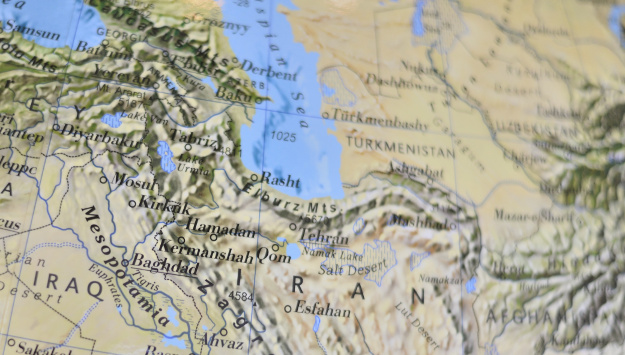
Ivan L. G. Pearson’s In the Name of Oil: Anglo-American Relations in the Middle East, 1950-1958 provides a comprehensive analysis of the extent to which British interests in the Middle East influenced or were furthered by the United States between 1950 and 1958.
Historically, promoting dialogue between people of different nations has been a way to build bridges of understanding between countries. For example, since 1946, the U.S. Fulbright Exchange has served to strengthen relations between the United States and other countries. Similarly, as the partnership between China and the UAE has grown significantly in recent years, both governments have come to recognize the importance of overcoming linguistic-cultural barriers. They have therefore worked cooperatively to increase the number of Emirati and Chinese professionals who are acquainted with each other’s societal norms and customs, methods of performing business, and national and institutional interests.
Frustrated Turkey Turns to Onetime Ally Saudi Arabia
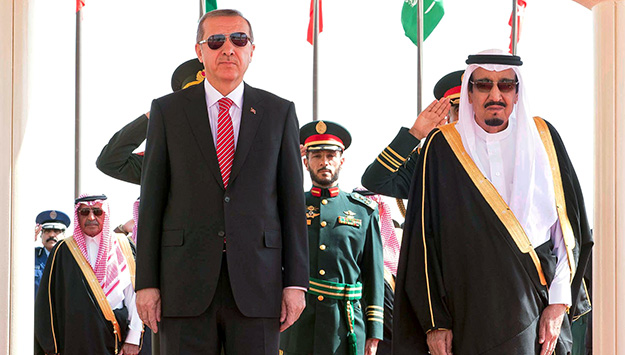
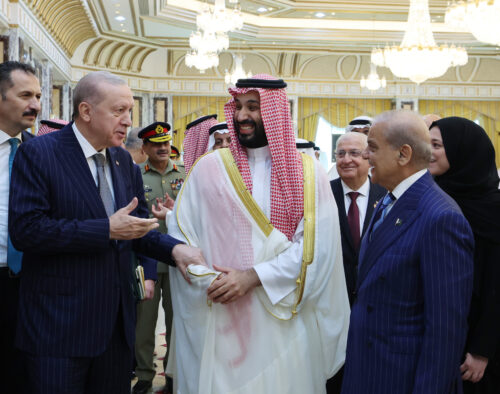
Frustrated by the United States’ failure to heed its advice on Syria and Iraq, and by Iran’s growing clout in these countries, Turkey seems to have decided to mend its frosty relationship with Saudi Arabia. When King Abdullah died earlier this year, Turkish President Recep Tayyip Erdogan immediately cut short an African tour and flew to Riyadh to offer his condolences. He declared a period of mourning in Turkey and ordered the Turkish flag to be flown at half-mast.
The GCC States and the Viability of a Strategic Military Partnership with China
The term “strategic partnership” has been increasingly used in GCC circles to signify that relations with China are important and worthy of long-term investment. In a March 14, 2014 speech during his visit to Beijing, Saudi Arabia’s then Crown Prince Salman announced that “we are witnessing the transformation of the relationship with China to one of strategic partnership with broad dimensions, to the benefit of both our countries.” Saudi Arabia’s position was echoed by the emir of Qatar during a 2014 visit to China in which issues of common concern to all GCC states, especially combating terrorism, were discussed. Abdel-Aziz Aluwaisheg, GCC general assistant secretary for negotiations and strategic dialogue, has also noted that there is growing interest in the Gulf to develop a “strategic dialogue” with China.
It has long been known that the Assad regime, facing a shortage of manpower in its regular army, has had to rely on irregular paramilitaries in its bid to reverse rebel advances. This became particularly apparent in 2013, when Hezbollah openly declared its participation in the capture of Qusayr, a town in Homs Province on the border with Lebanon.
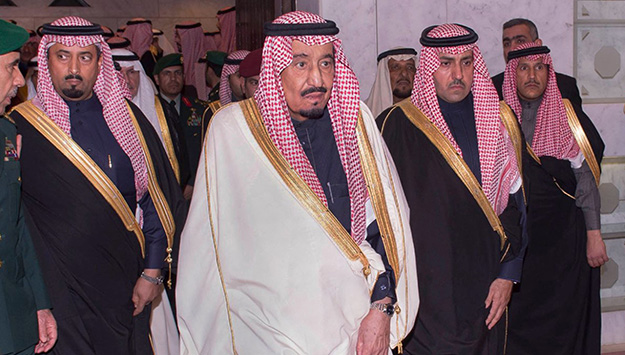
The death of King Abdullah in late January 2015 brought a seamless transition of power in Saudi Arabia. Crown Prince Salman acceded to the throne and Prince Muqrin became crown prince, while Prince Muhammad bin Nayef, minister of the interior, became second deputy prime minister and the first grandson of Ibn Saud in line for the throne. Despite speculation to contrary, the smooth transition was strong evidence of a preexisting agreement that included the late king, Salman, and other senior princes.
The oldest peer-reviewed publication dedicated to the study of the modern Middle East, MEI’s flagship journal covers politics, society, and culture in the region.









 Ivan L. G. Pearson’s In the Name of Oil: Anglo-American Relations in the Middle East, 1950-1958 provides a comprehensive analysis of the extent to which British interests in the Middle East influenced or were furthered by the United States between 1950 and 1958.