The Americans Are Gone. Will Iraq’s Militias Disarm?
On September 30, the US completed its military withdrawal from Iraq, ending a 12-year-long mission to combat ISIS that began in 2014. The date was also meant to be the deadline for disarming the largely Iranian-backed militias known as the Popular Mobilization Forces (PMF), but Prime Minister Ali al-Zaidi has now pushed that cutoff back to June 30, 2027. MEI Distinguished Diplomatic Fellow Amb. (ret.) Robert S. Ford joins hosts Alistair Taylor and Matthew Czekaj to discuss what the US military withdrawal means for Iraqi security and the nature of the bilateral relationship going forward. They also speak about what it will take for Baghdad to bring the PMF militias to heel, and how Iraq may navigate the post-Iran war era.
Jordan’s Economy Weathers Iran War’s Shocks and Finds New Opportunities
In the summer of 2003, King Abdullah II told Bloomberg Jordan sits “between Iraq and a hard place,” a play on words designed to describe the kingdom’s challenging environment to an American audience amid the US-led Iraq war to the east and the lingering Palestinian-Israeli conflict to the west. Jordan is grappling with a much “harder place” today.
Proponents of the war with Iran have taken recent increases in crude-oil flows through the Strait of Hormuz as proof that the US strategy is finally working. President Trump is so confident in this that he recently rejected a seven-day plan, set forward by Iran’s foreign ministry, to end the war and open the strait. The United States is “winning tremendously,” Trump boasted.
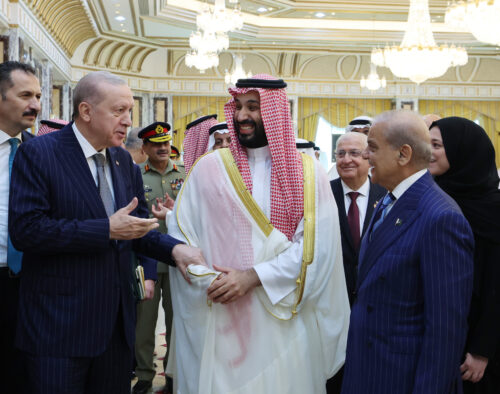
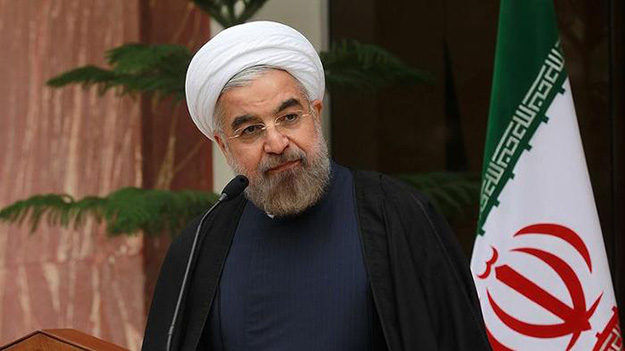
Turkish Prime Minister Recep Tayyip Erdogan is in Tehran January 28 and 29 for his first meeting with Iranian President Hassan Rouhani. Foreign Minister Ahmet Davutoglu, Energy Minister Taner Yildiz, and Economy Minister Nihat Zeybekci are accompanying him. MEI spoke to Gonul Tol, Director of the Institute’s Center for Turkish Studies, about the meeting.
Dressing for Diplomatic Success: Iranian Negotiations Lead the Way
In the Middle East today, diplomatic success and failure are unfolding side by side, often with some of the same players. High-profile attempts are being made to end the conflict between Israel and the Palestinians, to stop the massacre of innocents in Syria, and to bring Iran in from the cold.
Collection Spotlight: America's Great Game: The CIA's Secret Arabists and the Shaping of the Modern Middle East
America’s Great Game: The CIA’s Secret Arabists and the Shaping of the Modern Middle East, by Hugh Wilford, 2013
A tale of how the CIA set sail into the Middle East with the best intentions, ran aground on its own failings, and was overwhelmed by forces and events it could not control.
Qanats and Water Cooperation for a Sustainable Future
This essay is part of the Middle East-Asia Project (MAP) series on “Harvesting Water and Harnessing Cooperation: Qanat Systems in the Middle East and Asia.”
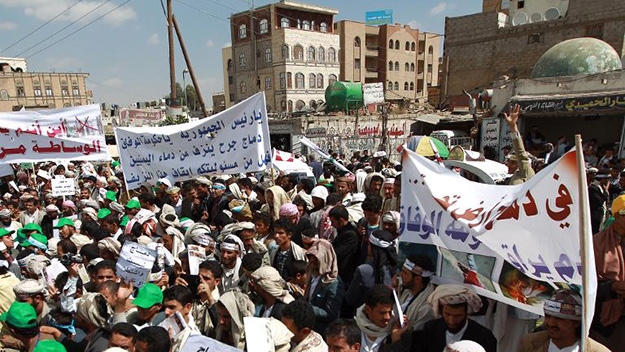
The removal of Yemeni President Ali Abdullah Saleh in 2011 has created an existential crisis for Yemen’s Houthis. Like many other armed political groups in Yemen and elsewhere, the Houthis’ survival depends on the continued existence of an enemy. With Saleh gone, their raison d’être has become difficult to define and their armed opposition hard to defend.
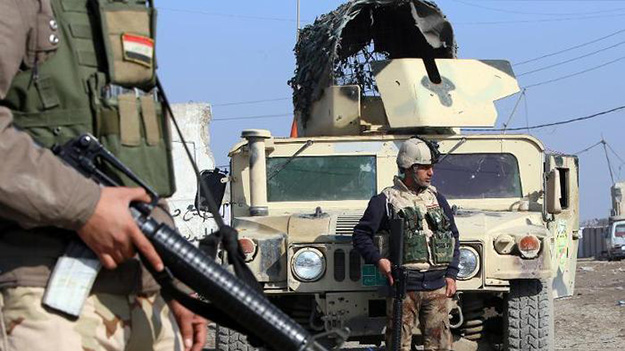
Since the departure of U.S. ground forces from Iraq in 2011 in the wake of failed negotiations to extend the 2008 Status of Forces Agreement, the security situation in Iraq has steadily declined. To many, the situation was predictable, as the absence of a residual U.S. force to mature the Iraqi security forces and moderate long-standing political tensions among the sects led to a security vacuum filled by extremists and terrorists. To others, 10 years of investment and over 4,000 troops lost was enough, and it was time for the Iraqis to resolve their own internal conflicts.
The following is an excerpt from “Iraq’s Tangled Foreign Interests and Relations,” written by MEI Vice President Paul Salem and published by the Carnegie Middle East Center on December 24, 2013. Click here to view the full report.
Scenarios of Change and Possibilities of Reform in Lebanon
The recent spate of bombings in Beirut underline the degree to which Lebanon has become entangled in the wider regional conflict being fought in and around Syria, but the paralysis of Lebanon’s political institutions indicate an equally deep domestic dysfunction. There is no doubt that part of Lebanon’s problems derive from its difficult geostrategic environment and require external developments and changes, and part of them come from the weaknesses of its domestic political and socioeconomic system and require internal reform.
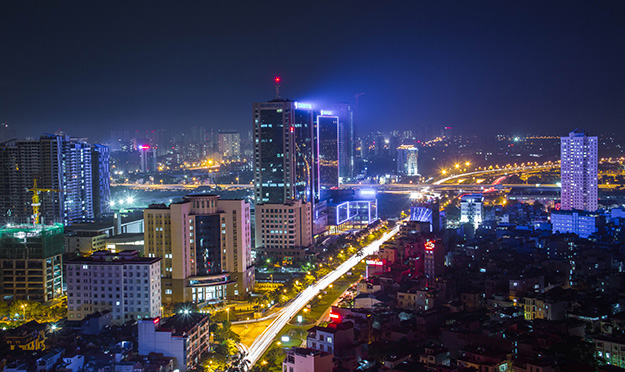
During the 1970s the Communist Party dominated almost all walks of life in Vietnam. This strict control, especially in regard to the economy, failed to achieve sustainable development. Vietnamese authorities then began to pursue a policy of openness to the outside world, and the Doi Moi, or “renovation,” was launched in 1986. As a result of this and other gradual reforms, Vietnam has become one of the fastest-growing economies in Asia, with annual GDP growth averaging 7.1 percent between 2000 and 2012—a rate that the country is expected to sustain over the next decade. In this context, Gulf Cooperation Council (GCC)-Vietnam relations are promising and may develop steadily over the coming years.
Earlier this week, Iran and world powers reached a deal in which Iran will curb its nuclear program for six months in exchange for a drop in some sanctions. MEI spoke with one of its experts, Alex Vatanka, to gain an understanding of how hardliners in Iran are reacting to the deal as well as other internal dynamics in the Islamic Republic.
How have hardliners in Iran, such as the Revolutionary Guards, responded to the news of the interim agreement?
The Iran Nuclear Deal: Risks and Opportunities for the Region
The nuclear deal with Iran, though still temporary and tentative, is ushering in a historic shift in the patterns of power, conflict, and diplomacy in the region. Like all historic shifts, it is laden with uncertainty and risk of new conflicts, but also carries with it potential opportunities for further diplomacy and finding common ground. Given the precedent of conflict and mistrust in the region, it is no surprise that the deal has raised concerns among many of America’s allies.
Earlier today, double explosions near the Iranian embassy in Beirut killed at least 23, including an Iranian diplomat. The Abdullah Azzam Brigades, an Islamist group with links to al-Qa`ida, took responsibility for the attack. MEI sat down with its Vice President for Policy and Research, Paul Salem, to discuss the significance of the bombings in Lebanon as well as their regional and global implications.
Tell us about the bombing and the group that claimed responsibility for it.
Iran-India relations are far-reaching and multidimensional. However, a variety of issues, including the upheaval in the Middle East and North Africa, U.S and Israeli influence over the region, Iran-Israel belligerence, and terrorism all constrain bilateral diplomacy.
The oldest peer-reviewed publication dedicated to the study of the modern Middle East, MEI’s flagship journal covers politics, society, and culture in the region.