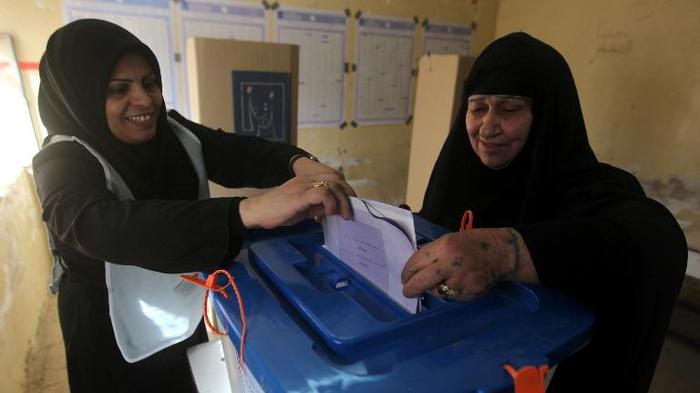
The Americans Are Gone. Will Iraq’s Militias Disarm?
On September 30, the US completed its military withdrawal from Iraq, ending a 12-year-long mission to combat ISIS that began in 2014. The date was also meant to be the deadline for disarming the largely Iranian-backed militias known as the Popular Mobilization Forces (PMF), but Prime Minister Ali al-Zaidi has now pushed that cutoff back to June 30, 2027. MEI Distinguished Diplomatic Fellow Amb. (ret.) Robert S. Ford joins hosts Alistair Taylor and Matthew Czekaj to discuss what the US military withdrawal means for Iraqi security and the nature of the bilateral relationship going forward. They also speak about what it will take for Baghdad to bring the PMF militias to heel, and how Iraq may navigate the post-Iran war era.
Jordan’s Economy Weathers Iran War’s Shocks and Finds New Opportunities
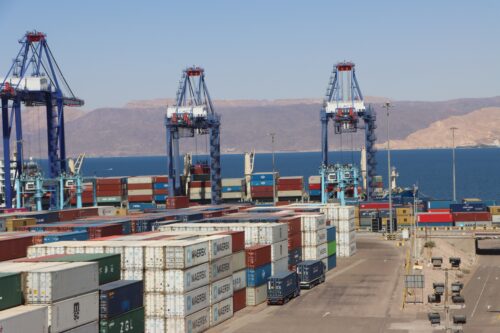
In the summer of 2003, King Abdullah II told Bloomberg Jordan sits “between Iraq and a hard place,” a play on words designed to describe the kingdom’s challenging environment to an American audience amid the US-led Iraq war to the east and the lingering Palestinian-Israeli conflict to the west. Jordan is grappling with a much “harder place” today.
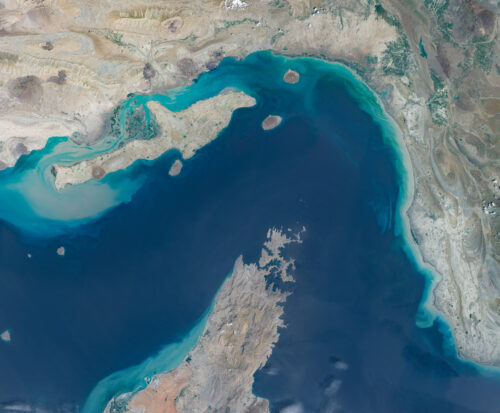
Proponents of the war with Iran have taken recent increases in crude-oil flows through the Strait of Hormuz as proof that the US strategy is finally working. President Trump is so confident in this that he recently rejected a seven-day plan, set forward by Iran’s foreign ministry, to end the war and open the strait. The United States is “winning tremendously,” Trump boasted.
The Middle East Institute is proud to host MEI Scholar Dr. Charles Schmitz for a discussion about Yemen’s political future. Two years after the start of anti-government protests in Yemen, the country remains torn by political divisions and rivalries. Schmitz will examine the political challenges ahead and whether or not the country’s upcoming National Dialogue holds the key to stabilizing Yemen.
The Middle East Institute is proud to host MEI Scholar Dr. Charles Schmitz for a discussion about Yemen’s political future. Two years after the start of anti-government protests in Yemen, the country remains torn by political divisions and rivalries. Schmitz will examine the political challenges ahead and whether or not the country’s upcoming National Dialogue holds the key to stabilizing Yemen.
The Middle East Institute is proud to host MEI Scholar Dr. Charles Schmitz for a discussion about Yemen’s political future. Two years after the start of anti-government protests in Yemen, the country remains torn by political divisions and rivalries. Schmitz will examine the political challenges ahead and whether or not the country’s upcoming National Dialogue holds the key to stabilizing Yemen.
The Middle East Institute is proud to host MEI Scholar Dr. Charles Schmitz for a discussion about Yemen’s political future. Two years after the start of anti-government protests in Yemen, the country remains torn by political divisions and rivalries. Schmitz will examine the political challenges ahead and whether or not the country’s upcoming National Dialogue holds the key to stabilizing Yemen.
The Middle East Institute is proud to host MEI Scholar Dr. Charles Schmitz for a discussion about Yemen’s political future. Two years after the start of anti-government protests in Yemen, the country remains torn by political divisions and rivalries. Schmitz will examine the political challenges ahead and whether or not the country’s upcoming National Dialogue holds the key to stabilizing Yemen.
The oldest peer-reviewed publication dedicated to the study of the modern Middle East, MEI’s flagship journal covers politics, society, and culture in the region.